
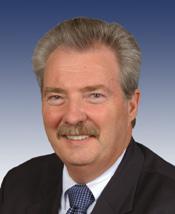
Historical · U.S. House · Indiana · District 9
Michael Sodrel
Former U.S. Representative · Indiana District 9 · 2005–2007 · Republican
Michael Sodrel represented Indiana's District 9 in the United States House of Representatives (2005–2007) for the Republican party. The page below collects sourced biographical facts, term history, committee roles, and provenance for Sodrel.
Bioguide ID: S001160
Key facts
- Full name
- Michael Sodrel
- State
- Indiana
- District
- District 9
- Party
- Republican
- House service
- 2005–2007
- First House term
- 2005
- Status
- Left office
- Current term ends
- —
- Born
- 1945
- Bioguide ID
- S001160
- Committee assignments
- —
- Dataset version
- 1.20260605
Biographical narrative
938 words · sourced from the Wikipedia REST extract
Michael E. Sodrel is a former American politician and businessman who served as a U.S. Representative for Indiana's 9th congressional district from 2005 to 2007. A member of the Republican Party, Sodrel's political career included multiple attempts to regain his congressional seat after his initial term, reflecting his ongoing engagement in Indiana politics. His legislative focus included issues such as job creation, tax reduction, and conservative social policies.
Early life and career
Michael Eugene Sodrel was born on December 17, 1945, in Louisville, Kentucky. He spent much of his formative years in New Albany, Indiana, where he graduated from New Albany High School in 1963. Following high school, he pursued higher education at Indiana University Southeast, located in New Albany.
Sodrel's career began in the military, where he served in the 151st Infantry Regiment of the Indiana National Guard from 1966 to 1973. He achieved the rank of staff sergeant before being honorably discharged. After his military service, he joined his family's business, Sodrel Truck Lines Inc., which has been a significant part of his professional life since 1963. In addition to his work with the family business, he founded Free Enterprise System Inc., a charter motor-coach and contract passenger carrier, as well as Sodrel Logistics, further expanding his entrepreneurial endeavors.
Beyond his business pursuits, Sodrel is also an author, having written an internet book titled "Citizen Sheep Government Shepherds," which reflects his views on government and civic engagement. His background in both business and military service has shaped his perspectives and approaches to public service.
House tenure
Sodrel's political career in the U.S. House of Representatives began when he was elected to represent Indiana's 9th congressional district in 2004. He successfully defeated incumbent Democratic Representative Baron Hill in a closely contested race, winning by a narrow margin. His term in office commenced in January 2005, and he served until January 2007.
During his time in Congress, Sodrel was a member of several important committees, including the House Committee on Agriculture, the House Committee on Transportation and Infrastructure, the House Committee on Small Business, and the House Committee on Science. His involvement in these committees allowed him to engage with a range of issues pertinent to his constituents and the nation.
Sodrel's tenure was marked by a strong alignment with conservative values. He opposed partial-birth abortions and federal funding for elective abortions, reflecting his stance on social issues. Additionally, he was against imposing further environmental regulations, advocating instead for policies that he believed would support economic growth. His support for the Second Amendment was notable, as he consistently championed the right to bear arms. His legislative record earned him a 92 lifetime rating from the American Conservative Union, while he received a zero rating from the League of Conservation Voters, indicating a clear ideological divide in his policy preferences.
In 2006, Sodrel introduced a bill aimed at preventing federal courts from ruling on the content of speech in state legislatures. This legislative effort was a direct response to a ruling by U.S. District Judge David Hamilton, which stated that official Indiana House proceedings could not begin with sectarian prayers that advanced any particular religion. This bill illustrated Sodrel's commitment to what he viewed as the protection of religious expression within governmental proceedings.
Despite his efforts and the support he garnered, Sodrel faced significant challenges in his re-election campaign in 2006. The race was deemed a toss-up by the Cook Political Report, and he ultimately lost to Hill, with the election results reflecting a competitive political landscape in Indiana's 9th district.
Legislative focus and committees
Throughout his time in the House, Sodrel maintained a focus on several key issues that resonated with his constituents. His campaign platforms consistently emphasized job creation and the importance of lowering taxes, which he believed were essential for economic growth and stability. He positioned himself as a candidate who understood the needs of working families and sought to implement policies that would foster a favorable business environment.
Sodrel's approach to governance was characterized by his commitment to conservative principles. He was a vocal opponent of federal estate taxes, advocating for their permanent repeal as part of his broader tax policy agenda. His legislative actions and public statements often reflected a desire to reduce government intervention in the economy, aligning with the Republican Party's traditional emphasis on free-market principles.
In addition to his legislative priorities, Sodrel's involvement in various committees allowed him to influence a wide array of policy areas. His participation in the House Committee on Agriculture, for instance, positioned him to address issues affecting farmers and rural communities, which are vital to Indiana's economy. Similarly, his role on the Committee on Transportation and Infrastructure enabled him to engage with critical infrastructure projects and transportation policies that impact constituents' daily lives.
Sodrel's political career did not end with his departure from Congress in 2007. He continued to remain active in Indiana politics, making multiple attempts to regain his congressional seat in subsequent election cycles. His campaigns in 2008, 2010, and 2022 reflected his enduring interest in public service and his desire to represent the interests of his constituents. Despite facing challenges in securing nominations and winning elections, Sodrel's persistence in the political arena underscores his commitment to the issues he championed during his time in office.
In summary, Michael E. Sodrel's political career is marked by his tenure in the U.S. House of Representatives, where he focused on conservative policies and engaged with various legislative committees. His background in business and military service informed his approach to governance, and his continued involvement in political campaigns illustrates his dedication to public service.
Notable legislation
Sponsored and co-sponsored legislation for Michael Sodrel is pending operator curation. The biographical narrative above carries the same provenance trail until per-bill rows are written.
Sources
- [1]https://en.wikipedia.org/wiki/Mike_SodrelWikipedia · retrieved 2026-06-05
Notable quotes
Sourced quotes for Michael Sodrel are pending operator curation. Narrative-scope provenance remains attached below.
Sources
- [1]https://en.wikipedia.org/wiki/Mike_SodrelWikipedia · retrieved 2026-06-05
Key positions
Curated policy positions for Michael Sodrel are pending operator review. The biographical narrative above carries the same provenance trail until per-topic positions are written.
Sources
- [1]https://en.wikipedia.org/wiki/Mike_SodrelWikipedia · retrieved 2026-06-05
Terms served
- 2005–2007U.S. House · Term 1 · Republican
Sources & provenance
Every attributable claim above carries a per-section [N] marker that resolves to the corresponding URL below. Each entry records the upstream provider, the canonical URL, and the timestamp at which the source was retrieved by the ingest pipeline.
Key facts
- https://bioguide.congress.gov/search/bio/S001160bioguide · retrieved 2026-06-05
- https://www.govtrack.us/congress/members/400632govtrack · retrieved 2026-06-05
Biographical narrative
- https://en.wikipedia.org/wiki/Mike_Sodrelwikipedia · retrieved 2026-06-05
Find your representative
Every U.S. state elects representatives by district. Browse Indiana’s delegation, the full former-representative roster, or explore the role and term length.
Related on The Candidate
- Preceded by Lee HamiltonEarlier holder of the Indiana District 9 House seat · Democratic.Open
- Succeeded by Trey HollingsworthLater holder of the Indiana District 9 House seat · Republican.Open
- Adam Benjamin Jr.Former U.S. Representative · Indiana District 1 · DemocraticOpen
- Alvin HoveyFormer U.S. Representative · Indiana District 1 · RepublicanOpen
- Arthur TaylorFormer U.S. Representative · Indiana District 1 · DemocraticOpen
- Benoni FullerFormer U.S. Representative · Indiana District 1 · DemocraticOpen