
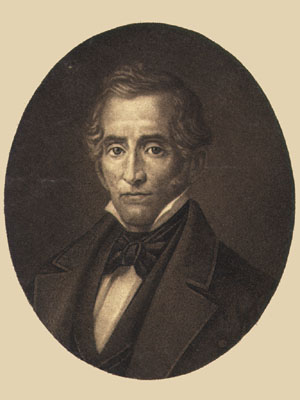
Historical · U.S. House · Louisiana · District 1
Edward White
Former U.S. Representative · Louisiana District 1 · 1829–1843 · Whig
Edward White represented Louisiana's District 1 in the United States House of Representatives (1829–1843) for the Whig party. The page below collects sourced biographical facts, term history, committee roles, and provenance for White.
Bioguide ID: W000365
Key facts
- Full name
- Edward White
- State
- Louisiana
- District
- District 1
- Party
- Whig
- House service
- 1829–1843
- First House term
- 1829
- Status
- Left office
- Current term ends
- —
- Born
- —
- Bioguide ID
- W000365
- Committee assignments
- —
- Dataset version
- 1.20260606
Biographical narrative
814 words · sourced from the Wikipedia REST extract
Edward White was a prominent 19th-century American lawyer and politician who served as a U.S. Representative for Louisiana's 1st congressional district and briefly as the governor of Louisiana. A member of the Whig Party, he was an ally of notable political figure Henry Clay. White's political career spanned multiple terms in the U.S. House of Representatives, during which he engaged in various legislative activities and contributed to the political landscape of his time. His legacy continued through his son, Edward Douglass White Jr., who held significant judicial positions, including that of Chief Justice of the United States.
Early life and career
Edward White was born in Maury County, Tennessee, in 1795, as the illegitimate son of James White, who was a delegate to the Congress of the Confederation from North Carolina. Despite the circumstances surrounding his birth, Edward was acknowledged by his father, which allowed him to pursue an education and a successful career. In his early years, he relocated with his father to Louisiana, where he would eventually establish his professional life.
White graduated from the University of Nashville in 1815, after which he began practicing law in Donaldsonville, Louisiana, located in Ascension Parish. His legal career flourished, and in 1825, he was appointed as an Associate Judge of the New Orleans Municipal Court by Governor Henry S. Johnson. This position marked a significant step in his public service and laid the groundwork for his future political career.
In 1834, White married Catherine Sidney Lee Ringgold, the daughter of Tench Ringgold, who was a long-serving U.S. Marshal in the District of Columbia. The couple had several children, including Edward Douglass White Jr., who would later achieve prominence in his own right. Throughout his life, White was a slaveholder, a fact that reflects the complex social and economic realities of the time.
White's early career was marked by his involvement in the legal and political spheres of Louisiana, which ultimately led to his election to the U.S. Congress.
House tenure
Edward White's political career in the U.S. House of Representatives began when he was elected to the 21st Congress in 1828. He took office in 1829 and served three consecutive terms until he resigned in 1834 to assume the governorship of Louisiana. His tenure in the House was characterized by his alignment with the Whig Party and his support for the policies advocated by Henry Clay, a leading figure in American politics at the time.
After serving as governor from 1835 to 1839, White returned to Congress, where he was re-elected and served two additional terms from 1839 until 1843. His legislative contributions during these periods were part of a broader political narrative that included significant national issues of the era, although specific details of his legislative actions are not extensively documented.
White's political career was also marked by a notable incident in 1833, when he survived the explosion of the steamboat Lioness on the Red River. This event was a significant moment in his life, illustrating both the dangers of travel during that period and the resilience he exhibited throughout his career.
White's final term in the House ended on March 3, 1843. After leaving Congress, he continued to be involved in public life until his death in 1847.
Legislative focus and committees
During his time in the U.S. House of Representatives, Edward White's legislative focus was shaped by the political climate of the early 19th century, particularly as it related to the Whig Party's principles. The Whigs were known for their support of a strong legislative branch, internal improvements, and a cautious approach to expansionism. While specific details of the bills he sponsored or voted on are not provided, it can be inferred that his alignment with the party's platform influenced his legislative priorities.
White's involvement in various committees during his tenure would have been typical for a member of Congress, as committee assignments are crucial for shaping legislation and addressing the needs of constituents. However, the specific committees he served on are not detailed in the available records.
In summary, Edward White's legislative career was marked by his commitment to the Whig Party and his engagement with the pressing issues of his time. His contributions to the U.S. House of Representatives reflect the complexities of American politics in the 19th century, as well as the challenges and opportunities faced by lawmakers during a period of significant national change.
Following his death in New Orleans in 1847, White was buried at St. Joseph's Catholic Cemetery in Thibodaux, Louisiana. His legacy is preserved in part through his home in Thibodaux, which is now operated as the Edward Douglass White Historic Site by the Louisiana State Museum. His son, Edward Douglass White Jr., continued the family's political legacy, serving as a U.S. senator and later as Chief Justice of the United States, further solidifying the White family's influence in American history.
Notable legislation
Sponsored and co-sponsored legislation for Edward White is pending operator curation. The biographical narrative above carries the same provenance trail until per-bill rows are written.
Sources
- [1]https://en.wikipedia.org/wiki/Edward_D._White_Sr.Wikipedia · retrieved 2026-06-06
Notable quotes
Sourced quotes for Edward White are pending operator curation. Narrative-scope provenance remains attached below.
Sources
- [1]https://en.wikipedia.org/wiki/Edward_D._White_Sr.Wikipedia · retrieved 2026-06-06
Key positions
Curated policy positions for Edward White are pending operator review. The biographical narrative above carries the same provenance trail until per-topic positions are written.
Sources
- [1]https://en.wikipedia.org/wiki/Edward_D._White_Sr.Wikipedia · retrieved 2026-06-06
Terms served
- 1829–1831U.S. House · Term 1 · Whig
- 1831–1833U.S. House · Term 2 · Whig
- 1833–1835U.S. House · Term 3 · Whig
- 1839–1841U.S. House · Term 4 · Whig
- 1841–1843U.S. House · Term 5 · Whig
Sources & provenance
Every attributable claim above carries a per-section [N] marker that resolves to the corresponding URL below. Each entry records the upstream provider, the canonical URL, and the timestamp at which the source was retrieved by the ingest pipeline.
Key facts
- https://bioguide.congress.gov/search/bio/W000365bioguide · retrieved 2026-06-06
- https://www.govtrack.us/congress/members/411527govtrack · retrieved 2026-06-06
Biographical narrative
- https://en.wikipedia.org/wiki/Edward_D._White_Sr.wikipedia · retrieved 2026-06-06
Find your representative
Every U.S. state elects representatives by district. Browse Louisiana’s delegation, the full former-representative roster, or explore the role and term length.
Related on The Candidate
- Preceded by Thomas ButlerEarlier holder of the Louisiana District 1 House seat · Republican.Open
- Succeeded by Emile La SéreLater holder of the Louisiana District 1 House seat · Democratic.Open
- Adolph MeyerFormer U.S. Representative · Louisiana District 1 · DemocraticOpen
- Albert EstopinalFormer U.S. Representative · Louisiana District 1 · DemocraticOpen
- Benjamin FlandersFormer U.S. Representative · Louisiana District 1 · UnionistOpen
- Bobby JindalFormer U.S. Representative · Louisiana District 1 · RepublicanOpen