
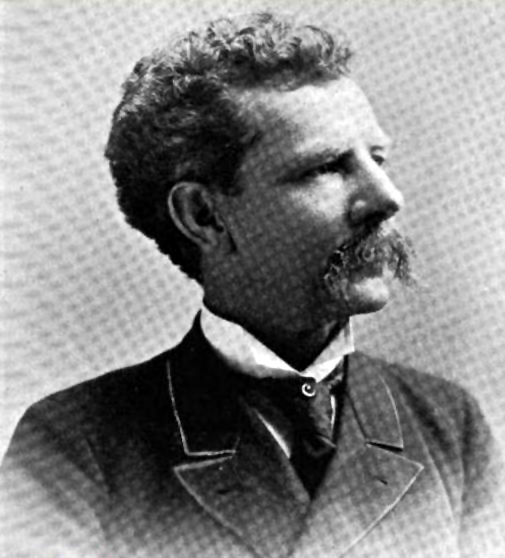
Historical · U.S. House · Louisiana · District 2
Hamilton Coleman
Former U.S. Representative · Louisiana District 2 · 1889–1891 · Republican
Hamilton Coleman represented Louisiana's District 2 in the United States House of Representatives (1889–1891) for the Republican party. The page below collects sourced biographical facts, term history, committee roles, and provenance for Coleman.
Bioguide ID: C000619
Key facts
- Full name
- Hamilton Coleman
- State
- Louisiana
- District
- District 2
- Party
- Republican
- House service
- 1889–1891
- First House term
- 1889
- Status
- Left office
- Current term ends
- —
- Born
- 1845
- Bioguide ID
- C000619
- Committee assignments
- —
- Dataset version
- 1.20260606
Biographical narrative
914 words · sourced from the Wikipedia REST extract
Hamilton Coleman was a businessman and politician who served as a U.S. Representative for Louisiana's 2nd congressional district from 1889 to 1891. A member of the Republican Party, he was notable for being the last Republican to represent Louisiana in Congress until 1973 and the last Republican to represent New Orleans in the House until 2008. His career spanned various roles, including military service during the American Civil War and involvement in local business ventures, particularly in the manufacturing of farm equipment and electric lighting.
Early life and career
Hamilton Dudley Coleman was born on May 12, 1845. His early life was marked by the tumultuous events of the American Civil War, during which he served in the Washington Artillery, a unit that was part of the Army of Northern Virginia. This experience in the Confederate Army culminated in his participation in the surrender at Appomattox, Virginia, a significant event that marked the end of the Civil War in 1865. Following the war, Coleman returned to New Orleans, a city that would become central to his business and political endeavors.
In the post-war period, Coleman transitioned into the business sector, where he made a name for himself as a manufacturer and dealer of farm equipment. This role was particularly important in a region where agriculture was a key component of the economy. His business acumen extended beyond farming; he was also involved in the establishment of New Orleans's first electric lighting company, reflecting a forward-thinking approach to urban development and modernization. These ventures not only contributed to the local economy but also positioned him as a prominent figure in the community.
Coleman's political aspirations began to take shape in the late 1880s. His involvement in the Republican Party during a time when the party was struggling to gain traction in the South was significant. The political landscape of Louisiana was complex, with the aftermath of the Civil War and Reconstruction leading to a predominantly Democratic political environment. Despite these challenges, Coleman successfully secured the Republican nomination for the U.S. House of Representatives in 1888, marking the beginning of his political career.
House tenure
Hamilton Coleman's tenure in the U.S. House of Representatives began in 1889, when he was elected to represent Louisiana's 2nd congressional district, which included New Orleans. His election was notable not only for his party affiliation but also for the context in which it occurred. At the time, the Republican Party was largely viewed as a minority party in Louisiana, having faced significant opposition since the end of Reconstruction. Coleman's victory represented a rare instance of Republican success in a predominantly Democratic region.
During his time in Congress, Coleman served a single term, which lasted until March 3, 1891. His legislative activities and contributions during this period, while not extensively documented, were part of the broader efforts of the Republican Party to regain influence in the South. However, Coleman's bid for reelection in 1890 was unsuccessful; he lost to Matthew D. Lagan, the former holder of the seat. This defeat marked the end of his congressional career, but it was not the end of his involvement in public service and politics.
Coleman's tenure was significant in that he was the last Republican to represent Louisiana in Congress until David C. Treen was elected in 1973. His representation also held historical importance as he was the last Republican to serve New Orleans in the House until Joseph Cao's election in 2008. This context illustrates the shifting political dynamics in Louisiana over the decades, as the Republican Party experienced a resurgence in the late 20th century.
Legislative focus and committees
While specific details regarding Coleman's legislative focus and committee assignments during his time in Congress are not extensively recorded, it can be inferred that his background in business and manufacturing likely influenced his interests in economic and infrastructure issues. As a businessman involved in the agricultural sector and electric lighting, he may have been inclined to support legislation that promoted industrial growth, agricultural development, and urban modernization.
In the broader context of the late 19th century, the U.S. Congress was engaged in various significant issues, including economic policies, infrastructure development, and the expansion of the railroads. Representatives from Southern states, like Coleman, often faced the challenge of balancing local interests with national policies, particularly as the nation was undergoing rapid industrialization and urbanization during this period.
After his congressional term, Coleman continued to engage in public service. From 1899 to 1905, he served as the melter and refiner for the New Orleans Mint, a position that allowed him to remain involved in the economic life of the city. His work at the Mint was a continuation of his commitment to public service and his connection to the local economy.
In addition to his congressional and Mint service, Coleman sought higher political office, running for governor and lieutenant governor of Louisiana. However, he was unsuccessful in these bids, which reflects the competitive nature of Louisiana politics during this era. Despite these setbacks, his involvement in various capacities demonstrated his ongoing commitment to public service and the political landscape of Louisiana.
Hamilton Coleman passed away on March 16, 1926, in Biloxi, Mississippi. He was interred at Metairie Cemetery in New Orleans, leaving behind a legacy as a businessman and politician who navigated the complexities of post-Civil War Louisiana. His life and career illustrate the challenges and opportunities faced by Republicans in the South during a period of significant political and social change.
Notable legislation
Sponsored and co-sponsored legislation for Hamilton Coleman is pending operator curation. The biographical narrative above carries the same provenance trail until per-bill rows are written.
Sources
- [1]https://en.wikipedia.org/wiki/Hamilton_D._ColemanWikipedia · retrieved 2026-06-06
Notable quotes
Sourced quotes for Hamilton Coleman are pending operator curation. Narrative-scope provenance remains attached below.
Sources
- [1]https://en.wikipedia.org/wiki/Hamilton_D._ColemanWikipedia · retrieved 2026-06-06
Key positions
Curated policy positions for Hamilton Coleman are pending operator review. The biographical narrative above carries the same provenance trail until per-topic positions are written.
Sources
- [1]https://en.wikipedia.org/wiki/Hamilton_D._ColemanWikipedia · retrieved 2026-06-06
Terms served
- 1889–1891U.S. House · Term 1 · Republican
Sources & provenance
Every attributable claim above carries a per-section [N] marker that resolves to the corresponding URL below. Each entry records the upstream provider, the canonical URL, and the timestamp at which the source was retrieved by the ingest pipeline.
Key facts
- https://bioguide.congress.gov/search/bio/C000619bioguide · retrieved 2026-06-06
- https://www.govtrack.us/congress/members/402748govtrack · retrieved 2026-06-06
Biographical narrative
- https://en.wikipedia.org/wiki/Hamilton_D._Colemanwikipedia · retrieved 2026-06-06
Find your representative
Every U.S. state elects representatives by district. Browse Louisiana’s delegation, the full former-representative roster, or explore the role and term length.
Related on The Candidate
- Preceded by Michael HahnEarlier holder of the Louisiana District 2 House seat · Republican.Open
- Succeeded by Robert DaveyLater holder of the Louisiana District 2 House seat · Democratic.Open
- Adolph MeyerFormer U.S. Representative · Louisiana District 1 · DemocraticOpen
- Albert EstopinalFormer U.S. Representative · Louisiana District 1 · DemocraticOpen
- Benjamin FlandersFormer U.S. Representative · Louisiana District 1 · UnionistOpen
- Bobby JindalFormer U.S. Representative · Louisiana District 1 · RepublicanOpen