
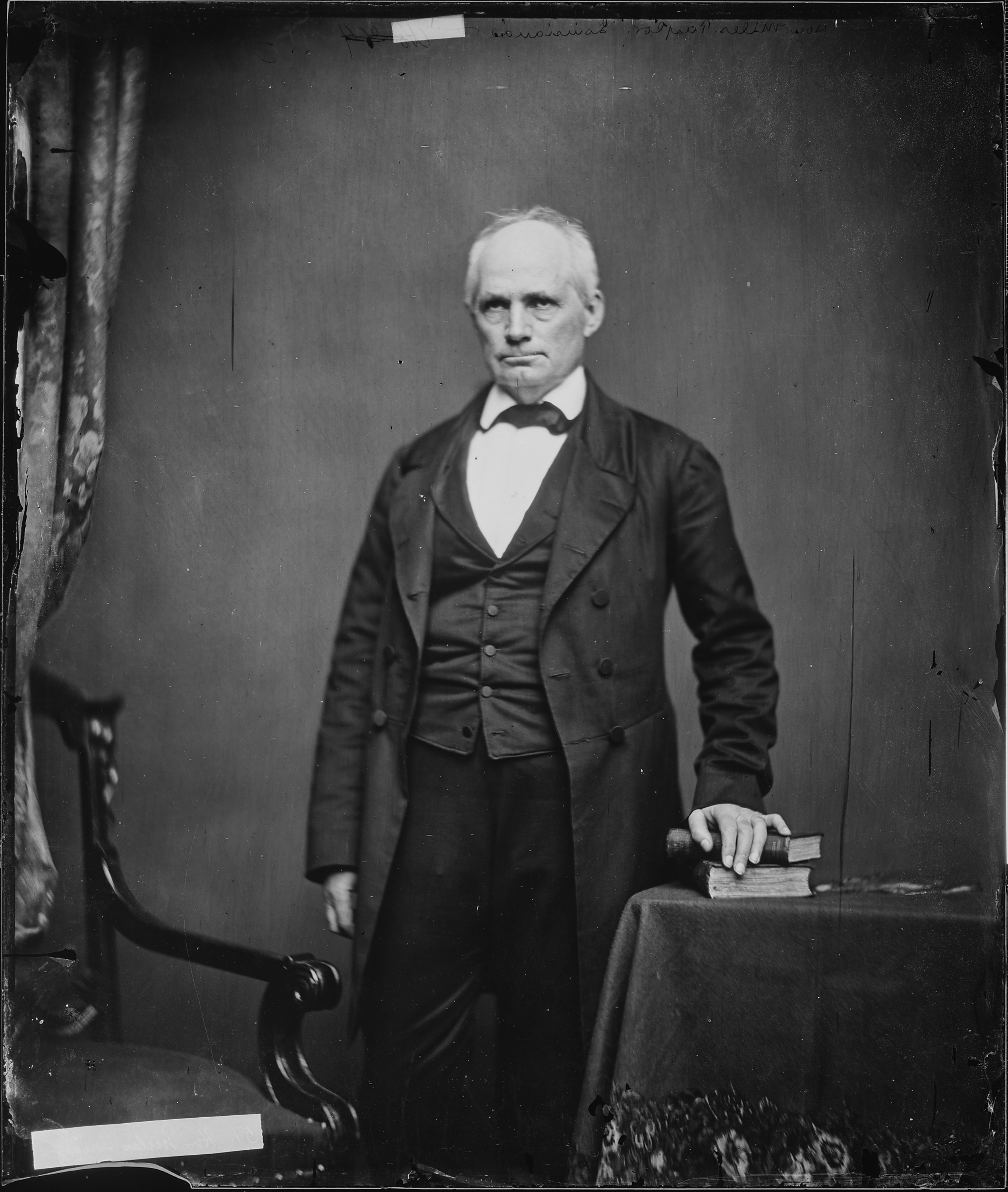
Historical · U.S. House · Louisiana · District 2
Miles Taylor
Former U.S. Representative · Louisiana District 2 · 1855–1861 · Democratic
Miles Taylor represented Louisiana's District 2 in the United States House of Representatives (1855–1861) for the Democratic party. The page below collects sourced biographical facts, term history, committee roles, and provenance for Taylor.
Bioguide ID: T000094
Key facts
- Full name
- Miles Taylor
- State
- Louisiana
- District
- District 2
- Party
- Democratic
- House service
- 1855–1861
- First House term
- 1855
- Status
- Left office
- Current term ends
- —
- Born
- 1805
- Bioguide ID
- T000094
- Committee assignments
- —
- Dataset version
- 1.20260606
Biographical narrative
854 words · sourced from the Wikipedia REST extract
Miles Taylor was a U.S. Representative from Louisiana, serving three terms in the House of Representatives as a member of the Democratic Party. His congressional career spanned from 1855 until his resignation in early 1861, coinciding with the secession of Louisiana from the Union. Born in 1805 in Saratoga Springs, New York, Taylor's life was marked by his political involvement during a tumultuous period in American history, particularly regarding issues surrounding slavery and states' rights. Following his resignation, he returned to Louisiana, where he lived until his death in 1873.
Early life and career
Miles Taylor was born on July 16, 1805, in Saratoga Springs, New York. His early life and education details are not extensively documented, but it is known that he eventually moved to Louisiana, where he would establish his political career. Taylor's marriage to Eliza Ann Bruden on May 21, 1838, in Terrebonne Parish, Louisiana, marked the beginning of his family life. Eliza was 19 years old at the time of their marriage, and the couple had four children together: John, Mary, Thomas, and Searing. Eliza passed away in 1850, leaving Taylor to raise their children.
Before entering politics, Taylor was involved in agricultural pursuits, managing his plantation, Front Scattery, located near Belle Alliance, Louisiana. This plantation became a significant part of his life, as he was later buried in the family graveyard there. The specifics of his early career prior to his congressional service are not well-documented, but his agricultural background likely influenced his perspectives on economic and social issues during his time in office.
House tenure
Miles Taylor's political career in the U.S. House of Representatives began in 1855 when he was elected to represent Louisiana's 2nd congressional district. He served three consecutive terms, during which he was part of a legislative body grappling with the contentious issues of the era, particularly those related to slavery and states' rights. Taylor's alignment with the Democratic Party positioned him within a political framework that largely supported the interests of slaveholding states.
His tenure in Congress was marked by the increasing tensions leading up to the Civil War. Taylor's political actions and statements reflected the sentiments of many Southern politicians who were advocating for the preservation of slavery and the rights of states to govern themselves without federal interference. As the nation moved closer to conflict, Taylor's views became more pronounced. On February 5, 1861, shortly after Louisiana's secession from the Union, he resigned from his congressional seat. His resignation was a clear indication of his commitment to the Southern cause and his belief that the South would resist any attempts by the federal government to impose control over slavery.
Taylor's resignation came at a pivotal moment in American history, as the nation was on the brink of civil war. His departure from Congress was emblematic of the broader political realignment occurring in the South, where many leaders were choosing to prioritize regional loyalty over national governance. Following his resignation, Taylor returned to Louisiana, where he continued to engage with the issues of the time, although specific details about his activities post-Congress are not well-documented.
Legislative focus and committees
During his time in the House of Representatives, Miles Taylor's legislative focus was primarily aligned with the interests of his constituents in Louisiana, reflecting the priorities of the Southern Democratic Party. While specific records of the bills he sponsored or the committees he served on are not detailed in the available information, it can be inferred that his legislative activities would have revolved around issues pertinent to the Southern economy, agriculture, and the institution of slavery.
As a representative from Louisiana, Taylor would have been involved in discussions and decisions that impacted the agricultural economy, which was heavily reliant on slave labor. The political climate of the time was characterized by debates over the expansion of slavery into new territories and states, and Taylor's alignment with the Democratic Party would have placed him in support of pro-slavery policies. His resignation in 1861 further underscored his commitment to these principles, as he expressed a belief that the Southern states would unite in opposition to federal efforts to regulate or abolish slavery.
The broader context of Taylor's legislative focus can be understood within the framework of the pre-Civil War era, where issues of states' rights and federal authority were hotly contested. His actions in Congress and subsequent resignation were reflective of the deep divisions that would ultimately lead to the Civil War. Taylor's legacy is intertwined with this critical period in American history, as he navigated the complex political landscape of a nation divided over fundamental issues of governance, rights, and human dignity.
Following his departure from Congress, Taylor returned to his plantation in Louisiana, where he lived until his death on September 23, 1873. He was buried at Front Scattery, marking the end of a life that was deeply enmeshed in the political and social fabric of his time. His contributions as a U.S. Representative, while limited in documentation, remain a part of the historical narrative surrounding the Civil War and the Southern perspective during this pivotal moment in American history.
Notable legislation
Sponsored and co-sponsored legislation for Miles Taylor is pending operator curation. The biographical narrative above carries the same provenance trail until per-bill rows are written.
Sources
- [1]https://en.wikipedia.org/wiki/Miles_Taylor_(politician)Wikipedia · retrieved 2026-06-06
Notable quotes
Sourced quotes for Miles Taylor are pending operator curation. Narrative-scope provenance remains attached below.
Sources
- [1]https://en.wikipedia.org/wiki/Miles_Taylor_(politician)Wikipedia · retrieved 2026-06-06
Key positions
Curated policy positions for Miles Taylor are pending operator review. The biographical narrative above carries the same provenance trail until per-topic positions are written.
Sources
- [1]https://en.wikipedia.org/wiki/Miles_Taylor_(politician)Wikipedia · retrieved 2026-06-06
Terms served
- 1855–1857U.S. House · Term 1 · Democratic
- 1857–1859U.S. House · Term 2 · Democratic
- 1859–1861U.S. House · Term 3 · Democratic
Sources & provenance
Every attributable claim above carries a per-section [N] marker that resolves to the corresponding URL below. Each entry records the upstream provider, the canonical URL, and the timestamp at which the source was retrieved by the ingest pipeline.
Key facts
- https://bioguide.congress.gov/search/bio/T000094bioguide · retrieved 2026-06-06
- https://www.govtrack.us/congress/members/410677govtrack · retrieved 2026-06-06
Biographical narrative
- https://en.wikipedia.org/wiki/Miles_Taylor_(politician)wikipedia · retrieved 2026-06-06
Find your representative
Every U.S. state elects representatives by district. Browse Louisiana’s delegation, the full former-representative roster, or explore the role and term length.
Related on The Candidate
- Preceded by Theodore HuntEarlier holder of the Louisiana District 2 House seat · Whig.Open
- Succeeded by Michael HahnLater holder of the Louisiana District 2 House seat · Republican.Open
- Adolph MeyerFormer U.S. Representative · Louisiana District 1 · DemocraticOpen
- Albert EstopinalFormer U.S. Representative · Louisiana District 1 · DemocraticOpen
- Benjamin FlandersFormer U.S. Representative · Louisiana District 1 · UnionistOpen
- Bobby JindalFormer U.S. Representative · Louisiana District 1 · RepublicanOpen