
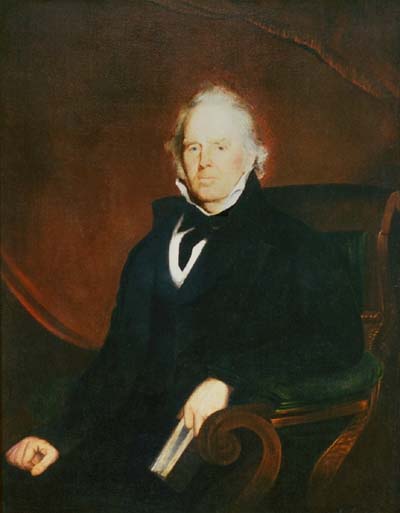
Historical · U.S. House · Louisiana · District 2
Philemon Thomas
Former U.S. Representative · Louisiana District 2 · 1831–1835
Philemon Thomas represented Louisiana's District 2 in the United States House of Representatives (1831–1835). The page below collects sourced biographical facts, term history, committee roles, and provenance for Thomas.
Bioguide ID: T000181
Key facts
- Full name
- Philemon Thomas
- State
- Louisiana
- District
- District 2
- Party
- —
- House service
- 1831–1835
- First House term
- 1831
- Status
- Left office
- Current term ends
- —
- Born
- 1763
- Bioguide ID
- T000181
- Committee assignments
- —
- Dataset version
- 1.20260606
Biographical narrative
993 words · sourced from the Wikipedia REST extract
Philemon Thomas was an American politician and military leader who served as the U.S. Representative for Louisiana's 2nd congressional district from 1831 until 1835. His career spanned significant military engagements and political developments in early American history, including the American Revolutionary War, the Northwest Indian War, and the War of 1812. Thomas's life was marked by his commitment to public service, both in military and political capacities, and he played a notable role in the early governance of Louisiana following its acquisition by the United States.
Early life and career
Philemon Thomas was born on February 9, 1763, in Orange County, Virginia Colony, to Richard Thomas II and Frances Hawkins. His early education took place in common schools, which provided him with a foundational understanding of the world around him. At the age of sixteen, he enlisted as a private in the 6th North Carolina Regiment during the American Revolutionary War. His military service began under the command of General Nathanael Greene, a prominent figure in the Continental Army. Thomas quickly rose through the ranks, achieving the position of ensign and participating in significant battles, including the Battle of Guilford Court House, which was a pivotal confrontation in the Southern campaign of the war.
Following the conclusion of the Revolutionary War, Thomas relocated to the Kentucky District of Virginia around 1783. His move to this frontier region marked the beginning of a new chapter in his life, where he continued to engage in military service during the Northwest Indian War. He fought in the Battle of the Wabash, where his strategic thinking contributed to the survival of some of his fellow soldiers under General Arthur St. Clair's command. This experience further solidified his reputation as a capable military leader.
As Kentucky transitioned from a territory to a state, Thomas was involved in the state's Constitutional Convention in 1799. His participation in this foundational event underscored his commitment to the governance of the region. Subsequently, he served in both the Kentucky House of Representatives and the state Senate, where he continued to influence local politics. Despite his active political career, Thomas made several unsuccessful attempts to secure a seat in the U.S. Congress, running for office in the 2nd congressional district in 1799 and 1801, as well as in the 6th congressional district in 1803 and 1804.
In 1806, Thomas moved to Spanish West Florida, where he engaged in land speculation and established a grocery business in Baton Rouge. His entrepreneurial endeavors coincided with a period of political unrest in the region, which would soon lead to his involvement in a significant military and political event.
House tenure
Philemon Thomas's political career took a decisive turn when he became involved in the West Florida Revolt against Spanish rule. On August 22, 1810, he attended a convention where local officials debated the overthrow of Spanish authority in the region. The convention's overwhelming support for independence led to Thomas being appointed as commander of the militia forces, holding the rank of Colonel Commandant. In this capacity, he recruited volunteers and orchestrated a military operation to seize Fort San Carlos in Baton Rouge, which was lightly defended at the time.
On September 22, 1810, Thomas led his militia in a successful assault on the fort, capturing it and taking several prisoners, including the Spanish governor of Baton Rouge. This military success was a turning point in the revolt, which ultimately led to the declaration of independence for West Florida from Spain. Following this, Thomas was promoted to the rank of General and tasked with suppressing loyalist militias in the area. His military actions during this period were marked by both support and opposition from local populations, reflecting the complex political landscape of the region.
After the annexation of West Florida by the United States, Thomas continued to serve in military roles, eventually reaching the rank of Major General in the Louisiana Militia during the War of 1812. His military career and political involvement laid the groundwork for his election to the U.S. House of Representatives. Thomas was elected to represent Louisiana's 2nd congressional district, beginning his first term in 1831. He served two terms in Congress, concluding his service on March 3, 1835. His tenure in the House occurred during a formative period for Louisiana, as the state was still adjusting to its status as part of the United States following the Louisiana Purchase.
Legislative focus and committees
During his time in the House of Representatives, Philemon Thomas participated in the legislative process at a time when the country was grappling with various issues, including westward expansion, state rights, and economic development. While specific details about the legislation he supported or the committees on which he served are not documented, it can be inferred that his background in military leadership and local governance would have informed his legislative priorities. Given the context of his career, it is likely that he focused on issues pertinent to the interests of his constituents in Louisiana, particularly those related to land use, military affairs, and the integration of new territories into the Union.
In addition to his congressional duties, Thomas was also involved in the Electoral College in 1820, where he cast his vote for James Monroe, indicating his engagement in national politics beyond his congressional service. Furthermore, he made two attempts to run for the governorship of Louisiana in 1824 and 1828, demonstrating his continued ambition to influence the state's political landscape.
Philemon Thomas's life and career reflect a commitment to public service through both military and political avenues. His experiences as a soldier during pivotal moments in American history, combined with his roles in state and national governance, positioned him as a significant figure in the early development of Louisiana. He passed away on November 18, 1847, in Baton Rouge, where he was interred in the Baton Rouge National Cemetery, leaving behind a legacy intertwined with the formative years of both Louisiana and the United States.
Notable legislation
Sponsored and co-sponsored legislation for Philemon Thomas is pending operator curation. The biographical narrative above carries the same provenance trail until per-bill rows are written.
Sources
- [1]https://en.wikipedia.org/wiki/Philemon_ThomasWikipedia · retrieved 2026-06-06
Notable quotes
Sourced quotes for Philemon Thomas are pending operator curation. Narrative-scope provenance remains attached below.
Sources
- [1]https://en.wikipedia.org/wiki/Philemon_ThomasWikipedia · retrieved 2026-06-06
Key positions
Curated policy positions for Philemon Thomas are pending operator review. The biographical narrative above carries the same provenance trail until per-topic positions are written.
Sources
- [1]https://en.wikipedia.org/wiki/Philemon_ThomasWikipedia · retrieved 2026-06-06
Terms served
- 1831–1833U.S. House · Term 1
- 1833–1835U.S. House · Term 2
Sources & provenance
Every attributable claim above carries a per-section [N] marker that resolves to the corresponding URL below. Each entry records the upstream provider, the canonical URL, and the timestamp at which the source was retrieved by the ingest pipeline.
Key facts
- https://bioguide.congress.gov/search/bio/T000181bioguide · retrieved 2026-06-06
- https://www.govtrack.us/congress/members/410762govtrack · retrieved 2026-06-06
Biographical narrative
- https://en.wikipedia.org/wiki/Philemon_Thomaswikipedia · retrieved 2026-06-06
Find your representative
Every U.S. state elects representatives by district. Browse Louisiana’s delegation, the full former-representative roster, or explore the role and term length.
Related on The Candidate
- Preceded by Henry GurleyEarlier holder of the Louisiana District 2 House seat.Open
- Succeeded by Thomas ChinnLater holder of the Louisiana District 2 House seat · Whig.Open
- Adolph MeyerFormer U.S. Representative · Louisiana District 1 · DemocraticOpen
- Albert EstopinalFormer U.S. Representative · Louisiana District 1 · DemocraticOpen
- Benjamin FlandersFormer U.S. Representative · Louisiana District 1 · UnionistOpen
- Bobby JindalFormer U.S. Representative · Louisiana District 1 · RepublicanOpen