
Historical · U.S. House · Louisiana · District 3
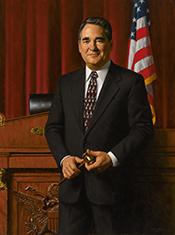
Billy Tauzin
Former U.S. Representative · Louisiana District 3 · 1979–2005 · Republican
Billy Tauzin represented Louisiana's District 3 in the United States House of Representatives (1979–2005) for the Republican party. The page below collects sourced biographical facts, term history, committee roles, and provenance for Tauzin.
Bioguide ID: T000058
Key facts
- Full name
- Billy Tauzin
- State
- Louisiana
- District
- District 3
- Party
- Republican
- House service
- 1979–2005
- First House term
- 1979
- Status
- Left office
- Current term ends
- —
- Born
- 1943
- Bioguide ID
- T000058
- Committee assignments
- —
- Dataset version
- 1.20260605
Biographical narrative
932 words · sourced from the Wikipedia REST extract
Wilbert Joseph Tauzin II, commonly known as Billy Tauzin, is a former American politician and lobbyist who served as a U.S. Representative for Louisiana's 3rd congressional district from 1980 until 2005. Initially a member of the Democratic Party, Tauzin switched to the Republican Party in 1995. Over his 13 terms in Congress, he held various leadership positions and was known for his involvement in significant legislative initiatives, particularly in the areas of healthcare and telecommunications. After leaving Congress, he became a prominent lobbyist, serving as the President and CEO of the Pharmaceutical Research and Manufacturers of America (PhRMA) from 2005 to 2010.
Early life and career
Billy Tauzin was born on June 14, 1943, in Louisiana. He is of Cajun descent and has spent much of his life in Chackbay, a small community near Thibodaux. Tauzin pursued higher education at Nicholls State University, where he earned a Bachelor of Arts degree in 1964. During his time at Nicholls, he was a member of the Tau Kappa Epsilon fraternity. He later attended Louisiana State University, obtaining a Juris Doctor degree in 1967. While in law school, he gained practical experience by working as a legislative aide in the Louisiana State Senate.
Tauzin's political career began in 1972 when he was elected to the Louisiana House of Representatives. He served four full terms in this role, representing his constituents as a Democrat. His early political career was marked by his alignment with fellow Democratic legislators, including Dick Guidry and Leonard J. Chabert. Tauzin's experience in state politics laid the groundwork for his later transition to federal office.
In 1979, following the election of David C. Treen as Louisiana's first Republican governor in over a century, Tauzin sought to move to the U.S. House of Representatives. Treen's resignation from Congress in March 1980 opened the door for a special election, which Tauzin won on May 17, 1980. He was sworn into office shortly thereafter, marking the beginning of his long tenure in the U.S. Congress.
House tenure
Tauzin's congressional career began with a strong electoral showing. He won his first full term in November 1980, receiving a significant majority of the vote against minimal opposition. For the first 15 years of his congressional service, he was recognized as one of the more conservative Democrats in the House. His political alignment often put him at odds with more liberal colleagues, leading him to seek support from Republican members for legislative initiatives. This bipartisan approach helped him navigate the complexities of congressional politics.
In 1994, following a shift in the political landscape that resulted in the Republican Party gaining control of the House, Tauzin co-founded the House Blue Dog Coalition. This group aimed to represent moderate-to-conservative Democrats and sought to maintain a voice for centrist policies within the party. Despite his affiliation with the Democratic Party, Tauzin's conservative stance on various issues allowed him to maintain popularity among his constituents.
In 1987, Tauzin ran for governor of Louisiana but was unsuccessful in his bid, losing to fellow Congressman Buddy Roemer. Following this setback, he continued to serve in Congress, where he remained a prominent figure. On August 8, 1995, he officially switched his party affiliation to Republican, citing a lack of support for conservative values within the Democratic Party. This transition marked a significant shift in his political identity and allowed him to align more closely with the Republican leadership.
Throughout his time in Congress, Tauzin held various leadership roles, including serving as the chairman of the Energy and Commerce Committee from 2001 until early 2004. His tenure in this position was marked by his involvement in critical legislative matters, including deregulation in various sectors such as natural gas, airlines, and telecommunications. He played a key role in the passage of significant legislation, including the Telecommunications Act of 1996 and the Private Securities Litigation Reform Act.
Tauzin's congressional career concluded when he announced he would not seek a 13th full term. He supported his son, Billy Tauzin III, as a candidate to succeed him, although the younger Tauzin was ultimately defeated in the election.
Legislative focus and committees
During his time in the House of Representatives, Tauzin focused on a wide range of legislative issues. His work encompassed areas such as healthcare, telecommunications, energy, and environmental policy. He was particularly influential in shaping legislation related to the healthcare industry, including the Medicare Prescription Drug Bill, which faced criticism for its provisions that limited the government's ability to negotiate drug prices.
Tauzin's leadership on the Energy and Commerce Committee allowed him to address various regulatory issues, including those related to electricity and natural gas markets. His role in the passage of the Telecommunications Act of 1996 was particularly notable, as it aimed to promote competition and innovation within the telecommunications sector.
In addition to his work on healthcare and telecommunications, Tauzin was involved in environmental legislation, including the Clean Air Act and the Superfund program, which aimed to address hazardous waste sites. His legislative efforts reflected a commitment to addressing both economic and environmental concerns.
After leaving Congress, Tauzin transitioned to a prominent role in the private sector as the President and CEO of PhRMA, where he continued to influence healthcare policy. His tenure at PhRMA was marked by his involvement in health care reform negotiations and his advocacy for the pharmaceutical industry.
Throughout his career, Tauzin's legislative focus and leadership roles in Congress helped shape key policies that impacted various sectors of American life. His ability to navigate party lines and work across the aisle contributed to his effectiveness as a legislator and leader.
Notable legislation
Sponsored and co-sponsored legislation for Billy Tauzin is pending operator curation. The biographical narrative above carries the same provenance trail until per-bill rows are written.
Sources
- [1]https://en.wikipedia.org/wiki/Billy_TauzinWikipedia · retrieved 2026-06-05
Notable quotes
Sourced quotes for Billy Tauzin are pending operator curation. Narrative-scope provenance remains attached below.
Sources
- [1]https://en.wikipedia.org/wiki/Billy_TauzinWikipedia · retrieved 2026-06-05
Key positions
Curated policy positions for Billy Tauzin are pending operator review. The biographical narrative above carries the same provenance trail until per-topic positions are written.
Sources
- [1]https://en.wikipedia.org/wiki/Billy_TauzinWikipedia · retrieved 2026-06-05
Terms served
- 1979–1981U.S. House · Term 1 · Democratic
- 1981–1983U.S. House · Term 2 · Democratic
- 1983–1985U.S. House · Term 3 · Democratic
- 1985–1987U.S. House · Term 4 · Democratic
- 1987–1989U.S. House · Term 5 · Democratic
- 1989–1991U.S. House · Term 6 · Democratic
- 1991–1993U.S. House · Term 7 · Democratic
- 1993–1995U.S. House · Term 8 · Democratic
- 1995–1997U.S. House · Term 9 · Republican
- 1997–1999U.S. House · Term 10 · Republican
- 1999–2001U.S. House · Term 11 · Republican
- 2001–2003U.S. House · Term 12 · Republican
- 2003–2005U.S. House · Term 13 · Republican
Sources & provenance
Every attributable claim above carries a per-section [N] marker that resolves to the corresponding URL below. Each entry records the upstream provider, the canonical URL, and the timestamp at which the source was retrieved by the ingest pipeline.
Key facts
- https://bioguide.congress.gov/search/bio/T000058bioguide · retrieved 2026-06-05
- http://www.house.gov/tauzinhouse.gov · retrieved 2026-06-05
Biographical narrative
- https://en.wikipedia.org/wiki/Billy_Tauzinwikipedia · retrieved 2026-06-05
Find your representative
Every U.S. state elects representatives by district. Browse Louisiana’s delegation, the full former-representative roster, or explore the role and term length.
Related on The Candidate
- Preceded by Patrick CafferyEarlier holder of the Louisiana District 3 House seat · Democratic.Open
- Succeeded by Charles Boustany Jr.Later holder of the Louisiana District 3 House seat · Republican.Open
- Adolph MeyerFormer U.S. Representative · Louisiana District 1 · DemocraticOpen
- Albert EstopinalFormer U.S. Representative · Louisiana District 1 · DemocraticOpen
- Benjamin FlandersFormer U.S. Representative · Louisiana District 1 · UnionistOpen
- Bobby JindalFormer U.S. Representative · Louisiana District 1 · RepublicanOpen