
Historical · U.S. House · Louisiana · District 3
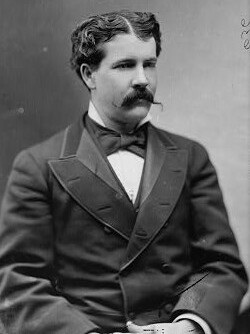
Joseph Acklen
Former U.S. Representative · Louisiana District 3 · 1877–1881 · Democratic
Joseph Acklen represented Louisiana's District 3 in the United States House of Representatives (1877–1881) for the Democratic party. The page below collects sourced biographical facts, term history, committee roles, and provenance for Acklen.
Bioguide ID: A000023
Key facts
- Full name
- Joseph Acklen
- State
- Louisiana
- District
- District 3
- Party
- Democratic
- House service
- 1877–1881
- First House term
- 1877
- Status
- Left office
- Current term ends
- —
- Born
- 1850
- Bioguide ID
- A000023
- Committee assignments
- —
- Dataset version
- 1.20260606
Biographical narrative
865 words · sourced from the Wikipedia REST extract
Joseph Acklen was a U.S. Representative from Louisiana, serving as a member of the Democratic Party. His congressional career spanned two terms from 1878 to 1881, during which he represented Louisiana's 3rd congressional district. Acklen's background included significant involvement in law, plantation management, and various public service roles after his time in Congress.
Early life and career
Joseph Hayes Acklen was born on May 20, 1850, in Nashville, Tennessee, to a prominent family. His parents, Adelicia and Joseph Alexander Smith Acklen, were affluent plantation owners, and their wealth afforded Acklen a privileged upbringing. He had a brother named William Hayes Acklen. During his formative years, Acklen spent time both in Nashville and on the family plantations located in Louisiana, which would later influence his career choices.
The American Civil War had a profound impact on Acklen's family. His parents aligned with the Confederacy, and his father fled to their Louisiana plantation, where he passed away in 1863. This tumultuous period shaped Acklen's early experiences and perspectives. Following the war, Acklen received his education through private tutors, which was common among children of wealthy families at the time. He attended Burlington Military College in New Jersey during the years 1864 and 1865. Acklen furthered his education abroad, graduating from École de Neuilly in Paris and Swiss University in Vevey. He returned to the United States and completed his legal education at Cumberland University’s law school in Lebanon, Tennessee, graduating in 1871.
After obtaining his law degree, Acklen began his legal career in Nashville before relocating to Memphis, Tennessee. However, he soon shifted his focus from law to agriculture, managing his family's sugar plantations near Pattersonville in St. Mary Parish, Louisiana. His involvement in local governance included serving as a colonel in the Louisiana Militia in 1876, reflecting his engagement in both civic and military affairs.
House tenure
Acklen's entry into politics was marked by the contentious political climate following the 1876 presidential election. In November of that year, he and other Democrats contested the reelection of Republican Chester Bidwell Darrall, alleging voting fraud. This dispute was part of the broader political struggles of the Reconstruction era. Following a protracted resolution of the election controversies, Acklen was appointed to fill Darrall's seat in the U.S. House of Representatives on February 20, 1878, for the remainder of the Forty-fifth Congress.
During his time in Congress, Acklen served two terms, concluding his service on March 3, 1881. He was reelected to the Forty-sixth Congress, where he continued to represent Louisiana's 3rd congressional district. After completing his second term, Acklen chose not to seek renomination in 1880. His departure from Congress allowed Darrall to regain the seat for the Forty-seventh Congress. Following his congressional career, Acklen made an unsuccessful bid for election to the Forty-eighth Congress in 1882.
Legislative focus and committees
While specific details regarding Acklen's legislative focus and committee assignments during his time in Congress are not provided, his background suggests that his interests may have aligned with issues pertinent to his constituents in Louisiana, particularly those related to agriculture and the economic conditions of the post-Reconstruction South. As a plantation owner and lawyer, Acklen likely had insights into the challenges faced by the agricultural sector, which was a significant part of Louisiana's economy at the time.
After leaving Congress, Acklen declined an appointment by President Rutherford B. Hayes to serve as a federal district court judge, opting instead to return to the practice of law in Franklin, Louisiana. He later moved back to Nashville in 1885, where he continued his legal career and became actively involved in local politics. Acklen held the position of chairman of the Democratic executive committee of Davidson County from 1886 to 1894 and served on the Nashville City Council from 1900 to 1904. His leadership extended to the Tennessee State Bar Association, where he served as president in 1901 and 1902.
In addition to his legal and political endeavors, Acklen was involved in various public service roles, including serving as the general insurance counsel of Tennessee from 1903 to 1907 and as the state warden of the Tennessee Department of Game, Fish, and Forestry from 1903 to 1913. His commitment to conservation and wildlife management was further demonstrated through his role as general counsel for the National Association of Game and Fish Commissioners from 1905 to 1912, culminating in his election as president of the association.
Under President Woodrow Wilson, Acklen served as the chief game warden of the United States from 1913 to 1914, reflecting his continued dedication to environmental and wildlife issues. Throughout his life, he authored numerous articles on topics such as ornithology, fish culture, forestry, and field sports, showcasing his expertise and passion for these subjects.
In the later years of his life, Acklen was involved in the Tennessee constitutional convention as chairman of the state central committee from 1923 to 1927. He passed away on September 28, 1938, in Nashville, where he was interred at Mount Olivet Cemetery. His family's former property, the Belmont Mansion, is now part of Belmont University and serves as a museum, highlighting the historical significance of Acklen's legacy in both his family and the broader context of Tennessee history.
Notable legislation
Sponsored and co-sponsored legislation for Joseph Acklen is pending operator curation. The biographical narrative above carries the same provenance trail until per-bill rows are written.
Sources
- [1]https://en.wikipedia.org/wiki/Joseph_H._AcklenWikipedia · retrieved 2026-06-06
Notable quotes
Sourced quotes for Joseph Acklen are pending operator curation. Narrative-scope provenance remains attached below.
Sources
- [1]https://en.wikipedia.org/wiki/Joseph_H._AcklenWikipedia · retrieved 2026-06-06
Key positions
Curated policy positions for Joseph Acklen are pending operator review. The biographical narrative above carries the same provenance trail until per-topic positions are written.
Sources
- [1]https://en.wikipedia.org/wiki/Joseph_H._AcklenWikipedia · retrieved 2026-06-06
Terms served
- 1877–1879U.S. House · Term 1 · Democratic
- 1879–1881U.S. House · Term 2 · Democratic
Sources & provenance
Every attributable claim above carries a per-section [N] marker that resolves to the corresponding URL below. Each entry records the upstream provider, the canonical URL, and the timestamp at which the source was retrieved by the ingest pipeline.
Key facts
- https://bioguide.congress.gov/search/bio/A000023bioguide · retrieved 2026-06-06
- https://www.govtrack.us/congress/members/400684govtrack · retrieved 2026-06-06
Biographical narrative
- https://en.wikipedia.org/wiki/Joseph_H._Acklenwikipedia · retrieved 2026-06-06
Find your representative
Every U.S. state elects representatives by district. Browse Louisiana’s delegation, the full former-representative roster, or explore the role and term length.
Related on The Candidate
- Preceded by Thomas DavidsonEarlier holder of the Louisiana District 3 House seat · Democratic.Open
- Succeeded by Edward GayLater holder of the Louisiana District 3 House seat · Democratic.Open
- Adolph MeyerFormer U.S. Representative · Louisiana District 1 · DemocraticOpen
- Albert EstopinalFormer U.S. Representative · Louisiana District 1 · DemocraticOpen
- Benjamin FlandersFormer U.S. Representative · Louisiana District 1 · UnionistOpen
- Bobby JindalFormer U.S. Representative · Louisiana District 1 · RepublicanOpen