
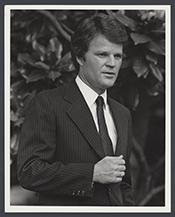
Historical · U.S. House · Louisiana · District 4
Buddy Roemer III
Former U.S. Representative · Louisiana District 4 · 1981–1989 · Democratic
Buddy Roemer III represented Louisiana's District 4 in the United States House of Representatives (1981–1989) for the Democratic party. The page below collects sourced biographical facts, term history, committee roles, and provenance for III.
Bioguide ID: R000384
Key facts
- Full name
- Buddy Roemer III
- State
- Louisiana
- District
- District 4
- Party
- Democratic
- House service
- 1981–1989
- First House term
- 1981
- Status
- Left office
- Current term ends
- —
- Born
- 1943
- Bioguide ID
- R000384
- Committee assignments
- —
- Dataset version
- 1.20260605
Biographical narrative
884 words · sourced from the Wikipedia REST extract
Buddy Roemer was an American politician who served as a U.S. Representative for Louisiana's 4th congressional district from 1981 to 1989. A member of the Democratic Party during his time in Congress, Roemer later became the 52nd governor of Louisiana, serving from 1988 to 1992. His political career was marked by a willingness to break from party lines, particularly in support of certain Republican initiatives. After leaving Congress, he switched his party affiliation to Republican and later sought the presidential nominations of both the Republican Party and the Reform Party in 2012. Roemer was also active in various civic organizations, including serving on the Advisory Council of Represent.Us, an anti-corruption group.
Early life and career
Buddy Roemer was born on October 4, 1943, in Shreveport, Louisiana, to Charles Elson "Budgie" Roemer, II, and Adeline McDade. He grew up on the family plantation, Scopena, located near Bossier City. Roemer attended public schools and graduated as valedictorian from Bossier High School in 1960. He pursued higher education at Harvard University, where he earned a Bachelor of Arts degree in economics in 1964. Following this, he attended Harvard Business School, obtaining an MBA in finance in 1967.
After completing his education, Roemer returned to Louisiana to work in his father's computer business. He later founded two banks, showcasing his entrepreneurial spirit. His political career began to take shape when he was elected as a delegate to the Louisiana Constitutional Convention in 1972, which convened in 1973. During this time, he collaborated with notable figures from the Shreveport area, including future U.S. District Judge Tom Stagg and former Louisiana State Representative Frank Fulco.
Roemer's family had a history of political involvement; his father had been the campaign manager for Edwin Edwards and served as commissioner of administration during Edwards' first term as governor. Buddy Roemer himself worked on Edwards' campaign as a regional leader and later established a political consulting firm, further solidifying his connections in Louisiana politics.
House tenure
Roemer's tenure in the U.S. House of Representatives began in 1981 when he was elected to represent Louisiana's 4th congressional district, which encompasses the northwestern part of the state, including Shreveport and Bossier City. His entry into Congress followed a competitive election process. In 1978, he initially ran for the same congressional seat vacated by the popular incumbent Joe Waggonner. However, he finished third in the nonpartisan blanket primary, trailing behind Democratic State Representative Buddy Leach and Republican Jimmy Wilson. Roemer's criticism of the Red River navigation program, which Waggonner supported, contributed to his defeat in that election.
In 1980, Roemer again contested the congressional seat, this time in a primary that included Leach and Wilson, as well as State Senator Foster Campbell. Although he did not win the primary, he secured enough support to defeat Leach in the general election, winning by a significant margin.
Once in office, Roemer served four terms in Congress, winning re-election without opposition in 1982, 1984, and 1986. His time in the House was characterized by a complex relationship with the Democratic leadership. Roemer often aligned himself with the policies of President Ronald Reagan, diverging from the positions of many of his fellow Democrats. Notably, he supported Reagan's tax cuts in 1981, which were met with resistance from Speaker of the House Tip O'Neill and other Democratic leaders. Roemer's willingness to break from party lines extended to foreign policy as well; in 1984, he supported U.S. aid to El Salvador, describing it as a "freedom-loving country."
Roemer's political stance often placed him at odds with the Democratic leadership, leading to his characterization as a "boll weevil," a term used to describe conservative Democrats who broke ranks with their party. His tenure also included a notable moment in 1988 when he expressed that Democratic presidential nominee Michael Dukakis made a better choice in selecting U.S. Senator Lloyd Bentsen as his running mate than Republican nominee George H. W. Bush did with Senator Dan Quayle.
Legislative focus and committees
During his time in the House, Roemer was assigned to the Public Works and Transportation Committee, a decision made by the Democratic leadership after he voted with the Republican minority on certain procedural matters. His committee assignments allowed him to engage with various issues pertinent to his district and the broader national landscape.
Roemer's legislative focus included a mix of local and national concerns. He was particularly attentive to issues affecting Louisiana, including infrastructure and economic development. His background in finance and banking informed his approach to economic policy, and he often advocated for initiatives that would benefit his constituents.
Despite his alignment with certain Republican policies, Roemer maintained his Democratic affiliation throughout his congressional career. His ability to navigate the complexities of party politics and his willingness to support bipartisan initiatives contributed to his reputation as a pragmatic legislator. After leaving the House in 1989 to assume the governorship of Louisiana, Roemer was succeeded by Jim McCrery, who had served as his administrative assistant.
Roemer's legislative career was marked by a blend of traditional Democratic values and a willingness to embrace conservative principles when he believed they would serve his constituents' interests. His unique position within the party and his approach to governance left a lasting impact on Louisiana politics, influencing both his subsequent gubernatorial tenure and his later political endeavors.
Notable legislation
Sponsored and co-sponsored legislation for Buddy Roemer III is pending operator curation. The biographical narrative above carries the same provenance trail until per-bill rows are written.
Sources
- [1]https://en.wikipedia.org/wiki/Buddy_RoemerWikipedia · retrieved 2026-06-05
Notable quotes
Sourced quotes for Buddy Roemer III are pending operator curation. Narrative-scope provenance remains attached below.
Sources
- [1]https://en.wikipedia.org/wiki/Buddy_RoemerWikipedia · retrieved 2026-06-05
Key positions
Curated policy positions for Buddy Roemer III are pending operator review. The biographical narrative above carries the same provenance trail until per-topic positions are written.
Sources
- [1]https://en.wikipedia.org/wiki/Buddy_RoemerWikipedia · retrieved 2026-06-05
Terms served
- 1981–1983U.S. House · Term 1 · Democratic
- 1983–1985U.S. House · Term 2 · Democratic
- 1985–1987U.S. House · Term 3 · Democratic
- 1987–1989U.S. House · Term 4 · Democratic
Sources & provenance
Every attributable claim above carries a per-section [N] marker that resolves to the corresponding URL below. Each entry records the upstream provider, the canonical URL, and the timestamp at which the source was retrieved by the ingest pipeline.
Key facts
- https://bioguide.congress.gov/search/bio/R000384bioguide · retrieved 2026-06-05
- https://www.govtrack.us/congress/members/409354govtrack · retrieved 2026-06-05
Biographical narrative
- https://en.wikipedia.org/wiki/Buddy_Roemerwikipedia · retrieved 2026-06-05
Find your representative
Every U.S. state elects representatives by district. Browse Louisiana’s delegation, the full former-representative roster, or explore the role and term length.
Related on The Candidate
- Preceded by Anthony Leach Jr.Earlier holder of the Louisiana District 4 House seat · Democratic.Open
- Succeeded by John FlemingLater holder of the Louisiana District 4 House seat · Republican.Open
- Adolph MeyerFormer U.S. Representative · Louisiana District 1 · DemocraticOpen
- Albert EstopinalFormer U.S. Representative · Louisiana District 1 · DemocraticOpen
- Benjamin FlandersFormer U.S. Representative · Louisiana District 1 · UnionistOpen
- Bobby JindalFormer U.S. Representative · Louisiana District 1 · RepublicanOpen