
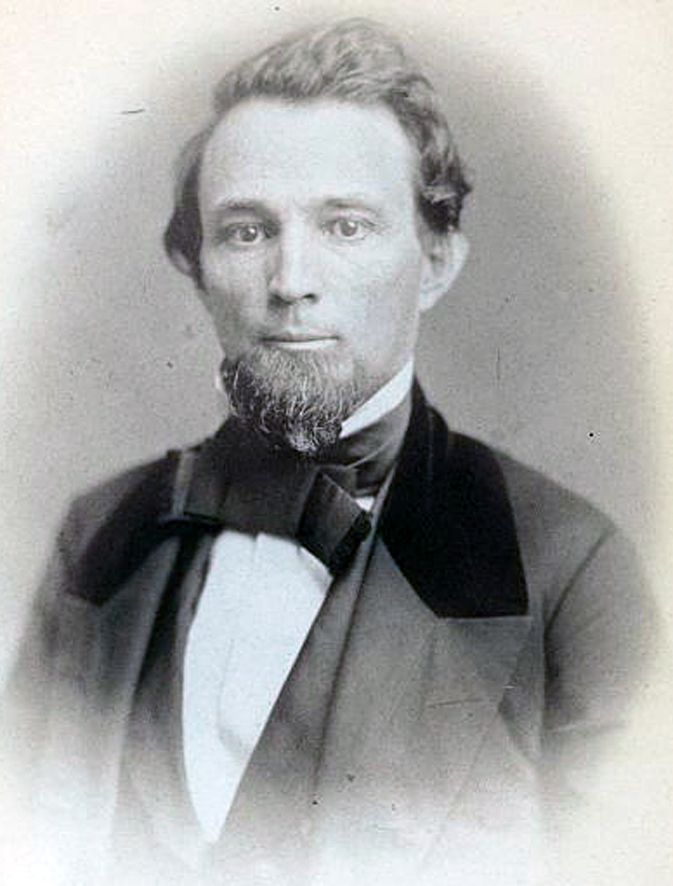
Historical · U.S. House · Louisiana · District 4
John Sandidge
Former U.S. Representative · Louisiana District 4 · 1855–1859 · Democratic
John Sandidge represented Louisiana's District 4 in the United States House of Representatives (1855–1859) for the Democratic party. The page below collects sourced biographical facts, term history, committee roles, and provenance for Sandidge.
Bioguide ID: S000042
Key facts
- Full name
- John Sandidge
- State
- Louisiana
- District
- District 4
- Party
- Democratic
- House service
- 1855–1859
- First House term
- 1855
- Status
- Left office
- Current term ends
- —
- Born
- 1817
- Bioguide ID
- S000042
- Committee assignments
- —
- Dataset version
- 1.20260606
Biographical narrative
982 words · sourced from the Wikipedia REST extract
John Sandidge was a prominent political figure in the mid-19th century, serving as a U.S. Representative from Louisiana's 4th congressional district. A member of the Democratic Party, Sandidge's political career spanned several significant events in American history, including the Mexican-American War and the Civil War. His tenure in the U.S. House of Representatives lasted from 1855 to 1859, during which he was involved in various legislative activities and held leadership roles within congressional committees.
Early life and career
John Sandidge was born on January 7, 1817, near Carnesville, Georgia. His early life in Georgia laid the foundation for his later endeavors in Louisiana, where he eventually relocated. Upon moving to Louisiana, Sandidge became a planter, engaging in agricultural pursuits that were common in the region during that era. His involvement in local agriculture likely provided him with insights into the economic and social issues facing his community, which would later inform his political career.
Sandidge's political journey began in the state legislature, where he served as a member of the Louisiana House of Representatives from 1846 until 1855. His leadership capabilities were recognized during this time, as he held the position of Speaker of the House for two years. This role would have involved presiding over legislative sessions, guiding discussions, and managing the legislative agenda, further establishing his reputation as a capable leader.
In addition to his legislative responsibilities, Sandidge participated in the state's constitutional convention in 1852 as a delegate. This convention was significant in shaping Louisiana's governance and legal framework, and Sandidge's involvement indicated his commitment to the political process and the development of state law.
Sandidge's military service also played a role in his early career. He served as a colonel during the Mexican-American War, an experience that not only contributed to his leadership skills but also connected him with a broader network of military and political figures. This military background likely enhanced his standing in the eyes of constituents and fellow politicians alike.
House tenure
John Sandidge was elected to the U.S. House of Representatives as a Democrat, beginning his first term on March 4, 1855. He represented Louisiana's 4th congressional district and served in the Thirty-fourth and Thirty-fifth Congresses until March 3, 1859. His election to Congress came at a time of significant national tension, as the United States was grappling with issues related to slavery, states' rights, and sectionalism.
During his time in the House, Sandidge was involved in various legislative matters, contributing to discussions and decisions that would shape the nation. His role as a congressman included participation in debates and the formulation of policies that addressed the needs and concerns of his constituents in Louisiana.
In the Thirty-fifth Congress, Sandidge was appointed as the chairman of the Committee on Private Land Claims. This committee was responsible for addressing issues related to land ownership and claims, which were particularly relevant in the context of westward expansion and the settlement of new territories. His leadership in this committee would have required a thorough understanding of land laws and the complexities surrounding land ownership disputes, reflecting his commitment to addressing the interests of his constituents.
Sandidge's congressional career came to an end with the conclusion of his second term in 1859. His time in the House was marked by a growing national divide that would soon escalate into the Civil War, a conflict that would profoundly impact the United States and its political landscape.
Legislative focus and committees
Throughout his tenure in the U.S. House of Representatives, John Sandidge's legislative focus was influenced by the pressing issues of his time, particularly those related to land claims and the rights of individuals in the context of expanding territories. As chairman of the Committee on Private Land Claims, he played a pivotal role in addressing matters that affected landowners and settlers in Louisiana and beyond. This committee's work was crucial during a period when land ownership was a contentious issue, particularly in the wake of the Mexican-American War and the acquisition of new territories.
Sandidge's experience as a planter and his background in state politics likely informed his approach to legislative matters. He understood the agricultural economy and the challenges faced by farmers and landowners, which would have guided his advocacy for policies that supported their interests. His leadership in the committee allowed him to influence legislation that aimed to resolve land disputes and clarify ownership rights, thereby contributing to the stability and growth of the region.
In addition to his work on land claims, Sandidge's broader legislative activities would have encompassed a range of issues pertinent to his constituents. Given the socio-political climate of the time, he would have been involved in discussions surrounding economic development, infrastructure, and the implications of national policies on the southern states.
Sandidge's military service during the Mexican-American War and his subsequent role as a colonel in the Civil War further shaped his perspective on national issues. His experiences in the military likely influenced his views on governance and the role of the federal government in addressing the needs of states, particularly those in the South.
After his congressional career, Sandidge continued to serve his community and state during the Civil War. He held the position of Chief of Ordnance on the staff of Brigadier General Henry Watkins Allen, the Governor of Louisiana. In this capacity, he was responsible for overseeing military supplies and logistics, which were critical during the war. His involvement in the conflict underscored his commitment to his state and its interests during a tumultuous period in American history.
John Sandidge passed away on March 30, 1898, in Bastrop, Louisiana. His contributions to Louisiana's political landscape, both as a state legislator and a U.S. Representative, reflect the complexities of the era in which he lived. He was interred in Christ Church Cemetery, leaving behind a legacy tied to the evolving narrative of American governance and regional representation.
Notable legislation
Sponsored and co-sponsored legislation for John Sandidge is pending operator curation. The biographical narrative above carries the same provenance trail until per-bill rows are written.
Sources
- [1]https://en.wikipedia.org/wiki/John_M._SandidgeWikipedia · retrieved 2026-06-06
Notable quotes
Sourced quotes for John Sandidge are pending operator curation. Narrative-scope provenance remains attached below.
Sources
- [1]https://en.wikipedia.org/wiki/John_M._SandidgeWikipedia · retrieved 2026-06-06
Key positions
Curated policy positions for John Sandidge are pending operator review. The biographical narrative above carries the same provenance trail until per-topic positions are written.
Sources
- [1]https://en.wikipedia.org/wiki/John_M._SandidgeWikipedia · retrieved 2026-06-06
Terms served
- 1855–1857U.S. House · Term 1 · Democratic
- 1857–1859U.S. House · Term 2 · Democratic
Sources & provenance
Every attributable claim above carries a per-section [N] marker that resolves to the corresponding URL below. Each entry records the upstream provider, the canonical URL, and the timestamp at which the source was retrieved by the ingest pipeline.
Key facts
- https://bioguide.congress.gov/search/bio/S000042bioguide · retrieved 2026-06-06
- https://www.govtrack.us/congress/members/409558govtrack · retrieved 2026-06-06
Biographical narrative
- https://en.wikipedia.org/wiki/John_M._Sandidgewikipedia · retrieved 2026-06-06
Find your representative
Every U.S. state elects representatives by district. Browse Louisiana’s delegation, the full former-representative roster, or explore the role and term length.
Related on The Candidate
- Preceded by Roland JonesEarlier holder of the Louisiana District 4 House seat · Democratic.Open
- Succeeded by John LandrumLater holder of the Louisiana District 4 House seat · Democratic.Open
- Adolph MeyerFormer U.S. Representative · Louisiana District 1 · DemocraticOpen
- Albert EstopinalFormer U.S. Representative · Louisiana District 1 · DemocraticOpen
- Benjamin FlandersFormer U.S. Representative · Louisiana District 1 · UnionistOpen
- Bobby JindalFormer U.S. Representative · Louisiana District 1 · RepublicanOpen