
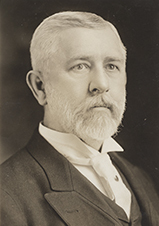
Historical · U.S. House · Louisiana · District 4
John Watkins
Former U.S. Representative · Louisiana District 4 · 1905–1921 · Democratic
John Watkins represented Louisiana's District 4 in the United States House of Representatives (1905–1921) for the Democratic party. The page below collects sourced biographical facts, term history, committee roles, and provenance for Watkins.
Bioguide ID: W000193
Key facts
- Full name
- John Watkins
- State
- Louisiana
- District
- District 4
- Party
- Democratic
- House service
- 1905–1921
- First House term
- 1905
- Status
- Left office
- Current term ends
- —
- Born
- 1854
- Bioguide ID
- W000193
- Committee assignments
- —
- Dataset version
- 1.20260606
Biographical narrative
975 words · sourced from the Wikipedia REST extract
John Watkins was a prominent American lawyer and politician who served as a U.S. Representative for Louisiana's 4th congressional district from 1905 until 1921. A member of the Democratic Party, he was known for his legal background and his long tenure in Congress, during which he held significant committee positions and engaged in various legislative activities. His career was marked by a commitment to his constituents and a series of political challenges, particularly during the tumultuous years surrounding World War I.
Early life and career
John Thomas Watkins was born on January 15, 1854, in Minden, Louisiana, to J. D. Watkins and Mary Morrow Watkins. His father was a notable figure in the state, having served as both a judge and a State Senator. Growing up in a politically active family, Watkins was exposed to the legal and political realms from an early age. He attended Minden Male Academy, where he received his early education, and later pursued higher education at Cumberland University in Tennessee for three years. His studies focused on law, and he was admitted to the bar in 1878, marking the beginning of his professional legal career.
Watkins initially joined his father's law practice in Minden, where he began to establish himself in the legal community. His legal career was complemented by his involvement in local affairs and his commitment to public service. In 1879, he married Elizabeth Murrell, with whom he shared a deep connection, as both had been baptized in the same Baptist church on the same day during their childhood. Together, they had several children, although their family faced significant losses over the years.
Before entering Congress, Watkins had a successful career in the judiciary. He was elected as a judge of the district court three times, serving from 1892 until 1904. His judicial experience provided him with a strong foundation for his later political career. After leaving the bench, he returned to practicing law but soon turned his attention to a political career. In 1902, he contemplated running for Congress against the long-serving incumbent Phanor Breazeale but ultimately decided against it. Instead, he focused on his role within the Louisiana Baptist Convention, where he delivered a keynote address and was elected president for the 1902-1903 term. This experience likely helped him build the political connections necessary for his future congressional campaign.
House tenure
Watkins's political career took a significant turn when he decided to challenge Breazeale in the 1904 election. Running as a Democrat, he successfully defeated Breazeale, securing 58 percent of the vote. He officially took office on March 4, 1905, beginning his first term in the Fifty-ninth Congress. Over the course of his political career, Watkins was re-elected to seven additional terms, serving in the House until March 3, 1921. His long tenure in Congress is indicative of his ability to connect with voters and navigate the political landscape of his time.
During his time in the House, Watkins ascended to the position of chairman of the Committee on Revision of the Laws, a role he held from the Sixty-second through the Sixty-fifth Congresses. This position allowed him to influence legislative processes and contribute to the development of legal frameworks within the federal government. His leadership in this committee underscored his legal expertise and provided him with a platform to advocate for various legislative initiatives.
Watkins's political career was not without its challenges. In the 1912 presidential election, he supported Champ Clark, the Speaker of the House at the time. However, when Clark lost the nomination to Woodrow Wilson, Watkins found himself at odds with the new administration. This tension escalated when Watkins initially opposed Wilson's proposal for U.S. involvement in World War I, aligning himself with Clark's stance. As a result, Watkins faced political vulnerabilities, particularly during the 1918 Democratic primary, where he was challenged by John N. Sandlin, a Louisiana judge who had previously supported Wilson. Despite a contentious campaign, Watkins narrowly defeated Sandlin in the primary.
However, the political landscape shifted again in 1920 when Sandlin ran against Watkins once more. This time, Sandlin emerged victorious, defeating Watkins by a significant margin, which marked the end of Watkins's congressional career.
Legislative focus and committees
Throughout his time in Congress, Watkins was involved in various legislative activities and committee work, reflecting his interests and priorities as a representative. His role as chairman of the Committee on Revision of the Laws allowed him to engage deeply with legal matters and influence the legislative framework of the United States. This committee was responsible for reviewing and revising existing laws, ensuring they met the needs of the time and were effectively implemented.
Watkins's legislative focus included issues relevant to his constituents in Louisiana, as well as broader national concerns. His support for Champ Clark during the 1912 presidential election demonstrated his alignment with certain Democratic priorities, particularly those related to economic and social policies. However, his opposition to Wilson's administration during World War I highlighted the complexities of political alliances and the challenges faced by lawmakers during periods of national crisis.
After his defeat in the 1920 election, Watkins chose to remain in Washington, D.C., where he continued to practice law. The years following his congressional tenure were marked by personal tragedy, as he lost his wife, Elizabeth, shortly after the election, and faced the deaths of other family members, including a daughter in 1916 and a son in 1923. Despite these hardships, he maintained connections to his community and continued to contribute to the legal profession.
John T. Watkins passed away on April 25, 1925, in Washington, D.C. His remains were returned to Louisiana, where he was interred in Murrell Cemetery in Minden. His life and career reflect the complexities of American politics in the early 20th century, as well as the personal and professional challenges faced by public servants of that era.
Notable legislation
Sponsored and co-sponsored legislation for John Watkins is pending operator curation. The biographical narrative above carries the same provenance trail until per-bill rows are written.
Sources
- [1]https://en.wikipedia.org/wiki/John_T._WatkinsWikipedia · retrieved 2026-06-06
Notable quotes
Sourced quotes for John Watkins are pending operator curation. Narrative-scope provenance remains attached below.
Sources
- [1]https://en.wikipedia.org/wiki/John_T._WatkinsWikipedia · retrieved 2026-06-06
Key positions
Curated policy positions for John Watkins are pending operator review. The biographical narrative above carries the same provenance trail until per-topic positions are written.
Sources
- [1]https://en.wikipedia.org/wiki/John_T._WatkinsWikipedia · retrieved 2026-06-06
Terms served
- 1905–1907U.S. House · Term 1 · Democratic
- 1907–1909U.S. House · Term 2 · Democratic
- 1909–1911U.S. House · Term 3 · Democratic
- 1911–1913U.S. House · Term 4 · Democratic
- 1913–1915U.S. House · Term 5 · Democratic
- 1915–1917U.S. House · Term 6 · Democratic
- 1917–1919U.S. House · Term 7 · Democratic
- 1919–1921U.S. House · Term 8 · Democratic
Sources & provenance
Every attributable claim above carries a per-section [N] marker that resolves to the corresponding URL below. Each entry records the upstream provider, the canonical URL, and the timestamp at which the source was retrieved by the ingest pipeline.
Key facts
- https://bioguide.congress.gov/search/bio/W000193bioguide · retrieved 2026-06-06
- https://www.govtrack.us/congress/members/411365govtrack · retrieved 2026-06-06
Biographical narrative
- https://en.wikipedia.org/wiki/John_T._Watkinswikipedia · retrieved 2026-06-06
Find your representative
Every U.S. state elects representatives by district. Browse Louisiana’s delegation, the full former-representative roster, or explore the role and term length.
Related on The Candidate
- Preceded by Phanor BreazealeEarlier holder of the Louisiana District 4 House seat · Democratic.Open
- Succeeded by John SandlinLater holder of the Louisiana District 4 House seat · Democratic.Open
- Adolph MeyerFormer U.S. Representative · Louisiana District 1 · DemocraticOpen
- Albert EstopinalFormer U.S. Representative · Louisiana District 1 · DemocraticOpen
- Benjamin FlandersFormer U.S. Representative · Louisiana District 1 · UnionistOpen
- Bobby JindalFormer U.S. Representative · Louisiana District 1 · RepublicanOpen