
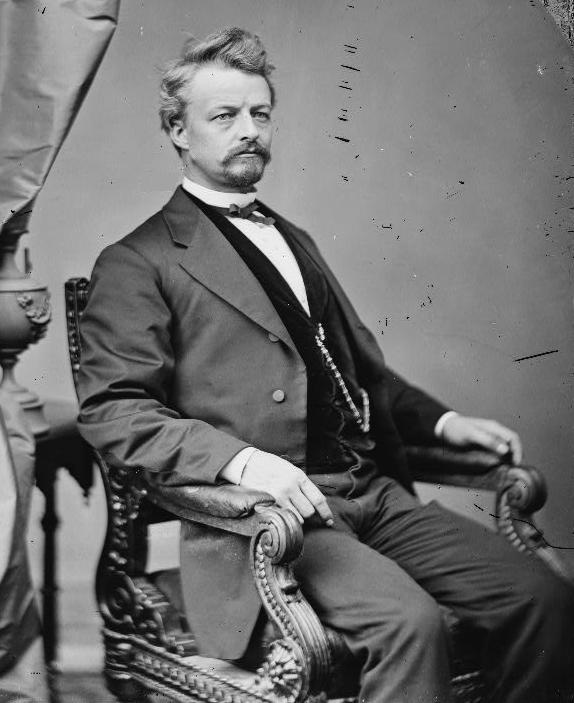
Historical · U.S. House · Louisiana · District 4
Joseph Newsham
Former U.S. Representative · Louisiana District 4 · 1867–1871 · Republican
Joseph Newsham represented Louisiana's District 4 in the United States House of Representatives (1867–1871) for the Republican party. The page below collects sourced biographical facts, term history, committee roles, and provenance for Newsham.
Bioguide ID: N000072
Key facts
- Full name
- Joseph Newsham
- State
- Louisiana
- District
- District 4
- Party
- Republican
- House service
- 1867–1871
- First House term
- 1867
- Status
- Left office
- Current term ends
- —
- Born
- 1837
- Bioguide ID
- N000072
- Committee assignments
- —
- Dataset version
- 1.20260606
Biographical narrative
890 words · sourced from the Wikipedia REST extract
Joseph Newsham was a 19th-century American politician, lawyer, merchant, and planter who served as a U.S. Representative from Louisiana. A member of the Republican Party, he held office during a transformative period in American history, marked by the aftermath of the Civil War and the Reconstruction era. Newsham's political career included two non-consecutive terms in the U.S. House of Representatives, where he represented Louisiana's congressional districts during a time of significant change and development in the South. His life spanned from May 24, 1837, until October 22, 1919, and his contributions to both local and national politics reflect the complexities of the era in which he lived.
Early life and career
Joseph Newsham was born on May 24, 1837, in Preston, England. His family immigrated to the United States in 1839, settling in Monroe County, Illinois. This move marked the beginning of Newsham's journey in a new country, where he would eventually pursue a career in law and politics. He received a solid academic education, which laid the groundwork for his future endeavors. Following his education, Newsham worked in a mercantile establishment for two years, gaining valuable experience in commerce that would later inform his work as a merchant and planter.
In 1860, Newsham began studying law and was subsequently admitted to the bar, allowing him to commence his legal practice in Edwardsville, Illinois. His legal career was interrupted by the outbreak of the Civil War, during which he served in the Union Army. Newsham held the position of adjutant in the 32nd Missouri Volunteer Infantry, where he contributed to the war effort. His military service was marked by a significant injury sustained in action on July 4, 1864, which ultimately led to his resignation later that year due to the disabling nature of his injuries.
Following the Civil War, Newsham relocated to Donaldsonville, Louisiana, in 1864. This move was part of a broader trend of migration and resettlement in the South during the Reconstruction era. In Louisiana, he took on the role of clerk for the fourth judicial district court of the Parish of Ascension, further establishing his legal credentials. In 1865, he was admitted to the Louisiana bar and began practicing law in Donaldsonville. His involvement in local governance and the legal system positioned him as a prominent figure in the community.
In 1867, Newsham moved to St. Francisville, Louisiana, where he continued to build his career. His political engagement deepened when he participated in the Louisiana Constitutional Convention from 1867 to 1868. This convention was a crucial event in shaping the state's post-war governance and legal framework, reflecting the broader national efforts to rebuild and redefine the Southern states after the Civil War.
House tenure
Joseph Newsham's entry into national politics occurred after Louisiana's readmission to the Union. In 1868, he was elected as a Republican to the U.S. House of Representatives, representing Louisiana's 3rd congressional district. His first term in Congress lasted until 1869, during which he was part of a legislative body grappling with the challenges of Reconstruction and the integration of formerly Confederate states back into the Union.
Newsham's political career in Congress was not continuous; he was not re-elected after his first term. However, he remained active in political circles and continued to influence local governance. In 1870, he successfully ran for a seat in the U.S. House of Representatives again, this time representing Louisiana's 4th congressional district. His second term lasted until March 3, 1871. After completing this term, Newsham chose not to seek renomination in 1870, concluding his congressional career at that time.
During his time in the House, Newsham was involved in the legislative processes that sought to address the numerous issues facing the nation in the post-war period. The Reconstruction era was characterized by significant political, social, and economic upheaval, and Newsham's role as a representative was part of the larger effort to navigate these complexities.
Legislative focus and committees
While specific details regarding Newsham's legislative focus and committee assignments during his time in Congress are not provided, it can be inferred that as a member of the Republican Party during the Reconstruction era, he would have been involved in discussions and legislation related to civil rights, economic recovery, and the reintegration of Southern states into the Union. The Republican Party at that time was primarily associated with the efforts to secure rights for formerly enslaved individuals and to rebuild the Southern economy.
After his congressional service, Newsham returned to Louisiana, where he continued his work as a planter and merchant in St. Francisville. His involvement in agriculture and commerce reflected the economic realities of the South during the late 19th century, as the region sought to recover from the devastation of the Civil War. Newsham remained active in these fields until his retirement in 1913, marking a significant transition from public service to private enterprise.
Joseph Newsham passed away on October 22, 1919, in St. Francisville, Louisiana. His contributions to the state and the nation during a pivotal time in American history are remembered through his service in the U.S. House of Representatives and his involvement in local governance and the legal profession. He was interred in Grace Church Cemetery in St. Francisville, leaving behind a legacy intertwined with the complexities of the Reconstruction era and the development of Louisiana in the years that followed.
Notable legislation
Sponsored and co-sponsored legislation for Joseph Newsham is pending operator curation. The biographical narrative above carries the same provenance trail until per-bill rows are written.
Sources
- [1]https://en.wikipedia.org/wiki/Joseph_P._NewshamWikipedia · retrieved 2026-06-06
Notable quotes
Sourced quotes for Joseph Newsham are pending operator curation. Narrative-scope provenance remains attached below.
Sources
- [1]https://en.wikipedia.org/wiki/Joseph_P._NewshamWikipedia · retrieved 2026-06-06
Key positions
Curated policy positions for Joseph Newsham are pending operator review. The biographical narrative above carries the same provenance trail until per-topic positions are written.
Sources
- [1]https://en.wikipedia.org/wiki/Joseph_P._NewshamWikipedia · retrieved 2026-06-06
Terms served
- 1867–1869U.S. House · Term 1 · Republican
- 1869–1871U.S. House · Term 2 · Republican
Sources & provenance
Every attributable claim above carries a per-section [N] marker that resolves to the corresponding URL below. Each entry records the upstream provider, the canonical URL, and the timestamp at which the source was retrieved by the ingest pipeline.
Key facts
- https://bioguide.congress.gov/search/bio/N000072bioguide · retrieved 2026-06-06
- https://www.govtrack.us/congress/members/408159govtrack · retrieved 2026-06-06
Biographical narrative
- https://en.wikipedia.org/wiki/Joseph_P._Newshamwikipedia · retrieved 2026-06-06
Find your representative
Every U.S. state elects representatives by district. Browse Louisiana’s delegation, the full former-representative roster, or explore the role and term length.
Related on The Candidate
- Preceded by John LandrumEarlier holder of the Louisiana District 4 House seat · Democratic.Open
- Succeeded by Aleck BoarmanLater holder of the Louisiana District 4 House seat · Liberal Republican.Open
- Adolph MeyerFormer U.S. Representative · Louisiana District 1 · DemocraticOpen
- Albert EstopinalFormer U.S. Representative · Louisiana District 1 · DemocraticOpen
- Benjamin FlandersFormer U.S. Representative · Louisiana District 1 · UnionistOpen
- Bobby JindalFormer U.S. Representative · Louisiana District 1 · RepublicanOpen