
Historical · U.S. House · Louisiana · District 4
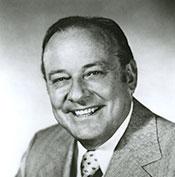
Joseph Waggonner Jr.
Former U.S. Representative · Louisiana District 4 · 1961–1979 · Democratic
Joseph Waggonner Jr. represented Louisiana's District 4 in the United States House of Representatives (1961–1979) for the Democratic party. The page below collects sourced biographical facts, term history, committee roles, and provenance for Jr..
Bioguide ID: W000018
Key facts
- Full name
- Joseph Waggonner Jr.
- State
- Louisiana
- District
- District 4
- Party
- Democratic
- House service
- 1961–1979
- First House term
- 1961
- Status
- Left office
- Current term ends
- —
- Born
- 1918
- Bioguide ID
- W000018
- Committee assignments
- —
- Dataset version
- 1.20260605
Biographical narrative
941 words · sourced from the Wikipedia REST extract
Joseph David Waggonner Jr. was a Democratic U.S. Representative who served Louisiana's 4th congressional district from December 1961 until January 1979. He was notable for his long tenure in Congress, having been elected to nine consecutive terms. Waggonner's political career was marked by his alignment with a coalition of conservative Democrats and Republicans, often referred to as the "Boll Weevils." His legislative focus included fiscal conservatism and a hawkish stance on foreign policy, particularly regarding the Vietnam War. Beyond his congressional service, Waggonner's background included military service during World War II and the Korean War, as well as involvement in local education and community affairs.
Early life and career
Joe D. Waggonner Jr. was born on September 7, 1918, in Plain Dealing, Louisiana, to Joe David Waggonner Sr. and Elizzibeth Johnston. He completed his early education at Plain Dealing High School and pursued higher education at Louisiana Tech University, graduating in 1941. During his time at university, he was a member of the Kappa Sigma fraternity. Waggonner married Mary Ruth Carter on December 14, 1942, and the couple later settled in Benton, Louisiana, and subsequently in Bossier City.
Waggonner's military service began with his enlistment in the U.S. Navy during World War II, where he achieved the rank of lieutenant commander. He continued his service during the Korean War, demonstrating a commitment to his country through his military career. Following his time in the Navy, Waggonner worked as a petroleum product wholesaler, establishing a foothold in the business community.
His political career commenced in 1954 when he was elected to the Bossier Parish School Board. He served as president of the board from 1956 to 1957, gaining experience in public administration and education policy. In 1959, Waggonner sought the position of Louisiana state comptroller but was unsuccessful in the Democratic primary against Roy R. Theriot. However, he continued to build his political profile and was elected to the Louisiana State Board of Education in 1960, where he unseated the incumbent. Waggonner's leadership roles included serving as president of both the Louisiana School Boards Association and the United Schools Committee of Louisiana in 1961. His tenure in these positions was characterized by his support for segregationist policies, and he played a role in founding the White Citizens Council in the late 1950s.
House tenure
Waggonner's congressional career began with a special election on December 19, 1961, to fill the vacancy left by the late U.S. Representative Overton Brooks. Waggonner had previously indicated his intention to challenge Brooks in the upcoming Democratic primary due to Brooks' support for expanding the House Rules Committee, which was seen as favoring more liberal members. In the special election, Waggonner faced a significant challenge from Republican candidate Charlton Lyons but ultimately secured victory with a majority of the votes.
Throughout his nine terms in Congress, Waggonner faced opposition in only a few elections, successfully defending his seat against primary challengers. His political alignment often placed him in coalition with conservative Democrats and Republicans, a group that became known as the "Boll Weevils." This coalition was characterized by its fiscal conservatism and opposition to many federal social programs, as well as civil rights legislation during the mid-1960s.
Waggonner's approach to governance was marked by a hawkish stance on foreign policy, particularly regarding the Vietnam War. He was known for his support of military involvement and defense spending, reflecting the sentiments of many constituents in his district. His political strategy often involved aligning with Republican initiatives, which positioned him as a key player in bipartisan efforts during a time of significant political polarization.
In addition to his legislative work, Waggonner served as an informal whip for President Richard Nixon during the impeachment investigation. He initially believed he could gather a substantial number of Democratic votes against impeachment, but as the situation evolved, it became clear that Nixon's support was waning. This experience highlighted Waggonner's role in the complex dynamics of congressional politics during a tumultuous period in American history.
Legislative focus and committees
Throughout his time in the House of Representatives, Waggonner's legislative focus was primarily on issues related to fiscal responsibility and national defense. He was known for his conservative approach to government spending and often opposed initiatives that he perceived as expanding the federal government's role in social programs. His alignment with the Boll Weevils allowed him to collaborate with Republican colleagues on various issues, fostering a political environment that emphasized conservative fiscal policies.
Waggonner's stance on civil rights legislation was also notable, as he opposed many of the significant reforms proposed during the 1960s. His support for segregationist policies during his earlier political career influenced his legislative decisions, and he maintained a conservative viewpoint on issues related to race and social justice.
In addition to his fiscal and social policy positions, Waggonner's hawkish perspective on foreign affairs, particularly concerning the Vietnam War, shaped his contributions to discussions on military funding and defense strategies. He advocated for a strong military presence and was supportive of U.S. involvement in international conflicts, reflecting the views of many of his constituents who prioritized national security.
Waggonner's congressional career concluded on January 3, 1979, after serving nearly two decades in the House. His tenure was characterized by a commitment to his constituents in Louisiana's 4th district, as well as a willingness to navigate the complexities of bipartisan politics during a time of significant change in American society. Following his departure from Congress, Waggonner remained a notable figure in Louisiana politics until his death on October 7, 2007. His contributions to the state and his role in national politics continue to be recognized in discussions of Louisiana's political history.
Notable legislation
Sponsored and co-sponsored legislation for Joseph Waggonner Jr. is pending operator curation. The biographical narrative above carries the same provenance trail until per-bill rows are written.
Sources
- [1]https://en.wikipedia.org/wiki/Joe_WaggonnerWikipedia · retrieved 2026-06-05
Notable quotes
Sourced quotes for Joseph Waggonner Jr. are pending operator curation. Narrative-scope provenance remains attached below.
Sources
- [1]https://en.wikipedia.org/wiki/Joe_WaggonnerWikipedia · retrieved 2026-06-05
Key positions
Curated policy positions for Joseph Waggonner Jr. are pending operator review. The biographical narrative above carries the same provenance trail until per-topic positions are written.
Sources
- [1]https://en.wikipedia.org/wiki/Joe_WaggonnerWikipedia · retrieved 2026-06-05
Terms served
- 1961–1963U.S. House · Term 1 · Democratic
- 1963–1965U.S. House · Term 2 · Democratic
- 1965–1967U.S. House · Term 3 · Democratic
- 1967–1969U.S. House · Term 4 · Democratic
- 1969–1971U.S. House · Term 5 · Democratic
- 1971–1973U.S. House · Term 6 · Democratic
- 1973–1975U.S. House · Term 7 · Democratic
- 1975–1977U.S. House · Term 8 · Democratic
- 1977–1979U.S. House · Term 9 · Democratic
Sources & provenance
Every attributable claim above carries a per-section [N] marker that resolves to the corresponding URL below. Each entry records the upstream provider, the canonical URL, and the timestamp at which the source was retrieved by the ingest pipeline.
Key facts
- https://bioguide.congress.gov/search/bio/W000018bioguide · retrieved 2026-06-05
- https://www.govtrack.us/congress/members/411197govtrack · retrieved 2026-06-05
Biographical narrative
- https://en.wikipedia.org/wiki/Joe_Waggonnerwikipedia · retrieved 2026-06-05
Find your representative
Every U.S. state elects representatives by district. Browse Louisiana’s delegation, the full former-representative roster, or explore the role and term length.
Related on The Candidate
- Preceded by John SandlinEarlier holder of the Louisiana District 4 House seat · Democratic.Open
- Succeeded by Anthony Leach Jr.Later holder of the Louisiana District 4 House seat · Democratic.Open
- Adolph MeyerFormer U.S. Representative · Louisiana District 1 · DemocraticOpen
- Albert EstopinalFormer U.S. Representative · Louisiana District 1 · DemocraticOpen
- Benjamin FlandersFormer U.S. Representative · Louisiana District 1 · UnionistOpen
- Bobby JindalFormer U.S. Representative · Louisiana District 1 · RepublicanOpen