
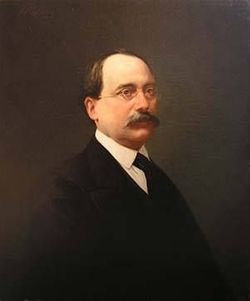
Historical · U.S. House · Louisiana · District 4
William Levy
Former U.S. Representative · Louisiana District 4 · 1875–1877 · Democratic
William Levy represented Louisiana's District 4 in the United States House of Representatives (1875–1877) for the Democratic party. The page below collects sourced biographical facts, term history, committee roles, and provenance for Levy.
Bioguide ID: L000269
Key facts
- Full name
- William Levy
- State
- Louisiana
- District
- District 4
- Party
- Democratic
- House service
- 1875–1877
- First House term
- 1875
- Status
- Left office
- Current term ends
- —
- Born
- 1827
- Bioguide ID
- L000269
- Committee assignments
- —
- Dataset version
- 1.20260606
Biographical narrative
825 words · sourced from the Wikipedia REST extract
William Levy was an American lawyer, jurist, and veteran of the Confederate Civil War who served as a U.S. Representative from Louisiana's 4th congressional district from 1875 to 1877. A member of the Democratic Party, Levy's congressional tenure was marked by significant political events, including his involvement in the contentious Tilden-Hayes controversy, which played a crucial role in the end of Reconstruction in the South. Following his time in Congress, he continued his public service as a member of the state constitutional convention and later as an associate justice of the Louisiana Supreme Court.
Early life and career
William Mallory Levy was born on October 31, 1827, in Isle of Wight, Virginia. He was the son of John B. Levy and completed his preparatory studies before pursuing higher education. Levy graduated from the College of William and Mary in Williamsburg, Virginia, in 1844. Following his graduation, he began a career in law, gaining admission to the bar in 1851. He initially practiced law in Norfolk, Virginia, before relocating to Natchitoches, Louisiana, in 1852, where he continued his legal career.
Levy's early political involvement began when he served as a member of the Louisiana House of Representatives from 1859 to 1861. His political activities during this time were aligned with the Democratic Party, and he was also a Democratic Presidential Elector in the 1860 election. His military service included participation in the Mexican-American War, where he served as a second lieutenant in Company F of the First Regiment of Virginia Volunteers. During the American Civil War, Levy joined the Confederate States Army, where he was commissioned as a captain of Company A, Second Louisiana Infantry, on May 11, 1861. He later rose to the rank of major in the Adjutant General's Department, reflecting his commitment to the Confederate cause.
House tenure
Levy's congressional career began when he was elected as a Democrat to the Forty-fourth Congress, serving from March 4, 1875, until March 3, 1877. His election came during a period of significant political upheaval in the United States, particularly in the South, where the aftermath of the Civil War and Reconstruction was still being felt. Levy's time in Congress was characterized by his involvement in key legislative and political events, most notably the Tilden-Hayes controversy, which revolved around the disputed presidential election of 1876.
During the contentious election, Levy played a pivotal role in negotiating a compromise that ultimately affected the political landscape of Louisiana and the broader South. His efforts contributed to a political trade-off that allowed the state’s electoral votes to be cast in favor of Republican candidate Rutherford B. Hayes, while simultaneously facilitating the declaration of Democratic candidate Francis T. Nicholls as the winner of the Louisiana gubernatorial election. This compromise was significant as it effectively marked the end of Reconstruction in Louisiana, leading to the withdrawal of federal troops and the restoration of Democratic control in the state government.
Levy's term in Congress concluded when he was not renominated in 1876, marking the end of his brief legislative career. Despite his limited time in office, his actions during the Tilden-Hayes controversy had lasting implications for the political rights of African Americans in the South, as the Compromise of 1877 set back the progress made during Reconstruction and ushered in the era of Jim Crow laws.
Legislative focus and committees
While specific details regarding Levy's committee assignments during his congressional tenure are not extensively documented, his legislative focus appeared to align with the interests of his constituents and the Democratic Party's platform at the time. Given the political climate of the era, it is likely that his work involved issues pertinent to the post-Civil War South, including matters related to civil rights, governance, and the reintegration of Southern states into the Union.
After leaving Congress, Levy continued to be active in public service. In 1879, he was elected as a member of the Louisiana State Constitutional Convention, where he contributed to the development of the state's legal framework during a time of significant change. Later that same year, he was appointed as an associate justice of the Louisiana Supreme Court, a position he held until his death. This role underscored his ongoing commitment to the legal and political development of Louisiana, as he participated in shaping the state's judicial landscape.
Levy's legal career and political activities reflected the complexities of his time, particularly in the context of the South's recovery from the Civil War and the challenges of Reconstruction. His contributions to both the legislative and judicial branches of government illustrate the multifaceted nature of his public service.
William Levy passed away on August 14, 1882, in Saratoga, New York. His funeral service was held at the Protestant Episcopal Church in Natchitoches, Louisiana, where he was interred in the American Cemetery. His life and career remain a part of the historical narrative of Louisiana and the broader context of American politics during a transformative period in the nation's history.
Notable legislation
Sponsored and co-sponsored legislation for William Levy is pending operator curation. The biographical narrative above carries the same provenance trail until per-bill rows are written.
Sources
- [1]https://en.wikipedia.org/wiki/William_M._LevyWikipedia · retrieved 2026-06-06
Notable quotes
Sourced quotes for William Levy are pending operator curation. Narrative-scope provenance remains attached below.
Sources
- [1]https://en.wikipedia.org/wiki/William_M._LevyWikipedia · retrieved 2026-06-06
Key positions
Curated policy positions for William Levy are pending operator review. The biographical narrative above carries the same provenance trail until per-topic positions are written.
Sources
- [1]https://en.wikipedia.org/wiki/William_M._LevyWikipedia · retrieved 2026-06-06
Terms served
- 1875–1877U.S. House · Term 1 · Democratic
Sources & provenance
Every attributable claim above carries a per-section [N] marker that resolves to the corresponding URL below. Each entry records the upstream provider, the canonical URL, and the timestamp at which the source was retrieved by the ingest pipeline.
Key facts
- https://bioguide.congress.gov/search/bio/L000269bioguide · retrieved 2026-06-06
- https://www.govtrack.us/congress/members/406770govtrack · retrieved 2026-06-06
Biographical narrative
- https://en.wikipedia.org/wiki/William_M._Levywikipedia · retrieved 2026-06-06
Find your representative
Every U.S. state elects representatives by district. Browse Louisiana’s delegation, the full former-representative roster, or explore the role and term length.
Related on The Candidate
- Preceded by George SmithEarlier holder of the Louisiana District 4 House seat · Republican.Open
- Succeeded by Joseph ElamLater holder of the Louisiana District 4 House seat · Democratic.Open
- Adolph MeyerFormer U.S. Representative · Louisiana District 1 · DemocraticOpen
- Albert EstopinalFormer U.S. Representative · Louisiana District 1 · DemocraticOpen
- Benjamin FlandersFormer U.S. Representative · Louisiana District 1 · UnionistOpen
- Bobby JindalFormer U.S. Representative · Louisiana District 1 · RepublicanOpen