
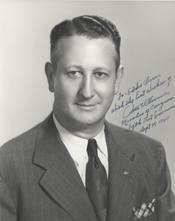
Historical · U.S. House · Louisiana · District 5
Otto Passman
Former U.S. Representative · Louisiana District 5 · 1947–1977 · Democratic
Otto Passman represented Louisiana's District 5 in the United States House of Representatives (1947–1977) for the Democratic party. The page below collects sourced biographical facts, term history, committee roles, and provenance for Passman.
Bioguide ID: P000098
Key facts
- Full name
- Otto Passman
- State
- Louisiana
- District
- District 5
- Party
- Democratic
- House service
- 1947–1977
- First House term
- 1947
- Status
- Left office
- Current term ends
- —
- Born
- 1900
- Bioguide ID
- P000098
- Committee assignments
- —
- Dataset version
- 1.20260605
Biographical narrative
876 words · sourced from the Wikipedia REST extract
Otto E. Passman was an American politician who served as a U.S. Representative for Louisiana's 5th congressional district from 1947 until 1977. A member of the Democratic Party, Passman was known for his long tenure in Congress, spanning three decades, during which he took on significant roles, including chairing the House Appropriations Subcommittee on Foreign Aid. His political career was marked by a strong opposition to foreign aid spending and notable involvement in various legislative matters.
Early life and career
Otto Ernest Passman was born on June 27, 1900, in Franklinton, Louisiana, to Ed and Pheriby Passman. Growing up in a small town, he developed an early interest in public service and community engagement. After completing his education, he graduated from Soule Business College in 1929. Following his graduation, Passman entered the business world, engaging in the manufacture and sale of appliances, which provided him with a foundation in commerce and entrepreneurship.
In the early 1920s, Passman married Willie Lenora Bateman. Their marriage lasted until her death in 1984. Later in life, he married Martha Kathryn Williams, who had been his secretary, in 1984. This personal transition occurred after a significant period of service in the military and the beginning of his political career.
Passman served in the United States Navy during World War II from 1942 to 1944. His military service contributed to his understanding of national issues and foreign relations, which would later influence his legislative focus. After the war, he sought to enter politics, running for a seat in the U.S. House of Representatives. In 1946, he successfully challenged the incumbent Congressman Charles E. McKenzie in the Democratic primary, a victory that was critical in Louisiana, where winning the Democratic primary was often seen as equivalent to winning the general election.
House tenure
Otto Passman's congressional career began in 1947 and lasted until 1977, during which he served a total of 15 terms in the House of Representatives. His lengthy tenure made him a prominent figure in Louisiana politics and a well-known member of the Democratic Party at the national level. Throughout his time in office, Passman was involved in various legislative initiatives and was known for his strong stances on several key issues.
One of the most notable aspects of Passman's congressional career was his role as chair of the House Appropriations Subcommittee on Foreign Aid. In this position, he became a vocal critic of foreign aid spending, arguing against the allocation of funds to foreign nations. His opposition to foreign aid was a defining feature of his legislative agenda, and he often voiced concerns about the impact of such spending on domestic priorities.
Passman’s political career was not without controversy. In the lead-up to the 1976 Democratic primary, he faced accusations of influence peddling, which raised questions about his ethical conduct while in office. Despite these challenges, he remained a significant figure in Louisiana politics until he was defeated by Jerry Huckaby in the 1976 primary election, losing by a narrow margin.
Throughout his tenure, Passman was involved in several high-profile legislative matters, including his vote regarding the Watergate scandal. He was one of only three Representatives who voted against the Judiciary Committee's report on the scandal following President Nixon's resignation, a decision that highlighted his willingness to take a contrarian stance on contentious issues.
Legislative focus and committees
During his time in Congress, Otto Passman focused on a range of issues, with a particular emphasis on fiscal policy and foreign aid. As chair of the House Appropriations Subcommittee on Foreign Aid, he played a crucial role in shaping the debate around U.S. spending on international assistance. His opposition to foreign aid was rooted in a belief that such expenditures detracted from domestic needs and priorities. This position resonated with certain constituents who shared his concerns about government spending.
In addition to his work on foreign aid, Passman was involved in various other legislative committees and initiatives. His long tenure allowed him to accumulate significant experience and influence within the House of Representatives. He participated in discussions and decisions that impacted both local and national issues, reflecting the interests of his constituents in Louisiana's 5th congressional district.
Passman's later years in office were marked by legal challenges and controversies. He faced a lawsuit for terminating his deputy administrative assistant, Shirley Davis, which raised significant legal questions regarding employment discrimination. The case, Davis v. Passman, became notable for its implications regarding the enforcement of constitutional rights against federal officials. The Supreme Court ultimately determined that Davis had a valid claim, which underscored the evolving legal landscape surrounding employment rights and discrimination.
After leaving Congress, Passman continued to be a figure of interest in political circles. He faced allegations related to financial misconduct, specifically concerning the acceptance of funds from Tongsun Park, a South Korean businessman. However, he was found not guilty after a trial in Monroe, which concluded his public service career.
Otto E. Passman's extensive career in the U.S. House of Representatives is characterized by his long-standing commitment to his constituents, his influential role in shaping fiscal policy, and his notable opposition to foreign aid spending. His legacy reflects both the complexities of political life and the challenges faced by public officials in navigating ethical and legal issues.
Notable legislation
Sponsored and co-sponsored legislation for Otto Passman is pending operator curation. The biographical narrative above carries the same provenance trail until per-bill rows are written.
Sources
- [1]https://en.wikipedia.org/wiki/Otto_PassmanWikipedia · retrieved 2026-06-05
Notable quotes
Sourced quotes for Otto Passman are pending operator curation. Narrative-scope provenance remains attached below.
Sources
- [1]https://en.wikipedia.org/wiki/Otto_PassmanWikipedia · retrieved 2026-06-05
Key positions
Curated policy positions for Otto Passman are pending operator review. The biographical narrative above carries the same provenance trail until per-topic positions are written.
Sources
- [1]https://en.wikipedia.org/wiki/Otto_PassmanWikipedia · retrieved 2026-06-05
Terms served
- 1947–1949U.S. House · Term 1 · Democratic
- 1949–1951U.S. House · Term 2 · Democratic
- 1951–1953U.S. House · Term 3 · Democratic
- 1953–1955U.S. House · Term 4 · Democratic
- 1955–1957U.S. House · Term 5 · Democratic
- 1957–1959U.S. House · Term 6 · Democratic
- 1959–1961U.S. House · Term 7 · Democratic
- 1961–1963U.S. House · Term 8 · Democratic
- 1963–1965U.S. House · Term 9 · Democratic
- 1965–1967U.S. House · Term 10 · Democratic
- 1967–1969U.S. House · Term 11 · Democratic
- 1969–1971U.S. House · Term 12 · Democratic
- 1971–1973U.S. House · Term 13 · Democratic
- 1973–1975U.S. House · Term 14 · Democratic
- 1975–1977U.S. House · Term 15 · Democratic
Sources & provenance
Every attributable claim above carries a per-section [N] marker that resolves to the corresponding URL below. Each entry records the upstream provider, the canonical URL, and the timestamp at which the source was retrieved by the ingest pipeline.
Key facts
- https://bioguide.congress.gov/search/bio/P000098bioguide · retrieved 2026-06-05
- https://www.govtrack.us/congress/members/408507govtrack · retrieved 2026-06-05
Biographical narrative
- https://en.wikipedia.org/wiki/Otto_Passmanwikipedia · retrieved 2026-06-05
Find your representative
Every U.S. state elects representatives by district. Browse Louisiana’s delegation, the full former-representative roster, or explore the role and term length.
Related on The Candidate
- Preceded by Charles McKenzieEarlier holder of the Louisiana District 5 House seat · Democratic.Open
- Succeeded by Thomas HuckabyLater holder of the Louisiana District 5 House seat · Democratic.Open
- Adolph MeyerFormer U.S. Representative · Louisiana District 1 · DemocraticOpen
- Albert EstopinalFormer U.S. Representative · Louisiana District 1 · DemocraticOpen
- Benjamin FlandersFormer U.S. Representative · Louisiana District 1 · UnionistOpen
- Bobby JindalFormer U.S. Representative · Louisiana District 1 · RepublicanOpen