
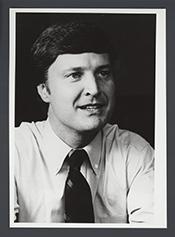
Historical · U.S. House · Louisiana · District 7
James Hayes
Former U.S. Representative · Louisiana District 7 · 1987–1997 · Republican
James Hayes represented Louisiana's District 7 in the United States House of Representatives (1987–1997) for the Republican party. The page below collects sourced biographical facts, term history, committee roles, and provenance for Hayes.
Bioguide ID: H000390
Key facts
- Full name
- James Hayes
- State
- Louisiana
- District
- District 7
- Party
- Republican
- House service
- 1987–1997
- First House term
- 1987
- Status
- Left office
- Current term ends
- —
- Born
- 1946
- Bioguide ID
- H000390
- Committee assignments
- —
- Dataset version
- 1.20260605
Biographical narrative
865 words · sourced from the Wikipedia REST extract
James A. Hayes is a former American politician and lawyer who served as a U.S. Representative for Louisiana's 7th congressional district. A member of the Republican Party, he held office from 1987 until 1997. Hayes is notable for his party switch from the Democratic Party to the Republican Party in the mid-1990s, reflecting a broader trend among conservative Southern Democrats during that period. Throughout his political career, he was involved in various legislative efforts and maintained a presence in political circles even after leaving Congress.
Early life and career
James Allison Hayes was born on December 21, 1946, in Lafayette, Louisiana. He pursued higher education at the University of Louisiana at Lafayette, which was then known as the University of Southwestern Louisiana. Following his academic pursuits, Hayes served in the Louisiana Air National Guard from 1968 to 1974, an experience that likely contributed to his understanding of military and veteran affairs.
Before entering the U.S. House of Representatives, Hayes held a significant position in state government. He served as the Commissioner of Louisiana Financial Institutions from 1984 to 1985 under the administrations of Governors Dave Treen and Edwin Edwards. This role involved overseeing the state's financial institutions and ensuring compliance with regulations, which provided him with valuable experience in governance and public policy.
Hayes's political career took a significant turn in 1986 when he was elected to the United States House of Representatives. He won the election to fill the seat left vacant by John Berlinger Breaux, marking the beginning of his congressional tenure. Initially a member of the Democratic Party, Hayes's early years in Congress were characterized by his alignment with the party's platform and values.
House tenure
James Hayes began his first term in the U.S. House of Representatives in 1987. Over the course of five terms, he was re-elected multiple times, demonstrating a consistent level of support from his constituents in Louisiana's 7th congressional district. His electoral victories included significant contests against notable opponents, such as David Thibodaux and his own brother, Fredric Hayes, who ran as a Republican in 1992. Hayes's ability to secure re-election in a competitive political landscape highlighted his effectiveness as a representative and his connection to the voters in his district.
In 1994, Hayes faced a challenge from former Congressman Clyde C. Holloway, who sought to reclaim his seat after the redistricting that followed the 1990 census. Despite this challenge, Hayes emerged victorious, further solidifying his position within the House. However, his political alignment began to shift during this time, reflecting broader changes within the Democratic Party and the political landscape of the South.
On December 1, 1995, Hayes officially switched his party affiliation from the Democratic Party to the Republican Party. This decision was part of a larger trend among conservative Democrats in the South, who were increasingly aligning with the Republican Party as it gained prominence in national politics. Hayes's switch was significant not only for his career but also for the political dynamics in Louisiana, as it indicated a shift in voter sentiment and party loyalty in the region.
Following his party switch, Hayes ran for the United States Senate in 1996. However, he did not succeed in this bid, finishing fifth in the nonpartisan blanket primary. The election was closely contested, ultimately leading to a runoff between Republican Louis E. "Woody" Jenkins and Democrat Mary Landrieu, with Landrieu winning the general election.
Hayes concluded his tenure in the House on January 3, 1997, after serving five terms. His departure marked the end of an era for his congressional representation, with his seat eventually being filled by Democrat Chris John. Hayes's time in Congress was characterized by his involvement in various legislative initiatives and his role in representing the interests of his constituents.
Legislative focus and committees
During his time in the U.S. House of Representatives, James Hayes was involved in a range of legislative activities and served on several committees. While specific details regarding the committees he served on are not provided, members of Congress typically participate in committees that align with their interests and the needs of their constituents. These committees play a crucial role in shaping legislation, conducting hearings, and overseeing government functions.
Hayes's legislative focus likely reflected the priorities of his district, which included issues pertinent to Louisiana, such as economic development, healthcare, and education. As a representative, he would have engaged in discussions and debates on various bills and policies, advocating for the interests of his constituents while navigating the complexities of federal legislation.
After leaving Congress, Hayes remained active in political circles, transitioning to a role as a lobbyist. His continued involvement in politics demonstrates his ongoing commitment to public service and advocacy. In December 2008, he participated in an event to raise funds for the reelection of Republican U.S. Senator David Vitter, indicating his sustained influence and connections within the political landscape.
James A. Hayes's career in public service reflects the evolving nature of American politics, particularly in the context of party affiliation and regional dynamics. His journey from state government to the U.S. House of Representatives, coupled with his party switch, illustrates the complexities of political identity and representation in the United States.
Notable legislation
Sponsored and co-sponsored legislation for James Hayes is pending operator curation. The biographical narrative above carries the same provenance trail until per-bill rows are written.
Sources
- [1]https://en.wikipedia.org/wiki/Jimmy_HayesWikipedia · retrieved 2026-06-05
Notable quotes
Sourced quotes for James Hayes are pending operator curation. Narrative-scope provenance remains attached below.
Sources
- [1]https://en.wikipedia.org/wiki/Jimmy_HayesWikipedia · retrieved 2026-06-05
Key positions
Curated policy positions for James Hayes are pending operator review. The biographical narrative above carries the same provenance trail until per-topic positions are written.
Sources
- [1]https://en.wikipedia.org/wiki/Jimmy_HayesWikipedia · retrieved 2026-06-05
Terms served
- 1987–1989U.S. House · Term 1 · Democratic
- 1989–1991U.S. House · Term 2 · Democratic
- 1991–1993U.S. House · Term 3 · Democratic
- 1993–1995U.S. House · Term 4 · Democratic
- 1995–1997U.S. House · Term 5 · Republican
Sources & provenance
Every attributable claim above carries a per-section [N] marker that resolves to the corresponding URL below. Each entry records the upstream provider, the canonical URL, and the timestamp at which the source was retrieved by the ingest pipeline.
Key facts
- https://bioguide.congress.gov/search/bio/H000390bioguide · retrieved 2026-06-05
- https://www.govtrack.us/congress/members/405258govtrack · retrieved 2026-06-05
Biographical narrative
- https://en.wikipedia.org/wiki/Jimmy_Hayeswikipedia · retrieved 2026-06-05
Find your representative
Every U.S. state elects representatives by district. Browse Louisiana’s delegation, the full former-representative roster, or explore the role and term length.
Related on The Candidate
- Preceded by Edwin EdwardsEarlier holder of the Louisiana District 7 House seat · Democratic.Open
- Succeeded by Chris JohnLater holder of the Louisiana District 7 House seat · Democratic.Open
- Adolph MeyerFormer U.S. Representative · Louisiana District 1 · DemocraticOpen
- Albert EstopinalFormer U.S. Representative · Louisiana District 1 · DemocraticOpen
- Benjamin FlandersFormer U.S. Representative · Louisiana District 1 · UnionistOpen
- Bobby JindalFormer U.S. Representative · Louisiana District 1 · RepublicanOpen