
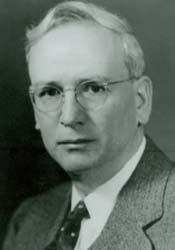
Historical · U.S. House · Louisiana · District 8
Asa Allen
Former U.S. Representative · Louisiana District 8 · 1937–1953 · Democratic
Asa Allen represented Louisiana's District 8 in the United States House of Representatives (1937–1953) for the Democratic party. The page below collects sourced biographical facts, term history, committee roles, and provenance for Allen.
Bioguide ID: A000114
Key facts
- Full name
- Asa Allen
- State
- Louisiana
- District
- District 8
- Party
- Democratic
- House service
- 1937–1953
- First House term
- 1937
- Status
- Left office
- Current term ends
- —
- Born
- 1891
- Bioguide ID
- A000114
- Committee assignments
- —
- Dataset version
- 1.20260605
Biographical narrative
847 words · sourced from the Wikipedia REST extract
Asa Allen was an American educator, attorney, and politician who served as a U.S. Representative for Louisiana's 8th congressional district from 1937 until 1953. A member of the Democratic Party, Allen's political career spanned eight terms in the House of Representatives, during which he was known for his involvement in various legislative matters and his alignment with the Long political organization. Born in 1891, Allen's early life and career were rooted in education and local governance, which laid the foundation for his subsequent political endeavors.
Early life and career
Asa Allen was born on January 5, 1891, in a log cabin near Winnfield, Louisiana, which is located in Winn Parish. He was the son of Asa L. Allen and Sophronia Perkins and was raised in a family that valued education and public service. His brother, Oscar Kelly Allen, later became the Governor of Louisiana, indicating a family legacy of political involvement. Allen's early education took place in the public schools of Winn Parish, where he developed a strong foundation for his future academic pursuits.
In 1914, Allen graduated with a bachelor's degree from Louisiana State University in Baton Rouge. The following year, he married Lottie Mae Thompson, and the couple had two sons, Harwell L. Allen and Lyndon Blaine Allen. Harwell would later serve as a district judge, continuing the family's engagement in public service.
Allen's professional career began in education, where he taught in rural schools in Grant Parish from 1914 to 1917. He later took on leadership roles as a principal in schools located in Georgetown and Verda, near Montgomery. His commitment to education culminated in his position as the superintendent of the Winn Parish school system from 1917 to 1922. During this time, he also pursued legal studies independently and was admitted to the bar in 1922, subsequently establishing a law practice in Winnfield. He served as the city attorney for a period, further solidifying his connection to local governance.
Beyond his professional pursuits, Allen was active in his community and religious life. He was a prominent member of the Baptist Church and served as vice-president of the Louisiana Baptist Convention. His involvement in fraternal organizations included membership in the Scottish Rite Masons and the Shriners, reflecting his commitment to community service and fellowship.
House tenure
Asa Allen's political career at the federal level began when he was elected to the U.S. House of Representatives in 1936, following his role as a delegate to the Democratic National Convention that year. He was part of a significant political movement that supported the re-nomination of Franklin D. Roosevelt and John Nance Garner, who were widely successful in the election. Allen officially took office in 1937 and represented the now-defunct 8th congressional district of Louisiana, which was centered around Alexandria.
During his tenure in Congress, Allen served for a total of eight terms, demonstrating a sustained commitment to his constituents and the Democratic Party. He was known for his alignment with the Long political organization, which was influential in Louisiana politics at the time. Allen's leadership in the House included his role as chairman of the Committee on the Census, where he contributed to discussions and decisions regarding population counts and related legislative matters.
In 1952, Allen chose not to seek a ninth term in Congress. Instead, he deferred to George Shannon "Doc" Long, who was the brother of prominent Louisiana politicians Huey Pierce Long Jr. and Earl Kemp Long. This decision reflected both Allen's loyalty to the Long political legacy and his desire to support the next generation of leadership in Louisiana.
Legislative focus and committees
Throughout his congressional career, Asa Allen was involved in a variety of legislative issues, reflecting the political climate and social concerns of his time. One notable aspect of his legislative focus was his opposition to the repeal of the Chinese Exclusion Act in 1943. This stance indicated his alignment with certain immigration policies and the complexities of race relations in the United States during that era.
In addition to his opposition to the repeal of the Chinese Exclusion Act, Allen introduced the Renunciation Act of 1944, which addressed issues related to citizenship and immigration. His legislative efforts were indicative of the broader national discussions surrounding immigration policy and civil rights during the mid-20th century.
Allen's contributions to the House of Representatives were marked by his commitment to his constituents and his engagement with significant legislative matters. His tenure spanned a transformative period in American history, and he played a role in shaping policies that affected the lives of many Americans.
After leaving Congress, Asa Allen returned to his roots in Louisiana, where he continued to be recognized for his contributions to the community and the state. He passed away on January 5, 1969, in Winnfield, Louisiana, on his 78th birthday. His legacy includes his posthumous induction into the Louisiana Political Museum and Hall of Fame in 1994, a recognition of his impact on Louisiana politics. Additionally, the municipal building in Winnfield bears his name, serving as a lasting tribute to his service and dedication to his community.
Notable legislation
Sponsored and co-sponsored legislation for Asa Allen is pending operator curation. The biographical narrative above carries the same provenance trail until per-bill rows are written.
Sources
- [1]https://en.wikipedia.org/wiki/A._Leonard_AllenWikipedia · retrieved 2026-06-05
Notable quotes
Sourced quotes for Asa Allen are pending operator curation. Narrative-scope provenance remains attached below.
Sources
- [1]https://en.wikipedia.org/wiki/A._Leonard_AllenWikipedia · retrieved 2026-06-05
Key positions
Curated policy positions for Asa Allen are pending operator review. The biographical narrative above carries the same provenance trail until per-topic positions are written.
Sources
- [1]https://en.wikipedia.org/wiki/A._Leonard_AllenWikipedia · retrieved 2026-06-05
Terms served
- 1937–1939U.S. House · Term 1 · Democratic
- 1939–1941U.S. House · Term 2 · Democratic
- 1941–1943U.S. House · Term 3 · Democratic
- 1943–1945U.S. House · Term 4 · Democratic
- 1945–1947U.S. House · Term 5 · Democratic
- 1947–1949U.S. House · Term 6 · Democratic
- 1949–1951U.S. House · Term 7 · Democratic
- 1951–1953U.S. House · Term 8 · Democratic
Sources & provenance
Every attributable claim above carries a per-section [N] marker that resolves to the corresponding URL below. Each entry records the upstream provider, the canonical URL, and the timestamp at which the source was retrieved by the ingest pipeline.
Key facts
- https://bioguide.congress.gov/search/bio/A000114bioguide · retrieved 2026-06-05
- https://www.govtrack.us/congress/members/400771govtrack · retrieved 2026-06-05
Biographical narrative
- https://en.wikipedia.org/wiki/A._Leonard_Allenwikipedia · retrieved 2026-06-05
Find your representative
Every U.S. state elects representatives by district. Browse Louisiana’s delegation, the full former-representative roster, or explore the role and term length.
Related on The Candidate
- Preceded by Cleveland DearEarlier holder of the Louisiana District 8 House seat · Democratic.Open
- Succeeded by George LongLater holder of the Louisiana District 8 House seat · Democratic.Open
- Adolph MeyerFormer U.S. Representative · Louisiana District 1 · DemocraticOpen
- Albert EstopinalFormer U.S. Representative · Louisiana District 1 · DemocraticOpen
- Benjamin FlandersFormer U.S. Representative · Louisiana District 1 · UnionistOpen
- Bobby JindalFormer U.S. Representative · Louisiana District 1 · RepublicanOpen