
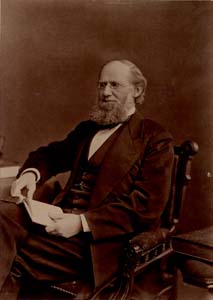
Historical · U.S. House · Massachusetts · District 10
Julius Seelye
Former U.S. Representative · Massachusetts District 10 · 1875–1877 · Independent
Julius Seelye represented Massachusetts's District 10 in the United States House of Representatives (1875–1877) for the Independent party. The page below collects sourced biographical facts, term history, committee roles, and provenance for Seelye.
Bioguide ID: S000225
Key facts
- Full name
- Julius Seelye
- State
- Massachusetts
- District
- District 10
- Party
- Independent
- House service
- 1875–1877
- First House term
- 1875
- Status
- Left office
- Current term ends
- —
- Born
- 1824
- Bioguide ID
- S000225
- Committee assignments
- —
- Dataset version
- 1.20260606
Biographical narrative
843 words · sourced from the Wikipedia REST extract
Julius Seelye was a prominent figure in 19th-century American education and politics, serving as a U.S. Representative for Massachusetts's 10th congressional district from 1875 to 1877. An Independent, Seelye was also a noted missionary, author, and educator, holding significant roles in academia, including the presidency of Amherst College. His contributions to education and his advocacy for the treatment of Native American tribes reflect his commitment to social issues and philanthropy.
Early life and career
Julius Seelye was born on September 14, 1824, in Bethel, Connecticut, to Seth and Abigail (Taylor) Seelye. His early education set the foundation for a lifelong dedication to learning and teaching. Seelye prepared for college and subsequently attended Amherst College from 1846 to 1849, where he graduated. During his time at Amherst, he became a member of the Psi Upsilon fraternity, which provided him with a network of peers that would influence his later career.
Following his graduation, Seelye pursued further studies at Auburn Theological Seminary from 1849 to 1852. He expanded his theological education in Halle, Prussia, from 1852 to 1853. On October 26, 1854, he married Elizabeth Tillman James, with whom he had four children. Tragically, Elizabeth died in 1881, and Seelye later married Marilyn Dockfill, who passed away from tuberculosis.
Seelye was ordained as a minister in Schenectady, New York, on August 10, 1853. He served as the pastor of the First Dutch Reformed Church in Schenectady from 1853 to 1858. His pastoral work laid the groundwork for his future endeavors in education and public service. In 1858, he returned to Amherst College, where he took on the role of Professor of Mental and Moral Philosophy, a position he held until 1890. This role allowed him to influence a generation of students, including notable figures such as Joseph Hardy Neesima, who later founded Doshisha University in Kyoto, Japan.
Seelye's commitment to education extended beyond the classroom. He served as a trustee of Amherst College and was appointed the fifth president of the institution in 1877, a position he held until 1890. During his presidency, he was instrumental in establishing the nation’s first student self-government system, which aimed to empower students and promote a sense of responsibility and leadership.
In addition to his academic roles, Seelye was actively involved in various organizations and initiatives. He lectured at Andover Theological Seminary from 1873 to 1874 and served on the Board of Visitors there until 1892. He was also a trustee of Mount Holyoke College from 1872 to 1895 and played a significant role in the incorporation of the Clarke Institute for Deaf Mutes in Northampton, Massachusetts, from 1867 to 1887.
House tenure
Seelye's political career began when he was elected to the United States House of Representatives as an Independent from Massachusetts's 10th congressional district. His term in the 44th Congress lasted from 1875 to 1877. During his time in office, Seelye focused on various issues, particularly those related to the treatment of Native American tribes. His speeches in Congress often reflected his commitment to Christian philanthropy and the ethical treatment of marginalized communities.
Despite his contributions in Congress, Seelye chose not to seek re-election after his term ended. His decision was influenced by his appointment as president of Amherst College, a role he had already begun to fulfill in 1876. This transition marked a return to his primary passion for education and leadership within the academic community.
Legislative focus and committees
During his brief tenure in the House of Representatives, Seelye's legislative focus was primarily on issues concerning Native American tribes. He advocated for policies that aligned with his principles of Christian philanthropy, emphasizing the need for humane treatment and support for these communities. His speeches and proposals often aimed to address the injustices faced by Native Americans, reflecting a broader concern for social justice and ethical governance.
Seelye's involvement in Congress was characterized by a commitment to addressing complex social issues, and he utilized his platform to raise awareness about the challenges faced by Indigenous populations. His approach combined his religious convictions with a sense of moral responsibility, which was a hallmark of his career both in politics and academia.
In addition to his advocacy work, Seelye's participation in various committees during his time in Congress allowed him to engage with a range of legislative matters. While specific committee assignments are not detailed, it can be inferred that his background in philosophy and education informed his contributions to discussions on social policy and education reform.
After concluding his congressional term, Seelye returned to his role at Amherst College, where he continued to influence the educational landscape until his retirement in 1890 due to health issues. His legacy in both education and public service remains significant, as he was a pioneer in promoting student governance and advocating for ethical treatment of marginalized communities.
Julius Seelye passed away on May 12, 1895, at his home in Amherst, Massachusetts. He is buried in Wildwood Cemetery in Amherst. His contributions to education, social justice, and public service continue to be recognized as part of his enduring legacy.
Notable legislation
Sponsored and co-sponsored legislation for Julius Seelye is pending operator curation. The biographical narrative above carries the same provenance trail until per-bill rows are written.
Sources
- [1]https://en.wikipedia.org/wiki/Julius_Hawley_SeelyeWikipedia · retrieved 2026-06-06
Notable quotes
Sourced quotes for Julius Seelye are pending operator curation. Narrative-scope provenance remains attached below.
Sources
- [1]https://en.wikipedia.org/wiki/Julius_Hawley_SeelyeWikipedia · retrieved 2026-06-06
Key positions
Curated policy positions for Julius Seelye are pending operator review. The biographical narrative above carries the same provenance trail until per-topic positions are written.
Sources
- [1]https://en.wikipedia.org/wiki/Julius_Hawley_SeelyeWikipedia · retrieved 2026-06-06
Terms served
- 1875–1877U.S. House · Term 1 · Independent
Sources & provenance
Every attributable claim above carries a per-section [N] marker that resolves to the corresponding URL below. Each entry records the upstream provider, the canonical URL, and the timestamp at which the source was retrieved by the ingest pipeline.
Key facts
- https://bioguide.congress.gov/search/bio/S000225bioguide · retrieved 2026-06-06
- https://www.govtrack.us/congress/members/409730govtrack · retrieved 2026-06-06
Biographical narrative
- https://en.wikipedia.org/wiki/Julius_Hawley_Seelyewikipedia · retrieved 2026-06-06
Find your representative
Every U.S. state elects representatives by district. Browse Massachusetts’s delegation, the full former-representative roster, or explore the role and term length.
Related on The Candidate
- Preceded by Alvah CrockerEarlier holder of the Massachusetts District 10 House seat · Republican.Open
- Succeeded by Amasa NorcrossLater holder of the Massachusetts District 10 House seat · Republican.Open
- Abbott LawrenceFormer U.S. Representative · Massachusetts District 1 · WhigOpen
- Allen TreadwayFormer U.S. Representative · Massachusetts District 1 · RepublicanOpen
- Artemas Ward Jr.Former U.S. Representative · Massachusetts District 1 · FederalistOpen
- Ashley WrightFormer U.S. Representative · Massachusetts District 1 · RepublicanOpen