
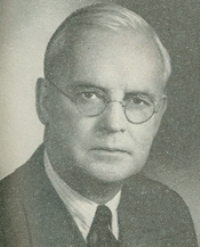
Historical · U.S. House · Massachusetts · District 13
Richard Wigglesworth
Former U.S. Representative · Massachusetts District 13 · 1927–1959 · Republican
Richard Wigglesworth represented Massachusetts's District 13 in the United States House of Representatives (1927–1959) for the Republican party. The page below collects sourced biographical facts, term history, committee roles, and provenance for Wigglesworth.
Bioguide ID: W000450
Key facts
- Full name
- Richard Wigglesworth
- State
- Massachusetts
- District
- District 13
- Party
- Republican
- House service
- 1927–1959
- First House term
- 1927
- Status
- Left office
- Current term ends
- —
- Born
- 1891
- Bioguide ID
- W000450
- Committee assignments
- —
- Dataset version
- 1.20260605
Biographical narrative
896 words · sourced from the Wikipedia REST extract
Richard Wigglesworth was a notable American politician and lawyer who served as a U.S. Representative for Massachusetts's 13th congressional district. A member of the Republican Party, he held office for a lengthy period, spanning from 1928 until 1958, marking a significant tenure in the U.S. House of Representatives. In addition to his legislative career, Wigglesworth was also an accomplished football player and coach, having played for the Harvard Crimson, and he served in various capacities during and after World War I, including as a captain in the U.S. Army.
Early life and career
Richard Wigglesworth was born on April 25, 1891, in Boston, Massachusetts. He completed his early education at Milton Academy, graduating in 1908. Following high school, he attended Harvard University, where he distinguished himself as an athlete. Wigglesworth was the starting quarterback for the Harvard Crimson football team from 1909 to 1911, showcasing his leadership and athletic skills during his college years. He graduated from Harvard in 1912, furthering his education at Harvard Law School, where he earned his law degree in 1916.
After completing his education, Wigglesworth began his legal career in Boston, where he was admitted to the bar. His early professional life included a role as assistant private secretary to the Governor General of the Philippine Islands, which provided him with valuable administrative experience. During World War I, he served in the U.S. Army as a captain in Battery E and commanded the First Battalion of the 303rd Field Artillery in the 76th Division from 1917 to 1919. His military service contributed to his leadership skills and understanding of national issues.
Following the war, Wigglesworth continued to engage in public service. He worked as a legal adviser to the Assistant Secretary of the Treasury, focusing on foreign loans and railway payments. His expertise in finance and law led him to serve as secretary of the World War Debt Commission from 1922 to 1924. He also held a position as assistant to the Agent General for Reparation Payments in Berlin, Germany, from 1924 to 1927. His work during this period involved significant international financial negotiations, particularly related to the reparations imposed on Germany after World War I.
In 1927, Wigglesworth was appointed as general counsel and Paris representative for organizations created under the Dawes Plan, which aimed to facilitate the payment of reparations and stabilize the German economy. This role further solidified his reputation as a skilled negotiator and legal expert in international finance.
House tenure
Wigglesworth's political career began in earnest when he was elected as a Republican to the U.S. House of Representatives. He filled a vacancy caused by the death of Louis A. Frothingham, officially taking office on November 6, 1928. Over the course of his political career, he was reelected to the House for a total of 16 terms, serving continuously until his resignation on November 13, 1958. His lengthy tenure in Congress is indicative of his ability to connect with constituents and navigate the complexities of legislative processes.
During his time in the House, Wigglesworth participated in numerous debates and votes on key legislation. Notably, he voted in favor of the Civil Rights Act of 1957, reflecting his engagement with the significant social issues of his time. His legislative career spanned several decades, during which he witnessed and contributed to major national events, including the Great Depression, World War II, and the early stages of the civil rights movement.
Wigglesworth's resignation in 1958 marked the end of his long service in the House, but it was not the end of his public career. Shortly after stepping down, he was appointed as the United States Ambassador to Canada, a position he held from December 15, 1958, until his death in 1960. His diplomatic role further exemplified his commitment to public service and international relations.
Legislative focus and committees
Throughout his congressional career, Richard Wigglesworth was involved in various legislative matters, reflecting the interests and needs of his constituents in Massachusetts. While specific details about the committees he served on are not provided, it is common for long-serving representatives to participate in committees that align with their expertise and the priorities of their districts. Given his background in law and finance, it is likely that he engaged in discussions and decisions related to economic policies, infrastructure, and other matters pertinent to his constituents.
Wigglesworth's support for the Civil Rights Act of 1957 indicates that he was involved in the legislative efforts aimed at addressing civil rights issues during a transformative period in American history. His participation in such significant legislation suggests that he was responsive to the changing social landscape and the demands for equality and justice.
In addition to his legislative work, Wigglesworth's experiences in international finance and diplomacy likely influenced his perspectives on foreign policy issues. His appointment as Ambassador to Canada after his congressional tenure underscores his capability in handling international relations and representing U.S. interests abroad.
Richard Wigglesworth's life and career reflect a blend of athletic achievement, military service, legal expertise, and political engagement. He married Florence Joyes Booth in 1931, and together they had three daughters. Wigglesworth passed away on October 22, 1960, in Boston, Massachusetts, and was interred at Arlington National Cemetery, marking the end of a distinguished career in public service and law. His legacy continues to be recognized in the context of Massachusetts politics and American legislative history.
Notable legislation
Sponsored and co-sponsored legislation for Richard Wigglesworth is pending operator curation. The biographical narrative above carries the same provenance trail until per-bill rows are written.
Sources
- [1]https://en.wikipedia.org/wiki/Richard_B._WigglesworthWikipedia · retrieved 2026-06-05
Notable quotes
Sourced quotes for Richard Wigglesworth are pending operator curation. Narrative-scope provenance remains attached below.
Sources
- [1]https://en.wikipedia.org/wiki/Richard_B._WigglesworthWikipedia · retrieved 2026-06-05
Key positions
Curated policy positions for Richard Wigglesworth are pending operator review. The biographical narrative above carries the same provenance trail until per-topic positions are written.
Sources
- [1]https://en.wikipedia.org/wiki/Richard_B._WigglesworthWikipedia · retrieved 2026-06-05
Terms served
- 1927–1929U.S. House · Term 1 · Republican
- 1929–1931U.S. House · Term 2 · Republican
- 1931–1933U.S. House · Term 3 · Republican
- 1933–1935U.S. House · Term 4 · Republican
- 1935–1937U.S. House · Term 5 · Republican
- 1937–1939U.S. House · Term 6 · Republican
- 1939–1941U.S. House · Term 7 · Republican
- 1941–1943U.S. House · Term 8 · Republican
- 1943–1945U.S. House · Term 9 · Republican
- 1945–1947U.S. House · Term 10 · Republican
- 1947–1949U.S. House · Term 11 · Republican
- 1949–1951U.S. House · Term 12 · Republican
- 1951–1953U.S. House · Term 13 · Republican
- 1953–1955U.S. House · Term 14 · Republican
- 1955–1957U.S. House · Term 15 · Republican
- 1957–1959U.S. House · Term 16 · Republican
Sources & provenance
Every attributable claim above carries a per-section [N] marker that resolves to the corresponding URL below. Each entry records the upstream provider, the canonical URL, and the timestamp at which the source was retrieved by the ingest pipeline.
Key facts
- https://bioguide.congress.gov/search/bio/W000450bioguide · retrieved 2026-06-05
- https://www.govtrack.us/congress/members/411607govtrack · retrieved 2026-06-05
Biographical narrative
- https://en.wikipedia.org/wiki/Richard_B._Wigglesworthwikipedia · retrieved 2026-06-05
Find your representative
Every U.S. state elects representatives by district. Browse Massachusetts’s delegation, the full former-representative roster, or explore the role and term length.
Related on The Candidate
- Preceded by William CarterEarlier holder of the Massachusetts District 13 House seat · Republican.Open
- Abbott LawrenceFormer U.S. Representative · Massachusetts District 1 · WhigOpen
- Allen TreadwayFormer U.S. Representative · Massachusetts District 1 · RepublicanOpen
- Artemas Ward Jr.Former U.S. Representative · Massachusetts District 1 · FederalistOpen
- Ashley WrightFormer U.S. Representative · Massachusetts District 1 · RepublicanOpen
- Republican PartyFederal candidates and office holders on the Republican line.Open