
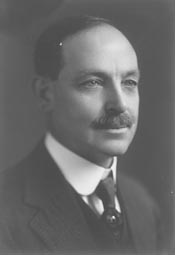
Historical · U.S. House · Massachusetts · District 13
William Carter
Former U.S. Representative · Massachusetts District 13 · 1915–1919 · Republican
William Carter represented Massachusetts's District 13 in the United States House of Representatives (1915–1919) for the Republican party. The page below collects sourced biographical facts, term history, committee roles, and provenance for Carter.
Bioguide ID: C000205
Key facts
- Full name
- William Carter
- State
- Massachusetts
- District
- District 13
- Party
- Republican
- House service
- 1915–1919
- First House term
- 1915
- Status
- Left office
- Current term ends
- —
- Born
- 1864
- Bioguide ID
- C000205
- Committee assignments
- —
- Dataset version
- 1.20260606
Biographical narrative
831 words · sourced from the Wikipedia REST extract
William Carter was a U.S. Representative from Massachusetts, serving in the House of Representatives during the early 20th century. A member of the Republican Party, he held office during the Sixty-fourth and Sixty-fifth Congresses from 1915 until 1919. Born in 1864, Carter had a multifaceted career that included work in manufacturing and real estate, alongside his political endeavors. He concluded his congressional service in 1919 and continued his involvement in business until his passing in 1955.
Early life and career
William Carter was born on June 15, 1864, in Needham Heights, Massachusetts. His early education took place in public schools, where he laid the foundation for his future endeavors. Following his primary education, he attended Comers Commercial College in Boston, Massachusetts, where he received training that would be beneficial in his later business pursuits.
Carter's professional life began in the manufacturing sector, specifically in the knit-underwear industry. He worked for the William Carter Company, a family-owned business that specialized in this sector. Over time, he assumed various roles within the company, gaining valuable experience in manufacturing and management. His involvement in the family business not only provided him with a livelihood but also equipped him with insights into the economic and industrial landscape of the time.
In addition to his work in manufacturing, Carter ventured into politics. His political career began at the state level when he was elected to the Massachusetts House of Representatives in 1906. This early experience in state government allowed him to understand legislative processes and the needs of his constituents. Following his term in the state legislature, he became involved with the Republican State Committee, serving in this capacity during 1907 and 1908. These roles helped him build a network within the Republican Party and prepared him for his future congressional candidacy.
House tenure
Carter's congressional career began when he was elected as a Republican to the Sixty-fourth Congress, which convened on March 4, 1915. He represented Massachusetts's 13th congressional district, a position he maintained through the Sixty-fifth Congress, which concluded on March 3, 1919. During his time in the House, Carter participated in various legislative discussions and contributed to the development of policies relevant to his constituents and the nation.
His tenure in Congress coincided with a period of significant change in the United States, including the lead-up to World War I and the social and economic transformations that accompanied it. While specific details of his legislative actions and votes are not documented, Carter's role as a representative would have involved addressing the pressing issues of the day, such as national defense, economic policy, and social reforms.
Carter chose not to seek reelection in 1918, concluding his time in the House after two terms. This decision marked the end of his formal political career, although he remained engaged in public life through his business activities and community involvement.
Legislative focus and committees
During his time in the House of Representatives, William Carter's legislative focus was shaped by his background in manufacturing and his experiences in state politics. While specific committee assignments and legislative initiatives are not detailed in the available records, it is reasonable to infer that his interests may have aligned with issues pertinent to industry, commerce, and economic development. Given the era in which he served, topics such as labor relations, trade policies, and support for American manufacturing would likely have been of particular relevance to him.
Carter's experience in the knit-underwear manufacturing sector would have provided him with a unique perspective on the challenges faced by American businesses during a time of rapid industrialization. As a member of the Republican Party, he may have advocated for policies that supported business interests and promoted economic growth.
After leaving Congress, Carter continued to be active in the business world. In 1918, he was elected president of the William Carter Company, a position he held until his death. His leadership in the company reflected his ongoing commitment to the industry and his desire to contribute to the economic landscape of Massachusetts and beyond. His work in real estate development also indicated a diversification of his professional interests, showcasing his adaptability and entrepreneurial spirit.
William Carter passed away on April 23, 1955, in Needham, Massachusetts, where he had spent much of his life. His contributions to both the political and business spheres left a lasting impact on his community. He was interred in Needham Cemetery, where he rests alongside others who have contributed to the region's history.
In summary, William Carter's life and career were marked by a blend of public service and private enterprise. His journey from local politics to the national stage exemplifies the interconnectedness of business and government during a transformative period in American history. Through his roles in the Massachusetts House of Representatives and the U.S. House of Representatives, he engaged with the challenges of his time, while his continued involvement in the William Carter Company and real estate development demonstrated his commitment to economic growth and community development.
Notable legislation
Sponsored and co-sponsored legislation for William Carter is pending operator curation. The biographical narrative above carries the same provenance trail until per-bill rows are written.
Sources
- [1]https://en.wikipedia.org/wiki/William_Henry_CarterWikipedia · retrieved 2026-06-06
Notable quotes
Sourced quotes for William Carter are pending operator curation. Narrative-scope provenance remains attached below.
Sources
- [1]https://en.wikipedia.org/wiki/William_Henry_CarterWikipedia · retrieved 2026-06-06
Key positions
Curated policy positions for William Carter are pending operator review. The biographical narrative above carries the same provenance trail until per-topic positions are written.
Sources
- [1]https://en.wikipedia.org/wiki/William_Henry_CarterWikipedia · retrieved 2026-06-06
Terms served
- 1915–1917U.S. House · Term 1 · Republican
- 1917–1919U.S. House · Term 2 · Republican
Sources & provenance
Every attributable claim above carries a per-section [N] marker that resolves to the corresponding URL below. Each entry records the upstream provider, the canonical URL, and the timestamp at which the source was retrieved by the ingest pipeline.
Key facts
- https://bioguide.congress.gov/search/bio/C000205bioguide · retrieved 2026-06-06
- https://www.govtrack.us/congress/members/402351govtrack · retrieved 2026-06-06
Biographical narrative
- https://en.wikipedia.org/wiki/William_Henry_Carterwikipedia · retrieved 2026-06-06
Find your representative
Every U.S. state elects representatives by district. Browse Massachusetts’s delegation, the full former-representative roster, or explore the role and term length.
Related on The Candidate
- Preceded by John MitchellEarlier holder of the Massachusetts District 13 House seat · Democratic.Open
- Succeeded by Richard WigglesworthLater holder of the Massachusetts District 13 House seat · Republican.Open
- Abbott LawrenceFormer U.S. Representative · Massachusetts District 1 · WhigOpen
- Allen TreadwayFormer U.S. Representative · Massachusetts District 1 · RepublicanOpen
- Artemas Ward Jr.Former U.S. Representative · Massachusetts District 1 · FederalistOpen
- Ashley WrightFormer U.S. Representative · Massachusetts District 1 · RepublicanOpen