
Historical · U.S. House · Massachusetts · District 14
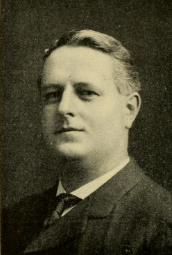
Edward Gilmore
Former U.S. Representative · Massachusetts District 14 · 1913–1915 · Democratic
Edward Gilmore represented Massachusetts's District 14 in the United States House of Representatives (1913–1915) for the Democratic party. The page below collects sourced biographical facts, term history, committee roles, and provenance for Gilmore.
Bioguide ID: G000221
Key facts
- Full name
- Edward Gilmore
- State
- Massachusetts
- District
- District 14
- Party
- Democratic
- House service
- 1913–1915
- First House term
- 1913
- Status
- Left office
- Current term ends
- —
- Born
- 1867
- Bioguide ID
- G000221
- Committee assignments
- —
- Dataset version
- 1.20260606
Biographical narrative
951 words · sourced from the Wikipedia REST extract
Edward Gilmore was a notable figure in early 20th-century American politics, serving as a United States Representative for Massachusetts' 14th congressional district. A member of the Democratic Party, he held office during the Sixty-third Congress from 1913 to 1915. His political career was preceded by various roles in local government and civic organizations, reflecting his deep engagement with the community in Brockton, Massachusetts, where he was born and raised. Following his congressional tenure, Gilmore continued to serve his community in various capacities until his death in 1924.
Early life and career
Edward Gilmore was born on January 4, 1867, in Brockton, Massachusetts. Growing up in this city, he received his education through the public school system, which laid the foundation for his future endeavors. To further his knowledge and skills, he also attended extension classes at Massachusetts State University, which provided him with additional educational opportunities beyond the traditional classroom setting.
After completing his education, Gilmore engaged in mercantile pursuits, which likely involved various business activities and trade. This experience in commerce would have provided him with insights into the economic concerns of his constituents, shaping his understanding of the issues that would later arise during his political career. His involvement in local business and commerce also positioned him as a familiar figure within the community, fostering relationships that would benefit him in his subsequent political endeavors.
Gilmore's political career began to take shape in the late 1890s when he became actively involved in the Democratic Party. He served on the Democratic State Committee from 1896 to 1903, a role that allowed him to influence party activities and strategy at the state level. His commitment to the party was further demonstrated through his participation as a delegate to the Democratic National Conventions in 1900 and 1904, where he contributed to the selection of the party's presidential nominees and helped shape the national platform.
In addition to his party work, Gilmore held several important local government positions. He served as the president of the Brockton Board of Aldermen from 1901 to 1906, a role that placed him at the forefront of municipal governance. As president, he would have been responsible for overseeing the board's activities, facilitating discussions on local legislation, and representing the interests of Brockton's residents. His leadership in this capacity likely enhanced his visibility and reputation within the community.
Following his tenure on the Board of Aldermen, Gilmore continued his public service by being elected to the Massachusetts House of Representatives in 1907 and 1908. This experience in the state legislature further solidified his political credentials and prepared him for a larger role in national politics.
House tenure
Edward Gilmore's congressional career began when he was elected as a Democrat to the Sixty-third Congress, which convened on March 4, 1913. He represented Massachusetts' 14th congressional district, a position that allowed him to advocate for the interests of his constituents at the federal level. His term in the House of Representatives lasted until March 3, 1915, marking a significant period in his political life.
During his time in Congress, Gilmore participated in the legislative process, contributing to discussions and decisions that would impact both his district and the nation. While specific details about his legislative actions and the bills he supported are not provided, it can be inferred that he focused on issues pertinent to his constituents, drawing from his background in local governance and commerce.
Gilmore's tenure in the House coincided with a transformative period in American history, characterized by significant social and economic changes. The early 20th century was marked by progressive reforms, labor movements, and shifts in public policy, all of which would have influenced the legislative environment in which he operated. As a representative from Massachusetts, a state known for its industrial base and progressive politics, Gilmore was likely involved in discussions surrounding labor rights, economic development, and social welfare.
After serving one term in Congress, Gilmore did not seek re-election. His decision to step away from the House of Representatives marked the end of his formal legislative career, but he continued to serve his community in other capacities.
Legislative focus and committees
Although specific details regarding Edward Gilmore's legislative focus and committee assignments during his time in Congress are not available, it is reasonable to assume that his background in local governance and business would have informed his priorities as a U.S. Representative. Given the economic landscape of the early 20th century, he may have been particularly attentive to issues related to commerce, labor, and infrastructure, which were critical to the growth and development of his district.
Following his congressional tenure, Gilmore continued to play an active role in public service. He was appointed as the postmaster of Brockton, serving from 1915 to 1923. This position allowed him to remain engaged with the community and manage an essential service that connected residents to the broader postal network. His work as postmaster would have involved overseeing postal operations, ensuring efficient mail delivery, and addressing the needs of the local population.
In addition to his role as postmaster, Gilmore served as the city assessor in 1923 and 1924, further contributing to the governance of Brockton. This position involved evaluating property values for taxation purposes, a critical function in municipal finance that directly impacted the city's budget and services.
Edward Gilmore passed away on April 19, 1924, in Boston, Massachusetts. His contributions to his community and his service in the U.S. House of Representatives left a lasting impact on the political landscape of Brockton and the surrounding region. He was interred in Calvary Cemetery in Brockton, where he is remembered for his dedication to public service and his role in the local and national political arenas.
Notable legislation
Sponsored and co-sponsored legislation for Edward Gilmore is pending operator curation. The biographical narrative above carries the same provenance trail until per-bill rows are written.
Sources
- [1]https://en.wikipedia.org/wiki/Edward_GilmoreWikipedia · retrieved 2026-06-06
Notable quotes
Sourced quotes for Edward Gilmore are pending operator curation. Narrative-scope provenance remains attached below.
Sources
- [1]https://en.wikipedia.org/wiki/Edward_GilmoreWikipedia · retrieved 2026-06-06
Key positions
Curated policy positions for Edward Gilmore are pending operator review. The biographical narrative above carries the same provenance trail until per-topic positions are written.
Sources
- [1]https://en.wikipedia.org/wiki/Edward_GilmoreWikipedia · retrieved 2026-06-06
Terms served
- 1913–1915U.S. House · Term 1 · Democratic
Sources & provenance
Every attributable claim above carries a per-section [N] marker that resolves to the corresponding URL below. Each entry records the upstream provider, the canonical URL, and the timestamp at which the source was retrieved by the ingest pipeline.
Key facts
- https://bioguide.congress.gov/search/bio/G000221bioguide · retrieved 2026-06-06
- https://www.govtrack.us/congress/members/404583govtrack · retrieved 2026-06-06
Biographical narrative
- https://en.wikipedia.org/wiki/Edward_Gilmorewikipedia · retrieved 2026-06-06
Find your representative
Every U.S. state elects representatives by district. Browse Massachusetts’s delegation, the full former-representative roster, or explore the role and term length.
Related on The Candidate
- Preceded by Robert HarrisEarlier holder of the Massachusetts District 14 House seat · Republican.Open
- Succeeded by Richard OlneyLater holder of the Massachusetts District 14 House seat · Democratic.Open
- Abbott LawrenceFormer U.S. Representative · Massachusetts District 1 · WhigOpen
- Allen TreadwayFormer U.S. Representative · Massachusetts District 1 · RepublicanOpen
- Artemas Ward Jr.Former U.S. Representative · Massachusetts District 1 · FederalistOpen
- Ashley WrightFormer U.S. Representative · Massachusetts District 1 · RepublicanOpen