
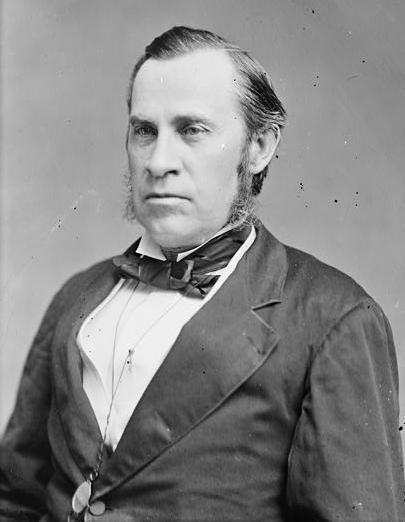
Historical · U.S. House · Massachusetts · District 2
Benjamin Harris
Former U.S. Representative · Massachusetts District 2 · 1873–1883 · Republican
Benjamin Harris represented Massachusetts's District 2 in the United States House of Representatives (1873–1883) for the Republican party. The page below collects sourced biographical facts, term history, committee roles, and provenance for Harris.
Bioguide ID: H000233
Key facts
- Full name
- Benjamin Harris
- State
- Massachusetts
- District
- District 2
- Party
- Republican
- House service
- 1873–1883
- First House term
- 1873
- Status
- Left office
- Current term ends
- —
- Born
- 1823
- Bioguide ID
- H000233
- Committee assignments
- —
- Dataset version
- 1.20260606
Biographical narrative
973 words · sourced from the Wikipedia REST extract
Benjamin Harris was a prominent American politician, lawyer, and judge who served as a U.S. Representative from Massachusetts. A member of the Republican Party, he represented the state's 2nd congressional district from 1873 until 1883. Harris's political career was marked by his involvement in various levels of government, including service in the Massachusetts Senate and as a district attorney. After his tenure in Congress, he continued to contribute to public service as a judge of probate in Plymouth County, Massachusetts. His life spanned from November 10, 1823, until February 7, 1907, during which he made significant contributions to the legal and political landscape of Massachusetts.
Early life and career
Benjamin Winslow Harris was born in East Bridgewater, Massachusetts, on November 10, 1823. He pursued an education that laid the foundation for his future career in law and politics. Harris attended Phillips Academy in Andover, Massachusetts, where he completed his studies in 1847. Following his time at Phillips Academy, he enrolled at Harvard University, specifically at the Dane Law School, from which he graduated in 1849. This academic background provided him with the legal knowledge and skills necessary for his future endeavors.
After graduating from law school, Harris was admitted to the bar in Boston in 1850. He began his legal practice in East Bridgewater, where he quickly established himself within the community. His legal career coincided with a period of significant political change in Massachusetts, and he became increasingly involved in public service. In 1857, he was elected to the Massachusetts Senate, marking the beginning of his formal political career. The following year, in 1858, he served as a member of the Massachusetts House of Representatives, further solidifying his role in state politics.
Harris's public service continued as he was appointed district attorney for the southeastern district of Massachusetts, a position he held from 1858 until 1866. In this role, he was responsible for prosecuting criminal cases and overseeing legal proceedings in the district, which encompassed several communities. His work as district attorney allowed him to gain valuable experience in the legal system and further enhanced his reputation as a dedicated public servant.
In 1866, Harris transitioned to a different role when he became the collector of internal revenue for the second district of Massachusetts. This position involved overseeing tax collection and ensuring compliance with federal revenue laws. He served in this capacity until 1873, during which time he developed a deeper understanding of federal fiscal policies and their impact on local communities.
House tenure
Harris's political career reached a new height when he was elected as a Republican to the United States House of Representatives in 1872. He officially began his first term in Congress on March 4, 1873. Over the course of his five terms in the House, which lasted until March 3, 1883, Harris participated in various legislative activities and contributed to discussions on a wide range of issues.
During his time in Congress, Harris was appointed chairman of the Committee on Naval Affairs, a significant position that he held from 1881 to 1883. As chairman, he played a crucial role in shaping policies related to the United States Navy, including matters of naval construction, funding, and military readiness. His leadership on this committee reflected his commitment to national defense and the importance of a strong naval presence, particularly during a period when the United States was expanding its influence on the global stage.
Harris's tenure in the House was characterized by his active participation in legislative debates and his efforts to represent the interests of his constituents in Massachusetts. He was involved in discussions that addressed various concerns, including economic policies, infrastructure development, and social issues. His experience as a lawyer and district attorney informed his approach to legislation, allowing him to navigate complex legal and political landscapes effectively.
Despite his accomplishments in Congress, Harris chose not to seek renomination in 1882, concluding his time in the House after serving for a decade. His decision to step away from federal politics marked a transition in his career, as he returned to his legal practice in East Bridgewater.
Legislative focus and committees
Throughout his congressional career, Benjamin Harris demonstrated a commitment to issues that were pertinent to his constituents and the nation as a whole. His role as chairman of the Committee on Naval Affairs highlighted his focus on military and defense matters, which were increasingly relevant during the late 19th century. The period was marked by growing international tensions and the United States' emergence as a global power, making naval strength a critical component of national security.
In addition to his work on naval affairs, Harris's legislative focus extended to various other areas that affected the lives of his constituents. His background as a lawyer and district attorney provided him with insights into the legal challenges faced by individuals and communities, which likely influenced his approach to legislation. He was known to advocate for policies that promoted justice, public safety, and the welfare of his constituents.
After concluding his congressional service, Harris returned to East Bridgewater, where he resumed his legal practice. His legal expertise and experience in public service led to his appointment as judge of probate for Plymouth County, a position he held from 1887 until 1906. In this role, he was responsible for overseeing matters related to wills, estates, and guardianships, further contributing to the legal framework of his community.
Benjamin Harris passed away on February 7, 1907, in East Bridgewater, where he had spent much of his life. He was interred in Central Cemetery in the same town, leaving behind a legacy of public service and dedication to the legal profession. His contributions to Massachusetts politics and law remain a part of the historical narrative of the state, reflecting the complexities and challenges of governance during a transformative period in American history.
Notable legislation
Sponsored and co-sponsored legislation for Benjamin Harris is pending operator curation. The biographical narrative above carries the same provenance trail until per-bill rows are written.
Sources
- [1]https://en.wikipedia.org/wiki/Benjamin_W._HarrisWikipedia · retrieved 2026-06-06
Notable quotes
Sourced quotes for Benjamin Harris are pending operator curation. Narrative-scope provenance remains attached below.
Sources
- [1]https://en.wikipedia.org/wiki/Benjamin_W._HarrisWikipedia · retrieved 2026-06-06
Key positions
Curated policy positions for Benjamin Harris are pending operator review. The biographical narrative above carries the same provenance trail until per-topic positions are written.
Sources
- [1]https://en.wikipedia.org/wiki/Benjamin_W._HarrisWikipedia · retrieved 2026-06-06
Terms served
- 1873–1875U.S. House · Term 1 · Republican
- 1875–1877U.S. House · Term 2 · Republican
- 1877–1879U.S. House · Term 3 · Republican
- 1879–1881U.S. House · Term 4 · Republican
- 1881–1883U.S. House · Term 5 · Republican
Sources & provenance
Every attributable claim above carries a per-section [N] marker that resolves to the corresponding URL below. Each entry records the upstream provider, the canonical URL, and the timestamp at which the source was retrieved by the ingest pipeline.
Key facts
- https://bioguide.congress.gov/search/bio/H000233bioguide · retrieved 2026-06-06
- https://www.govtrack.us/congress/members/405111govtrack · retrieved 2026-06-06
Biographical narrative
- https://en.wikipedia.org/wiki/Benjamin_W._Harriswikipedia · retrieved 2026-06-06
Find your representative
Every U.S. state elects representatives by district. Browse Massachusetts’s delegation, the full former-representative roster, or explore the role and term length.
Related on The Candidate
- Preceded by Oakes AmesEarlier holder of the Massachusetts District 2 House seat · Republican.Open
- Succeeded by John LongLater holder of the Massachusetts District 2 House seat · Republican.Open
- Abbott LawrenceFormer U.S. Representative · Massachusetts District 1 · WhigOpen
- Allen TreadwayFormer U.S. Representative · Massachusetts District 1 · RepublicanOpen
- Artemas Ward Jr.Former U.S. Representative · Massachusetts District 1 · FederalistOpen
- Ashley WrightFormer U.S. Representative · Massachusetts District 1 · RepublicanOpen