
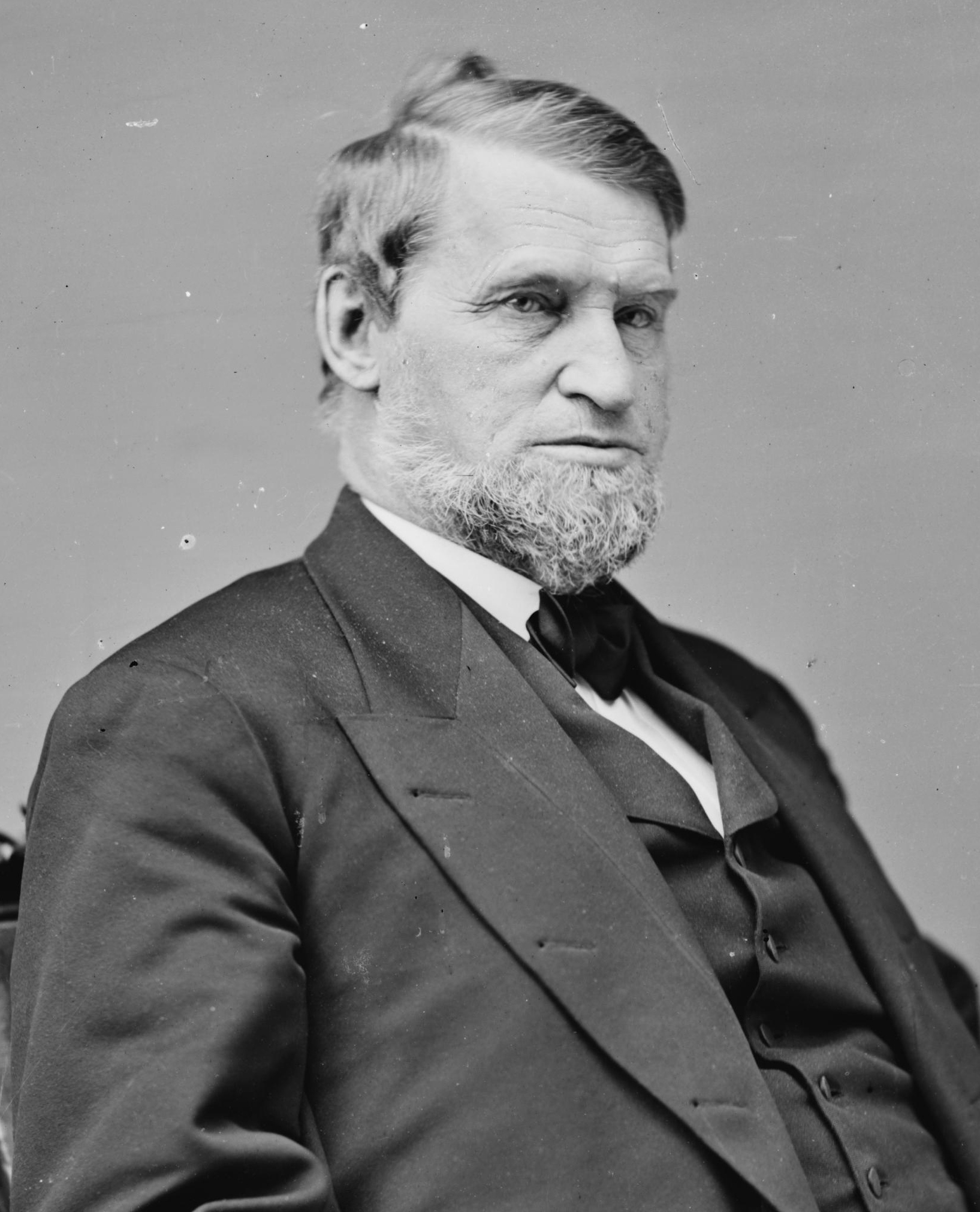
Historical · U.S. House · Massachusetts · District 2
Oakes Ames
Former U.S. Representative · Massachusetts District 2 · 1863–1873 · Republican
Oakes Ames represented Massachusetts's District 2 in the United States House of Representatives (1863–1873) for the Republican party. The page below collects sourced biographical facts, term history, committee roles, and provenance for Ames.
Bioguide ID: A000175
Key facts
- Full name
- Oakes Ames
- State
- Massachusetts
- District
- District 2
- Party
- Republican
- House service
- 1863–1873
- First House term
- 1863
- Status
- Left office
- Current term ends
- —
- Born
- 1804
- Bioguide ID
- A000175
- Committee assignments
- —
- Dataset version
- 1.20260606
Biographical narrative
948 words · sourced from the Wikipedia REST extract
Oakes Ames was a prominent American businessman and politician who served as a U.S. Representative for Massachusetts's Second Congressional District from 1863 until 1873. A member of the Republican Party, Ames is notably recognized for his significant role in the construction of the Union Pacific Railroad, a key component of the transcontinental railroad. His tenure in Congress was marked by both notable achievements and controversies, particularly related to his involvement with the Credit Mobilier scandal, which ultimately led to his censure by the House of Representatives.
Early life and career
Oakes Ames was born on January 10, 1804, in Easton, Massachusetts. He was the son of Oliver Ames Sr., a blacksmith who founded the Ames Shovel Shop, which specialized in manufacturing shovels and other tools. This family business earned the nickname "King of Spades" due to its prominence in the industry. Growing up in a family deeply involved in manufacturing, Ames received a public school education and worked in the family workshops, where he learned the intricacies of the manufacturing process. His early experiences in the family business laid the groundwork for his future entrepreneurial ventures.
As he matured, Ames became a partner in the family business, and alongside his brother Oliver Ames Jr., he established the firm Oliver Ames & Sons. The company thrived during the mid-19th century, driven by the increasing demand for tools and implements, particularly during the California Gold Rush and the expansion of railroads in the United States. The Civil War further bolstered the firm's success, as it secured contracts for military supplies, including swords and shovels. This period of prosperity allowed Ames to amass considerable wealth, positioning him as a significant figure in both business and politics.
Ames's political career began to take shape in the 1850s as he became involved in the formation of the Republican Party in Massachusetts. His commitment to the party and its principles led to his election to the executive council of Massachusetts in 1860. This role marked the beginning of his formal political career, which would culminate in his election to the U.S. House of Representatives.
House tenure
Oakes Ames was elected to the U.S. House of Representatives in 1863, representing Massachusetts's Second Congressional District. He served a total of five terms in Congress, during which he became a member of the Committee on Railroads. His tenure coincided with a critical period in American history, as the nation was grappling with the consequences of the Civil War and the need for infrastructure development.
Ames's most significant contribution during his time in Congress was his involvement in the construction of the Union Pacific Railroad. In 1865, President Abraham Lincoln appointed Ames to oversee the Union Pacific portion of the transcontinental railroad project, which had stalled due to the war. At that time, only a small amount of track had been laid, and the project was in dire need of leadership and direction. Ames's influence and connections allowed him to secure contracts for his family's firm, which played a crucial role in the construction of the railroad.
Under Ames's guidance, the Union Pacific Railroad was completed in 1869, marking a monumental achievement in American transportation history. The railroad not only facilitated the movement of goods and people across the continent but also contributed to the economic development of the regions it served. Ames's efforts in this endeavor solidified his reputation as a key figure in the expansion of the American West.
However, his congressional career was not without controversy. In 1872, allegations emerged regarding Ames's involvement in the Credit Mobilier scandal, which involved the improper sale of stock in the construction company responsible for building the railroad. It was revealed that Ames had sold shares in Credit Mobilier to fellow congressmen at prices significantly below market value. This scandal prompted a House investigation, which ultimately led to a formal censure of Ames for his actions.
Legislative focus and committees
During his time in the House of Representatives, Oakes Ames was primarily focused on issues related to transportation and infrastructure, particularly railroads. His position on the Committee on Railroads allowed him to influence legislation that shaped the future of American transportation. Ames's expertise in the field, gained through his business background and direct involvement in railroad construction, made him a valuable asset in discussions surrounding the expansion of the rail network.
Ames's legislative activities were largely centered on promoting the interests of the railroad industry, which was crucial for the economic growth of the nation during the post-Civil War era. His efforts in securing funding and contracts for the Union Pacific Railroad exemplified his commitment to advancing infrastructure projects that would benefit the country as a whole.
Despite his contributions to the development of the railroad system, Ames's legacy is complicated by the events surrounding the Credit Mobilier scandal. The public outcry and subsequent investigation into his actions raised questions about the ethical conduct of public officials and the influence of corporate interests in government. The House's censure of Ames in 1873 marked a significant moment in his career, as it underscored the challenges faced by politicians in navigating the intersection of business and politics.
Oakes Ames passed away on May 8, 1873, shortly after his censure, due to a stroke. His contributions to the construction of the Union Pacific Railroad and his role in the early development of the Republican Party in Massachusetts remain notable aspects of his legacy. In recognition of his work, the Oliver and Oakes Ames Monument was erected in Wyoming, commemorating the brothers' contributions to the railroad. Additionally, several places, including the city of Ames, Iowa, are named in his honor, reflecting his lasting impact on American history and infrastructure development.
Notable legislation
Sponsored and co-sponsored legislation for Oakes Ames is pending operator curation. The biographical narrative above carries the same provenance trail until per-bill rows are written.
Sources
- [1]https://en.wikipedia.org/wiki/Oakes_AmesWikipedia · retrieved 2026-06-06
Notable quotes
Sourced quotes for Oakes Ames are pending operator curation. Narrative-scope provenance remains attached below.
Sources
- [1]https://en.wikipedia.org/wiki/Oakes_AmesWikipedia · retrieved 2026-06-06
Key positions
Curated policy positions for Oakes Ames are pending operator review. The biographical narrative above carries the same provenance trail until per-topic positions are written.
Sources
- [1]https://en.wikipedia.org/wiki/Oakes_AmesWikipedia · retrieved 2026-06-06
Terms served
- 1863–1865U.S. House · Term 1 · Republican
- 1865–1867U.S. House · Term 2 · Republican
- 1867–1869U.S. House · Term 3 · Republican
- 1869–1871U.S. House · Term 4 · Republican
- 1871–1873U.S. House · Term 5 · Republican
Sources & provenance
Every attributable claim above carries a per-section [N] marker that resolves to the corresponding URL below. Each entry records the upstream provider, the canonical URL, and the timestamp at which the source was retrieved by the ingest pipeline.
Key facts
- https://bioguide.congress.gov/search/bio/A000175bioguide · retrieved 2026-06-06
- https://www.govtrack.us/congress/members/400830govtrack · retrieved 2026-06-06
Biographical narrative
- https://en.wikipedia.org/wiki/Oakes_Ameswikipedia · retrieved 2026-06-06
Find your representative
Every U.S. state elects representatives by district. Browse Massachusetts’s delegation, the full former-representative roster, or explore the role and term length.
Related on The Candidate
- Preceded by Samuel CrockerEarlier holder of the Massachusetts District 2 House seat · Whig.Open
- Succeeded by Benjamin HarrisLater holder of the Massachusetts District 2 House seat · Republican.Open
- Abbott LawrenceFormer U.S. Representative · Massachusetts District 1 · WhigOpen
- Allen TreadwayFormer U.S. Representative · Massachusetts District 1 · RepublicanOpen
- Artemas Ward Jr.Former U.S. Representative · Massachusetts District 1 · FederalistOpen
- Ashley WrightFormer U.S. Representative · Massachusetts District 1 · RepublicanOpen