
Historical · U.S. House · Massachusetts · District 2
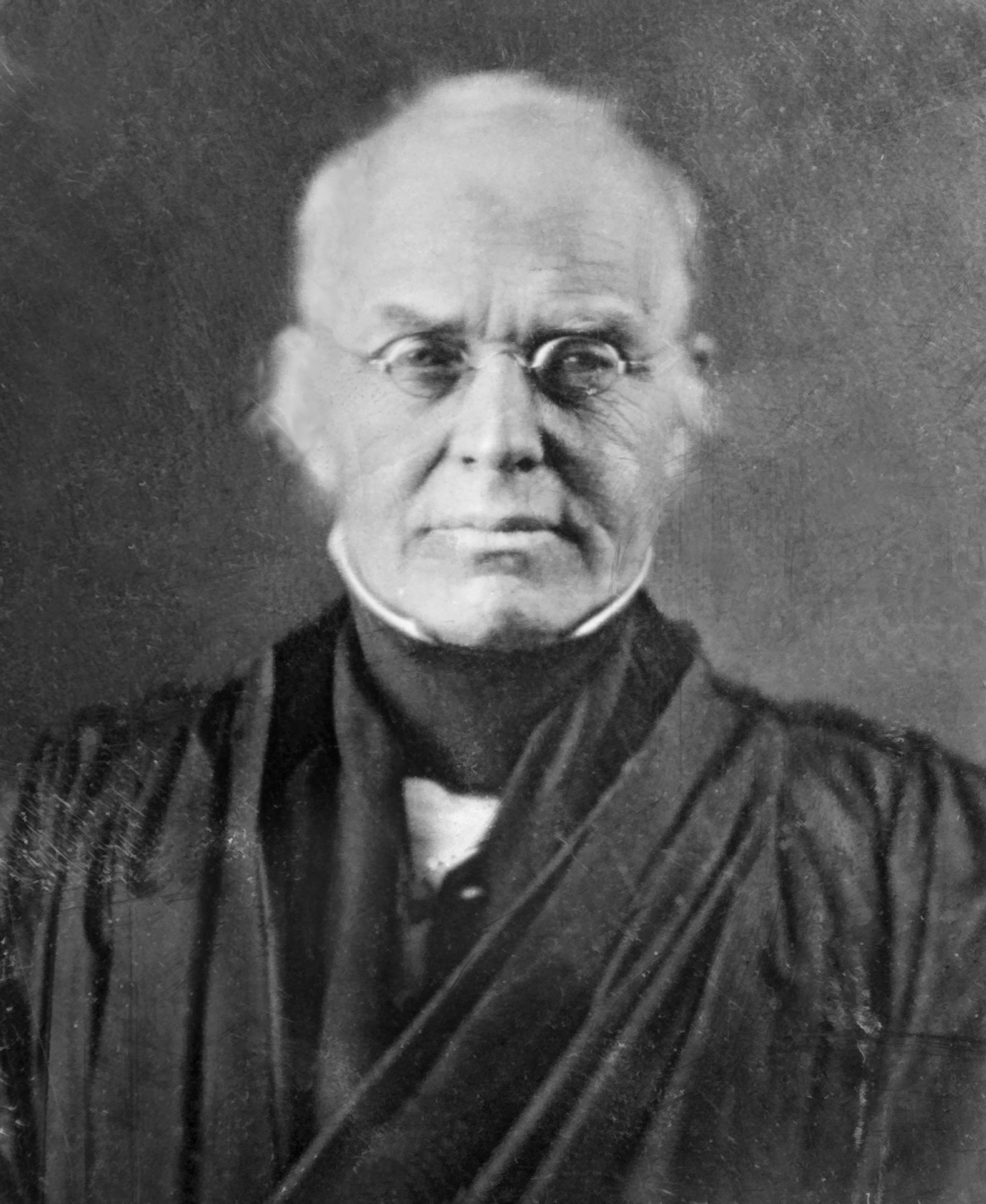
Joseph Story
Former U.S. Representative · Massachusetts District 2 · 1807–1809 · Republican
Joseph Story represented Massachusetts's District 2 in the United States House of Representatives (1807–1809) for the Republican party. The page below collects sourced biographical facts, term history, committee roles, and provenance for Story.
Bioguide ID: S000978
Key facts
- Full name
- Joseph Story
- State
- Massachusetts
- District
- District 2
- Party
- Republican
- House service
- 1807–1809
- First House term
- 1807
- Status
- Left office
- Current term ends
- —
- Born
- 1779
- Bioguide ID
- S000978
- Committee assignments
- —
- Dataset version
- 1.20260606
Biographical narrative
955 words · sourced from the Wikipedia REST extract
Joseph Story was an American lawyer, jurist, and politician who served as a U.S. Representative for Massachusetts's 2nd congressional district from 1807 to 1809. A member of the Republican Party, Story's political career was brief in the House, but he later gained prominence as an associate justice of the Supreme Court of the United States, a position he held from 1812 until his death in 1845. He is particularly noted for his influential legal opinions and writings, which have had a lasting impact on American jurisprudence.
Early life and career
Joseph Story was born on September 18, 1779, in Marblehead, Massachusetts. He was the firstborn of eleven children from the second marriage of Dr. Elisha Story, a prominent local physician and a participant in the Boston Tea Party. Dr. Story had moved his family from Boston to Marblehead during the American Revolutionary War. Joseph's early education took place at the Marblehead Academy, where he was taught by William Harris, who later became the president of Columbia University. After an incident at school that led to his withdrawal, he was accepted into Harvard University in January 1795. During his time at Harvard, he became involved in literary pursuits, joining the Adelphi, a student-run literary society, and was later admitted to the Phi Beta Kappa society, recognizing his academic achievements.
Upon graduating from Harvard, Story pursued a career in law, studying under notable attorneys Samuel Sewall and Samuel Putnam. He was admitted to the bar in July 1801 and began practicing law in Salem, Massachusetts. His political career began when he was elected to the Massachusetts House of Representatives, where he served from 1805 to 1807. Following his tenure in the state legislature, he was appointed as the state attorney for Essex County from 1807 to 1809. In 1808, Story was elected to the United States House of Representatives to fill the vacancy left by the death of Jacob Crowninshield. He served a partial term from May 23, 1808, until March 3, 1809, but chose not to seek a full term after this period, returning to his legal practice.
In his personal life, Story experienced significant loss early on. His first wife, Mary Lynde Fitch Oliver, passed away shortly after their marriage in June 1805, just two months after the death of his father. He later married Sarah Waldo Wetmore in August 1808, with whom he had seven children, though only two survived to adulthood. His son, William Wetmore Story, became a well-known poet and sculptor, and his works included a biography of his father.
House tenure
Joseph Story's time in the U.S. House of Representatives was characterized by a focus on legal and constitutional issues, reflecting his background as a practicing attorney. He was elected as a member of the Republican Party, which was the dominant political force during this period in American history. His service in the House lasted less than a year, during which he participated in the legislative process at a time when the nation was navigating the complexities of governance in its early years.
During his brief tenure, Story was involved in discussions and debates that shaped the legislative landscape of the early 19th century. However, he did not seek re-election after his partial term ended in 1809. Following his departure from the House, he returned to his legal practice and continued to engage in public service, eventually returning to the Massachusetts House of Representatives in 1811, where he was elected Speaker of the House.
Legislative focus and committees
While specific details about the committees Joseph Story served on during his time in the House of Representatives are not documented, his legal background and subsequent career suggest a strong interest in constitutional law and the judiciary. His later work as an associate justice of the Supreme Court would further solidify his legacy in these areas. Story's opinions in landmark cases, such as Martin v. Hunter's Lessee and United States v. The Amistad, reflect his commitment to the principles of the Constitution and the rule of law.
Story's writings, particularly his Commentaries on the Constitution of the United States, published in 1833, are considered foundational texts in American legal thought. These commentaries provided a comprehensive analysis of the Constitution and its provisions, influencing generations of legal scholars and practitioners. His work is recognized as a critical resource for understanding the early development of American law and the challenges faced in defining the legal framework of the new republic.
Throughout his career, Story was known for his opposition to certain democratic trends of his time, particularly those associated with Jacksonian democracy. He expressed concerns about the potential erosion of property rights and the influence of popular majorities on minority interests. His views aligned with the conservative legal philosophy of the era, which sought to protect property rights and maintain a balance between individual liberties and governmental authority.
In addition to his judicial and legislative contributions, Story was actively involved in various scholarly and civic organizations. He was elected a Fellow of the American Academy of Arts and Sciences in 1810 and became a member of the American Antiquarian Society in 1814, later serving as its vice-president. His engagement with these institutions reflects his commitment to the advancement of knowledge and the importance of historical scholarship in shaping American society.
Joseph Story's legacy extends beyond his brief time in the House of Representatives. His contributions to the Supreme Court and his influential writings have left an indelible mark on American law and continue to be studied and referenced by legal scholars and practitioners today. His life and career exemplify the intersection of law, politics, and scholarship in the early years of the United States, making him a significant figure in American history.
Notable legislation
Sponsored and co-sponsored legislation for Joseph Story is pending operator curation. The biographical narrative above carries the same provenance trail until per-bill rows are written.
Sources
- [1]https://en.wikipedia.org/wiki/Joseph_StoryWikipedia · retrieved 2026-06-06
Notable quotes
Sourced quotes for Joseph Story are pending operator curation. Narrative-scope provenance remains attached below.
Sources
- [1]https://en.wikipedia.org/wiki/Joseph_StoryWikipedia · retrieved 2026-06-06
Key positions
Curated policy positions for Joseph Story are pending operator review. The biographical narrative above carries the same provenance trail until per-topic positions are written.
Sources
- [1]https://en.wikipedia.org/wiki/Joseph_StoryWikipedia · retrieved 2026-06-06
Terms served
- 1807–1809U.S. House · Term 1 · Republican
Sources & provenance
Every attributable claim above carries a per-section [N] marker that resolves to the corresponding URL below. Each entry records the upstream provider, the canonical URL, and the timestamp at which the source was retrieved by the ingest pipeline.
Key facts
- https://bioguide.congress.gov/search/bio/S000978bioguide · retrieved 2026-06-06
- https://www.govtrack.us/congress/members/410437govtrack · retrieved 2026-06-06
Biographical narrative
- https://en.wikipedia.org/wiki/Joseph_Storywikipedia · retrieved 2026-06-06
Find your representative
Every U.S. state elects representatives by district. Browse Massachusetts’s delegation, the full former-representative roster, or explore the role and term length.
Related on The Candidate
- Preceded by William ShepardEarlier holder of the Massachusetts District 2 House seat · Federalist.Open
- Succeeded by Benjamin Pickman Jr.Later holder of the Massachusetts District 2 House seat · Federalist.Open
- Abbott LawrenceFormer U.S. Representative · Massachusetts District 1 · WhigOpen
- Allen TreadwayFormer U.S. Representative · Massachusetts District 1 · RepublicanOpen
- Artemas Ward Jr.Former U.S. Representative · Massachusetts District 1 · FederalistOpen
- Ashley WrightFormer U.S. Representative · Massachusetts District 1 · RepublicanOpen