
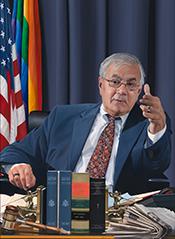
Historical · U.S. House · Massachusetts · District 4
Barney Frank
Former U.S. Representative · Massachusetts District 4 · 1981–2013 · Democratic
Barney Frank represented Massachusetts's District 4 in the United States House of Representatives (1981–2013) for the Democratic party. The page below collects sourced biographical facts, term history, committee roles, and provenance for Frank.
Bioguide ID: F000339
Key facts
- Full name
- Barney Frank
- State
- Massachusetts
- District
- District 4
- Party
- Democratic
- House service
- 1981–2013
- First House term
- 1981
- Status
- Left office
- Current term ends
- —
- Born
- 1940
- Bioguide ID
- F000339
- Committee assignments
- —
- Dataset version
- 1.20260605
Biographical narrative
1,008 words · sourced from the Wikipedia REST extract
Barney Frank was an American politician who served as a member of the U.S. House of Representatives from Massachusetts's 4th congressional district from 1981 until 2013. A member of the Democratic Party, he was known for his significant role in financial legislation, particularly as the chairman of the House Financial Services Committee from 2007 to 2011. Frank was a prominent advocate for LGBTQ+ rights and made history as the first openly gay member of Congress to marry while in office. His legislative career spanned over three decades, during which he became a leading figure in addressing the financial crisis of 2007-2008 through the Dodd-Frank Act.
Early life and career
Barney Frank was born on March 31, 1940, in Bayonne, New Jersey, into a Jewish family. He was one of four children born to Elsie and Samuel Frank, whose parents emigrated from Poland and Russia. Frank's upbringing was marked by a complex family dynamic; his father operated a truck stop in Jersey City, which Frank later described as corrupt. When Frank was young, his father faced legal troubles, serving a year in prison for refusing to testify against Frank's uncle.
Frank attended Bayonne High School and later enrolled at Harvard College, where he lived in various residential houses during his studies. He graduated in 1962, although his academic journey was interrupted by the death of his father, which required him to take a year off to manage family affairs. In 1964, he participated in Freedom Summer, a civil rights initiative in Mississippi aimed at increasing voter registration among African Americans. Afterward, he returned to Harvard, where he taught undergraduates while pursuing a PhD in government. However, he left the program in 1968 to work as the Chief Assistant to Boston Mayor Kevin White, a position he held for three years before serving as Administrative Assistant to Congressman Michael J. Harrington for one year.
Frank completed his legal education at Harvard Law School, graduating in 1977. During his time in law school, he also served as a Massachusetts state representative, marking the beginning of his political career. In 1972, he was elected to the Massachusetts House of Representatives, where he served for eight years. He gained recognition for his controversial stance on issues related to Boston's Combat Zone, a red-light district, where he proposed legislation to legalize sex work within a designated area to combat crime and corruption.
House tenure
Barney Frank was elected to the U.S. House of Representatives in 1980, succeeding Reverend Robert Drinan, who had left Congress. Frank won the Democratic primary with 52% of the vote in a competitive four-candidate field. In the general election, he narrowly defeated Republican Richard A. Jones with a similar margin of 52% to 48%. Initially representing a district that included parts of the western and southern suburbs of Boston, Frank faced redistricting in 1982 that required him to run against incumbent Republican Margaret Heckler. Frank successfully campaigned against Heckler by emphasizing her support for President Ronald Reagan's tax cuts, winning the election with 60% of the vote.
Following this election, Frank's political career gained momentum, and he did not face another serious challenge for many years. From 1984 to 2008, he was re-elected 12 times, consistently receiving at least 66% of the vote. In several elections, including those in 1994, 1998, 2002, and 2006, he achieved overwhelming victories, often winning over 97% of the vote. His opponents during this period were frequently from independent parties, as the Republican Party often chose not to field candidates against him.
In 2010, Frank sought re-election for his 16th term. This election marked a shift, as he faced a credible challenge from Republican Sean Bielat, a U.S. Marine veteran and businessman. Polling indicated a competitive race, prompting Frank to invest significantly in his campaign. Despite the challenges, he maintained a strong position in the district, which had been assessed as "likely Democratic" by political analysts.
Frank's tenure in the House was characterized by his leadership on financial issues. He became the ranking Democrat on the Financial Services Committee in 2003 and served as its chairman from 2007 to 2011. His legislative efforts culminated in the Dodd-Frank Wall Street Reform and Consumer Protection Act, which was enacted in response to the financial crisis. This landmark legislation aimed to increase regulation of the financial industry and protect consumers from predatory lending practices.
Legislative focus and committees
During his time in Congress, Barney Frank was known for his focus on financial services, housing, and civil rights. As chairman of the House Financial Services Committee, he played a pivotal role in shaping legislation that addressed the financial crisis of 2007-2008. The Dodd-Frank Act, which he co-sponsored, introduced significant reforms to the financial sector, including measures to prevent future economic crises and protect consumers from financial abuses.
In addition to his work on financial legislation, Frank was a strong advocate for LGBTQ+ rights. He made history in 1987 by publicly coming out as gay, becoming the first member of Congress to do so voluntarily. His visibility and advocacy contributed to the broader acceptance of LGBTQ+ individuals in politics and society. In July 2012, he married his long-time partner, James Ready, making him the first sitting member of Congress to marry someone of the same sex.
Throughout his congressional career, Frank served on various committees, with a significant focus on financial services and housing issues. His expertise in these areas allowed him to influence key policies and advocate for reforms that aimed to improve the economic well-being of his constituents and the nation as a whole. Frank's legislative legacy is marked by his commitment to addressing economic inequality and protecting the rights of marginalized communities.
Barney Frank did not seek re-election in 2012, concluding a 16-term career in the U.S. House of Representatives. He was succeeded by fellow Democrat Joe Kennedy III. Frank's contributions to American politics, particularly in the areas of financial regulation and LGBTQ+ rights, continue to be recognized as significant milestones in the evolution of legislative practices and social justice in the United States.
Notable legislation
Sponsored and co-sponsored legislation for Barney Frank is pending operator curation. The biographical narrative above carries the same provenance trail until per-bill rows are written.
Sources
- [1]https://en.wikipedia.org/wiki/Barney_FrankWikipedia · retrieved 2026-06-05
Notable quotes
Sourced quotes for Barney Frank are pending operator curation. Narrative-scope provenance remains attached below.
Sources
- [1]https://en.wikipedia.org/wiki/Barney_FrankWikipedia · retrieved 2026-06-05
Key positions
Curated policy positions for Barney Frank are pending operator review. The biographical narrative above carries the same provenance trail until per-topic positions are written.
Sources
- [1]https://en.wikipedia.org/wiki/Barney_FrankWikipedia · retrieved 2026-06-05
Terms served
- 1981–1983U.S. House · Term 1 · Democratic
- 1983–1985U.S. House · Term 2 · Democratic
- 1985–1987U.S. House · Term 3 · Democratic
- 1987–1989U.S. House · Term 4 · Democratic
- 1989–1991U.S. House · Term 5 · Democratic
- 1991–1993U.S. House · Term 6 · Democratic
- 1993–1995U.S. House · Term 7 · Democratic
- 1995–1997U.S. House · Term 8 · Democratic
- 1997–1999U.S. House · Term 9 · Democratic
- 1999–2001U.S. House · Term 10 · Democratic
- 2001–2003U.S. House · Term 11 · Democratic
- 2003–2005U.S. House · Term 12 · Democratic
- 2005–2007U.S. House · Term 13 · Democratic
- 2007–2009U.S. House · Term 14 · Democratic
- 2009–2011U.S. House · Term 15 · Democratic
- 2011–2013U.S. House · Term 16 · Democratic
Sources & provenance
Every attributable claim above carries a per-section [N] marker that resolves to the corresponding URL below. Each entry records the upstream provider, the canonical URL, and the timestamp at which the source was retrieved by the ingest pipeline.
Key facts
- https://bioguide.congress.gov/search/bio/F000339bioguide · retrieved 2026-06-05
- http://www.house.gov/frankhouse.gov · retrieved 2026-06-05
Biographical narrative
- https://en.wikipedia.org/wiki/Barney_Frankwikipedia · retrieved 2026-06-05
Find your representative
Every U.S. state elects representatives by district. Browse Massachusetts’s delegation, the full former-representative roster, or explore the role and term length.
Related on The Candidate
- Preceded by Robert DrinanEarlier holder of the Massachusetts District 4 House seat · Democratic.Open
- Succeeded by Joseph Kennedy IIILater holder of the Massachusetts District 4 House seat · Democratic.Open
- Abbott LawrenceFormer U.S. Representative · Massachusetts District 1 · WhigOpen
- Allen TreadwayFormer U.S. Representative · Massachusetts District 1 · RepublicanOpen
- Artemas Ward Jr.Former U.S. Representative · Massachusetts District 1 · FederalistOpen
- Ashley WrightFormer U.S. Representative · Massachusetts District 1 · RepublicanOpen