
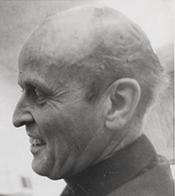
Historical · U.S. House · Massachusetts · District 4
Robert Drinan
Former U.S. Representative · Massachusetts District 4 · 1971–1981 · Democratic
Robert Drinan represented Massachusetts's District 4 in the United States House of Representatives (1971–1981) for the Democratic party. The page below collects sourced biographical facts, term history, committee roles, and provenance for Drinan.
Bioguide ID: D000499
Key facts
- Full name
- Robert Drinan
- State
- Massachusetts
- District
- District 4
- Party
- Democratic
- House service
- 1971–1981
- First House term
- 1971
- Status
- Left office
- Current term ends
- —
- Born
- 1920
- Bioguide ID
- D000499
- Committee assignments
- —
- Dataset version
- 1.20260605
Biographical narrative
1,030 words · sourced from the Wikipedia REST extract
Robert F. Drinan was a prominent American Jesuit priest, lawyer, activist, and Democratic U.S. Representative from Massachusetts. Serving in the U.S. House of Representatives from 1971 until 1981, Drinan was known for his advocacy on various social issues, including civil rights and abortion rights. His tenure in Congress was notable for his anti-Vietnam War stance and his efforts to hold the executive branch accountable, particularly during the Watergate scandal. After leaving office, he continued to influence legal education and human rights advocacy as a professor at Georgetown University Law Center.
Early life and career
Robert Frederick Drinan was born on November 15, 1920, in Hyde Park, Massachusetts. He was the son of Ann Mary Flanagan and James John Drinan. Drinan completed his secondary education at Hyde Park High School in 1938. He pursued higher education at Boston College, where he earned both a Bachelor of Arts and a Master of Arts degree, completing his studies in 1942. That same year, he joined the Society of Jesus, the religious order of the Catholic Church known as the Jesuits. Drinan was ordained as a priest in 1953.
In addition to his theological education, Drinan obtained a Bachelor of Laws (LL.B.) and a Master of Laws (LL.M.) from Georgetown University Law Center in 1950. He furthered his studies in theology, receiving a doctorate from Gregorian University in Rome in 1954. Drinan spent two years studying in Florence, Italy, before returning to Boston, where he was admitted to the bar in 1956.
Drinan's academic career began at Boston College Law School, where he served as dean from 1956 until 1970. During this time, he also taught courses in family law and church-state relations. His academic contributions extended beyond Boston College, as he held visiting professorships at other institutions, including the University of Texas School of Law. In addition to his teaching responsibilities, Drinan was involved in various Massachusetts state commissions that examined legal issues such as judicial salaries and conflicts of interest among lawyers.
House tenure
Drinan entered politics in 1970, running for a seat in the U.S. House of Representatives on a platform that opposed the Vietnam War. He won the Democratic primary against incumbent Representative Philip J. Philbin, who had served on the House Armed Services Committee. Following his primary victory, Drinan successfully secured election to the House, beginning his first term in 1971. Over the course of his congressional career, he was re-elected four times, ultimately serving until January 3, 1981.
Drinan's tenure in Congress was marked by his status as one of the first two Catholic priests to serve as voting members of the House, alongside Robert John Cornell of Wisconsin. He was actively involved in various House committees, notably serving as the chair of the Subcommittee on Criminal Justice within the House Judiciary Committee. In addition, Drinan was a delegate to the 1972 Democratic National Convention.
One of the most significant moments of Drinan's congressional career occurred in July 1973 when he introduced a resolution calling for the impeachment of President Richard Nixon. Drinan's rationale for this resolution stemmed from his belief that Nixon's secret bombing of Cambodia constituted a "high crime and misdemeanor." However, House Majority Leader Tip O'Neill intervened, persuading Drinan to refrain from pursuing the articles of impeachment further, as it could complicate the ongoing impeachment process stemming from the Senate Watergate Committee's findings. Ultimately, the Judiciary Committee voted against including Drinan's charge in the articles of impeachment that were later approved and sent to the full House.
Throughout his time in office, Drinan's strong support for abortion rights drew significant criticism from some members of the Catholic Church. Despite facing pressure to resign from political office, Drinan maintained that his personal opposition to abortion did not preclude him from advocating for its legality. He argued that the moral implications of abortion were distinct from the legal considerations surrounding it. This position, however, did not satisfy his critics within the Church.
In 1980, Pope John Paul II issued a directive that required all priests to withdraw from electoral politics. In compliance with this directive, Drinan chose not to seek re-election. He expressed a deep commitment to his priestly vocation, stating that he believed there was work for him to do that would be more significant than his political role.
Legislative focus and committees
During his time in Congress, Drinan's legislative focus encompassed a range of social issues, reflecting his commitment to civil rights, social justice, and legal reform. His opposition to the Vietnam War was a defining aspect of his political identity, and he actively sought to hold the executive branch accountable for its actions during the conflict. Drinan's introduction of the impeachment resolution against President Nixon highlighted his willingness to confront the administration on issues he deemed critical to the rule of law.
Drinan's advocacy for abortion rights was particularly notable, as he became a prominent figure in the pro-choice movement. His stance contributed to the broader acceptance of abortion rights among politicians, especially within the Democratic Party. Despite facing backlash from some Church leaders, Drinan remained steadfast in his beliefs, arguing for the separation of personal morality and legal rights.
In addition to his legislative work, Drinan was involved in various committees that addressed issues related to criminal justice and civil liberties. His role as chair of the Subcommittee on Criminal Justice allowed him to influence discussions on law enforcement practices and the legal system's treatment of individuals.
After leaving Congress, Drinan continued to engage in legal education and advocacy. He joined the faculty at Georgetown University Law Center, where he taught for 26 years, focusing on legal ethics and international human rights. His contributions to legal scholarship included founding the Georgetown Journal of Legal Ethics and authoring several books on human rights and legal issues.
Drinan's legacy is marked by his commitment to social justice, legal reform, and the intersection of faith and politics. His passing on January 28, 2007, was acknowledged by members of Congress, who honored his memory with a moment of silence on the House floor. Through his diverse career as a priest, lawyer, and politician, Drinan left a lasting impact on American legal and political discourse.
Notable legislation
Sponsored and co-sponsored legislation for Robert Drinan is pending operator curation. The biographical narrative above carries the same provenance trail until per-bill rows are written.
Sources
- [1]https://en.wikipedia.org/wiki/Robert_DrinanWikipedia · retrieved 2026-06-05
Notable quotes
Sourced quotes for Robert Drinan are pending operator curation. Narrative-scope provenance remains attached below.
Sources
- [1]https://en.wikipedia.org/wiki/Robert_DrinanWikipedia · retrieved 2026-06-05
Key positions
Curated policy positions for Robert Drinan are pending operator review. The biographical narrative above carries the same provenance trail until per-topic positions are written.
Sources
- [1]https://en.wikipedia.org/wiki/Robert_DrinanWikipedia · retrieved 2026-06-05
Terms served
- 1971–1973U.S. House · Term 1 · Democratic
- 1973–1975U.S. House · Term 2 · Democratic
- 1975–1977U.S. House · Term 3 · Democratic
- 1977–1979U.S. House · Term 4 · Democratic
- 1979–1981U.S. House · Term 5 · Democratic
Sources & provenance
Every attributable claim above carries a per-section [N] marker that resolves to the corresponding URL below. Each entry records the upstream provider, the canonical URL, and the timestamp at which the source was retrieved by the ingest pipeline.
Key facts
- https://bioguide.congress.gov/search/bio/D000499bioguide · retrieved 2026-06-05
- https://www.govtrack.us/congress/members/403606govtrack · retrieved 2026-06-05
Biographical narrative
- https://en.wikipedia.org/wiki/Robert_Drinanwikipedia · retrieved 2026-06-05
Find your representative
Every U.S. state elects representatives by district. Browse Massachusetts’s delegation, the full former-representative roster, or explore the role and term length.
Related on The Candidate
- Preceded by Pehr HolmesEarlier holder of the Massachusetts District 4 House seat · Republican.Open
- Succeeded by Barney FrankLater holder of the Massachusetts District 4 House seat · Democratic.Open
- Abbott LawrenceFormer U.S. Representative · Massachusetts District 1 · WhigOpen
- Allen TreadwayFormer U.S. Representative · Massachusetts District 1 · RepublicanOpen
- Artemas Ward Jr.Former U.S. Representative · Massachusetts District 1 · FederalistOpen
- Ashley WrightFormer U.S. Representative · Massachusetts District 1 · RepublicanOpen