
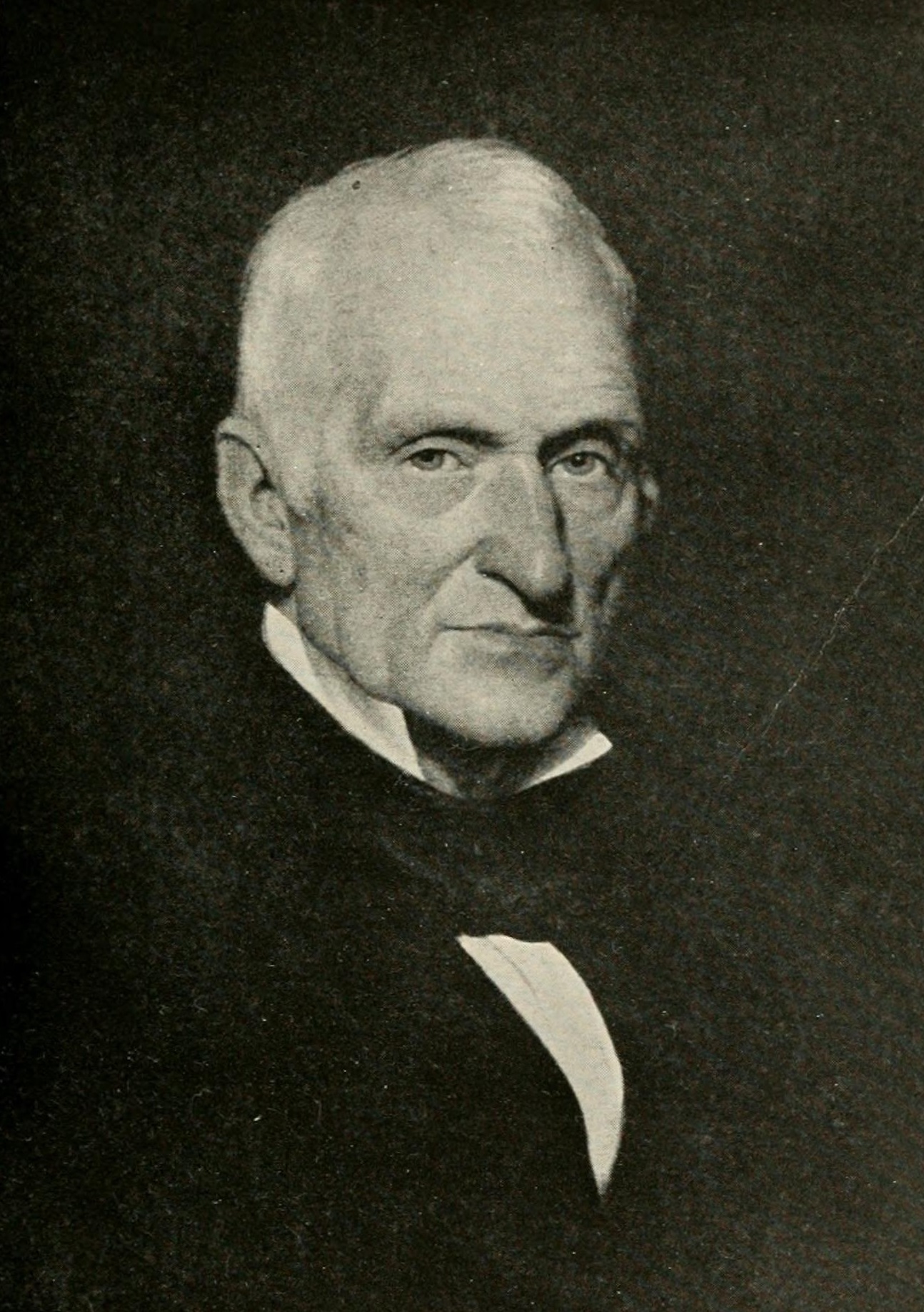
Historical · U.S. House · Massachusetts · District 4
Samuel Hoar
Former U.S. Representative · Massachusetts District 4 · 1835–1837 · Whig
Samuel Hoar represented Massachusetts's District 4 in the United States House of Representatives (1835–1837) for the Whig party. The page below collects sourced biographical facts, term history, committee roles, and provenance for Hoar.
Bioguide ID: H000656
Key facts
- Full name
- Samuel Hoar
- State
- Massachusetts
- District
- District 4
- Party
- Whig
- House service
- 1835–1837
- First House term
- 1835
- Status
- Left office
- Current term ends
- —
- Born
- 1778
- Bioguide ID
- H000656
- Committee assignments
- —
- Dataset version
- 1.20260606
Biographical narrative
855 words · sourced from the Wikipedia REST extract
Samuel Hoar was an American lawyer and politician who served as a U.S. Representative for Massachusetts's 4th congressional district from 1835 to 1837. A member of the Whig Party, Hoar was known for his legal expertise and his strong anti-slavery stance, which positioned him as a significant figure in the political landscape of 19th-century Massachusetts. His career included notable involvement in various political movements, including the Free Soil Party and the early Republican Party, reflecting his commitment to addressing the issues of slavery and civil rights.
Early life and career
Samuel Hoar was born on May 18, 1778, in Lincoln, Massachusetts. He grew up in a politically active family and later moved to Concord, Massachusetts, where he continued his education and legal career. Hoar graduated from Harvard College in 1802 and was admitted to the bar in 1805, marking the beginning of his professional journey as a lawyer. His legal career flourished, and he became recognized as a leading attorney in Massachusetts, particularly in matters related to waterways, canals, and maritime commerce.
In addition to his legal practice, Hoar was involved in public service. He participated as a delegate in the Massachusetts constitutional convention of 1820, which was a significant event in the state's political history. His contributions to public life were further acknowledged when he was elected a Fellow of the American Academy of Arts and Sciences in 1824. Hoar's political career continued to evolve as he served in the Massachusetts State Senate in 1826, 1832, and 1833, establishing himself as a prominent figure in the state's political arena.
On October 13, 1812, Hoar married Sarah Sherman, who was the daughter of Roger Sherman, a notable figure in American history known for signing both the Declaration of Independence and the U.S. Constitution. This marriage further connected Hoar to a legacy of political involvement and civic duty.
House tenure
Hoar's tenure in the U.S. House of Representatives began when he was elected as an Anti-Jacksonian candidate to the Twenty-fourth Congress, serving from March 4, 1835, to March 3, 1837. His election came during a period of significant political realignment in the United States, as the Whig Party emerged in opposition to the policies of President Andrew Jackson. During his time in Congress, Hoar focused on issues pertinent to his constituents and the broader national discourse.
Despite his efforts, Hoar was unsuccessful in his bid for re-election to the Twenty-fifth Congress in 1836. His single term in the House was marked by his commitment to the principles of the Whig Party, which sought to address the concerns of various constituencies, including those advocating for economic development and social reform. Following his departure from Congress, Hoar continued to engage in political activities and remained active in Massachusetts politics.
Legislative focus and committees
Throughout his political career, Samuel Hoar was known for his strong advocacy against slavery and his involvement in various anti-slavery movements. His legal background and political connections positioned him as a key figure in the fight against the injustices faced by free African Americans, particularly in relation to the laws of Southern states that allowed for the seizure of free black individuals.
One of the most notable events in Hoar's career occurred in 1844 when he was appointed as a commissioner by the Massachusetts legislature to investigate the unlawful seizure of Massachusetts citizens in South Carolina and Louisiana. This appointment arose from ongoing tensions between Massachusetts and Southern states regarding the treatment of free African Americans. Hoar's mission was to gather information and challenge the constitutionality of the laws that permitted such seizures. However, upon his arrival in Charleston, South Carolina, he faced significant resistance. Local authorities and citizens threatened him with violence, ultimately forcing him to leave the state without fulfilling his duties. This incident garnered considerable attention in Massachusetts and fueled anti-slavery sentiment in the region.
In addition to his role as a commissioner, Hoar was actively involved in the formation of the Massachusetts Free Soil Party, which emerged in response to the expansion of slavery into new territories. He chaired the Massachusetts Free Soil Party Convention in 1848 and was elected to the Massachusetts House of Representatives in 1850, further solidifying his commitment to anti-slavery causes.
Hoar's political activities continued into the 1850s, when he played a crucial role in the establishment of the Republican Party. In 1854, he chaired a committee that organized a meeting of anti-slavery politicians in Boston, leading to the formation of a new political party aimed at opposing the spread of slavery. This initiative reflected the growing discontent with existing political structures and the urgent need for a unified front against the institution of slavery.
Throughout his life, Samuel Hoar remained dedicated to the principles of justice and equality, using his legal expertise and political influence to advocate for the rights of marginalized individuals. His legacy is marked by his unwavering commitment to civil rights and his significant contributions to the political landscape of 19th-century America. Hoar passed away on November 2, 1856, leaving behind a legacy of activism and public service that continues to resonate in discussions of civil rights and social justice.
Notable legislation
Sponsored and co-sponsored legislation for Samuel Hoar is pending operator curation. The biographical narrative above carries the same provenance trail until per-bill rows are written.
Sources
- [1]https://en.wikipedia.org/wiki/Samuel_HoarWikipedia · retrieved 2026-06-06
Notable quotes
Sourced quotes for Samuel Hoar are pending operator curation. Narrative-scope provenance remains attached below.
Sources
- [1]https://en.wikipedia.org/wiki/Samuel_HoarWikipedia · retrieved 2026-06-06
Key positions
Curated policy positions for Samuel Hoar are pending operator review. The biographical narrative above carries the same provenance trail until per-topic positions are written.
Sources
- [1]https://en.wikipedia.org/wiki/Samuel_HoarWikipedia · retrieved 2026-06-06
Terms served
- 1835–1837U.S. House · Term 1 · Whig
Sources & provenance
Every attributable claim above carries a per-section [N] marker that resolves to the corresponding URL below. Each entry records the upstream provider, the canonical URL, and the timestamp at which the source was retrieved by the ingest pipeline.
Key facts
- https://bioguide.congress.gov/search/bio/H000656bioguide · retrieved 2026-06-06
- https://www.govtrack.us/congress/members/405511govtrack · retrieved 2026-06-06
Biographical narrative
- https://en.wikipedia.org/wiki/Samuel_Hoarwikipedia · retrieved 2026-06-06
Find your representative
Every U.S. state elects representatives by district. Browse Massachusetts’s delegation, the full former-representative roster, or explore the role and term length.
Related on The Candidate
- Preceded by Timothy FullerEarlier holder of the Massachusetts District 4 House seat · Republican.Open
- Succeeded by William ParmenterLater holder of the Massachusetts District 4 House seat · Democratic.Open
- Abbott LawrenceFormer U.S. Representative · Massachusetts District 1 · WhigOpen
- Allen TreadwayFormer U.S. Representative · Massachusetts District 1 · RepublicanOpen
- Artemas Ward Jr.Former U.S. Representative · Massachusetts District 1 · FederalistOpen
- Ashley WrightFormer U.S. Representative · Massachusetts District 1 · RepublicanOpen