
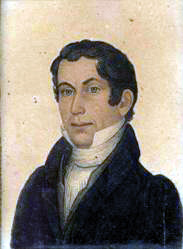
Historical · U.S. House · Massachusetts · District 4
Timothy Fuller
Former U.S. Representative · Massachusetts District 4 · 1817–1825 · Republican
Timothy Fuller represented Massachusetts's District 4 in the United States House of Representatives (1817–1825) for the Republican party. The page below collects sourced biographical facts, term history, committee roles, and provenance for Fuller.
Bioguide ID: F000413
Key facts
- Full name
- Timothy Fuller
- State
- Massachusetts
- District
- District 4
- Party
- Republican
- House service
- 1817–1825
- First House term
- 1817
- Status
- Left office
- Current term ends
- —
- Born
- 1778
- Bioguide ID
- F000413
- Committee assignments
- —
- Dataset version
- 1.20260606
Biographical narrative
1,097 words · sourced from the Wikipedia REST extract
Timothy Fuller was a prominent U.S. Representative from Massachusetts, serving in the House of Representatives during the early 19th century. A member of the Republican Party, he was involved in significant legislative matters and held various positions of influence throughout his political career. His tenure in Congress spanned from 1817 until 1825, during which he was known for his oratory skills and advocacy on behalf of various causes. Fuller’s legacy extends beyond his political career, as he was also the father of notable figures in American history, including early feminist Margaret Fuller.
Early life and career
Timothy Fuller was born on July 11, 1778, in Chilmark, Massachusetts. He was the son of Timothy Fuller, who served as the first settled minister of Princeton, Massachusetts. The family lineage traces back to Thomas Fuller, who emigrated from England in 1638, indicating a long-standing presence in American history. Growing up in a family with strong educational and religious values, Fuller received a classical education that laid the foundation for his future endeavors.
Fuller graduated from Harvard University in 1801, achieving second honors, which reflects his academic excellence. Following his graduation, he began his professional journey as an educator, teaching at Leicester Academy. This role allowed him to impart knowledge and influence the next generation, showcasing his commitment to education. After his time in academia, Fuller pursued a career in law, studying under Levi Lincoln, a prominent figure in Massachusetts politics and law. He was subsequently admitted to the bar and began practicing law in Boston, where he established himself in the legal community.
Fuller’s political career began at the state level, where he served in the Massachusetts House of Representatives. His involvement in state politics provided him with valuable experience and insight into the legislative process. He later became a State councilor and served in the Massachusetts State Senate from 1813 to 1816. His time in the state legislature helped him build a network of political connections and gain a deeper understanding of the issues facing his constituents.
House tenure
Timothy Fuller was elected to the U.S. House of Representatives as a member of the Democratic-Republican Party, serving from March 4, 1817, to March 3, 1825. He was elected to four consecutive terms, reflecting the confidence his constituents had in his leadership and representation. During his time in Congress, Fuller was a member of the Fifteenth, Sixteenth, Seventeenth, and Eighteenth Congresses. His political alignment shifted over time, as he was reelected as an Adams–Clay Republican for his final term, indicating his evolving political stance in response to the changing dynamics of the party system in the early 19th century.
Fuller’s contributions to Congress were marked by his active participation in various legislative matters. He served as the chairman of the Committee on Naval Affairs during the Seventeenth Congress, a role that underscored his involvement in issues related to national defense and maritime policy. His leadership in this committee allowed him to influence decisions regarding the U.S. Navy and its operations, which were crucial during a period of expanding American interests and territorial ambitions.
Throughout his congressional career, Fuller was recognized for his oratorical skills. He delivered speeches on significant issues of the time, including advocacy for the Seminole Indians and opposition to the Missouri Compromise. His ability to articulate complex issues and persuade his colleagues was a hallmark of his tenure, and he was often called upon to represent the interests of marginalized groups. His speeches on behalf of the Seminole Indians highlighted his commitment to social justice and the rights of indigenous peoples, while his opposition to the Missouri Compromise reflected his engagement with the contentious debates surrounding slavery and statehood.
Fuller was also a strong supporter of John Quincy Adams, a fellow Massachusetts politician who later became the sixth President of the United States. His support for Adams was evident in his political activities, including the publication of a pamphlet titled "The Election for the Presidency Considered," which circulated widely and contributed to the political discourse of the time. This engagement with national politics and his alignment with influential figures positioned Fuller as a significant player in the political landscape of early 19th-century America.
Legislative focus and committees
During his time in the House of Representatives, Timothy Fuller focused on a range of legislative issues that were pertinent to his constituents and the nation as a whole. His role as chairman of the Committee on Naval Affairs allowed him to delve into matters related to naval policy, military readiness, and the expansion of the U.S. Navy. This position was particularly important during a time when the United States was navigating its place in international affairs and seeking to assert its influence on the global stage.
Fuller’s advocacy for the Seminole Indians is a notable aspect of his legislative focus. His speeches and efforts to raise awareness about the plight of indigenous peoples demonstrated his commitment to social justice and the importance of representing marginalized communities in Congress. This advocacy was particularly significant given the broader context of U.S. expansion and the often detrimental impact it had on Native American populations.
In addition to his work on naval affairs and indigenous rights, Fuller’s opposition to the Missouri Compromise illustrated his engagement with the contentious issue of slavery. The Missouri Compromise was a significant legislative measure aimed at addressing the balance of free and slave states, and Fuller’s stance on this issue reflected the complexities of political alignment during a time of growing sectional tensions. His willingness to speak out against the compromise indicated his awareness of the moral and political implications of slavery in the United States.
Fuller’s legislative contributions were not limited to his committee work and speeches. His overall engagement in Congress encompassed a variety of issues that affected his constituents and the nation. His ability to navigate the political landscape of the time, coupled with his commitment to advocacy, positioned him as a notable figure in early American politics.
Timothy Fuller passed away on October 1, 1835, in Groton, Massachusetts, succumbing to cholera. His death marked the end of a life dedicated to public service and advocacy. He was interred in Mount Auburn Cemetery in Cambridge, Massachusetts, leaving behind a legacy that included his contributions to American politics and his familial connections to influential figures in American history. His daughter, Margaret Fuller, became an early feminist and a prominent intellectual, while his son, Arthur Buckminster Fuller, was a Unitarian minister. Through his descendants, Fuller’s influence extended into various fields, including innovation and public service, highlighting the lasting impact of his life and work.
Notable legislation
Sponsored and co-sponsored legislation for Timothy Fuller is pending operator curation. The biographical narrative above carries the same provenance trail until per-bill rows are written.
Sources
- [1]https://en.wikipedia.org/wiki/Timothy_FullerWikipedia · retrieved 2026-06-06
Notable quotes
Sourced quotes for Timothy Fuller are pending operator curation. Narrative-scope provenance remains attached below.
Sources
- [1]https://en.wikipedia.org/wiki/Timothy_FullerWikipedia · retrieved 2026-06-06
Key positions
Curated policy positions for Timothy Fuller are pending operator review. The biographical narrative above carries the same provenance trail until per-topic positions are written.
Sources
- [1]https://en.wikipedia.org/wiki/Timothy_FullerWikipedia · retrieved 2026-06-06
Terms served
- 1817–1819U.S. House · Term 1 · Republican
- 1819–1821U.S. House · Term 2 · Republican
- 1821–1823U.S. House · Term 3 · Republican
- 1823–1825U.S. House · Term 4 · Republican
Sources & provenance
Every attributable claim above carries a per-section [N] marker that resolves to the corresponding URL below. Each entry records the upstream provider, the canonical URL, and the timestamp at which the source was retrieved by the ingest pipeline.
Key facts
- https://bioguide.congress.gov/search/bio/F000413bioguide · retrieved 2026-06-06
- https://www.govtrack.us/congress/members/404355govtrack · retrieved 2026-06-06
Biographical narrative
- https://en.wikipedia.org/wiki/Timothy_Fullerwikipedia · retrieved 2026-06-06
Find your representative
Every U.S. state elects representatives by district. Browse Massachusetts’s delegation, the full former-representative roster, or explore the role and term length.
Related on The Candidate
- Preceded by Asahel StearnsEarlier holder of the Massachusetts District 4 House seat · Federalist.Open
- Succeeded by Samuel HoarLater holder of the Massachusetts District 4 House seat · Whig.Open
- Abbott LawrenceFormer U.S. Representative · Massachusetts District 1 · WhigOpen
- Allen TreadwayFormer U.S. Representative · Massachusetts District 1 · RepublicanOpen
- Artemas Ward Jr.Former U.S. Representative · Massachusetts District 1 · FederalistOpen
- Ashley WrightFormer U.S. Representative · Massachusetts District 1 · RepublicanOpen