
Historical · U.S. House · Massachusetts · District 6
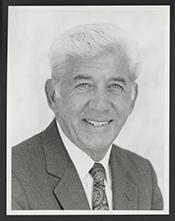
Nicholas Mavroules
Former U.S. Representative · Massachusetts District 6 · 1979–1993 · Democratic
Nicholas Mavroules represented Massachusetts's District 6 in the United States House of Representatives (1979–1993) for the Democratic party. The page below collects sourced biographical facts, term history, committee roles, and provenance for Mavroules.
Bioguide ID: M000264
Key facts
- Full name
- Nicholas Mavroules
- State
- Massachusetts
- District
- District 6
- Party
- Democratic
- House service
- 1979–1993
- First House term
- 1979
- Status
- Left office
- Current term ends
- —
- Born
- 1929
- Bioguide ID
- M000264
- Committee assignments
- —
- Dataset version
- 1.20260605
Biographical narrative
911 words · sourced from the Wikipedia REST extract
Nicholas James Mavroules was an American politician affiliated with the Democratic Party, who served as a U.S. Representative for Massachusetts's 6th congressional district from 1979 until 1993. Before his tenure in Congress, he was the Mayor of Peabody, Massachusetts, where he held office for a decade. Mavroules's political career was marked by significant legislative involvement, particularly in defense matters, but it was ultimately overshadowed by legal troubles that led to his conviction on multiple counts of racketeering and extortion.
Early life and career
Nicholas Mavroules was born on November 1, 1929, in Peabody, Massachusetts. He completed his secondary education at Peabody High School and subsequently began his professional career at Sylvania Electric Products, where he worked from 1949 until 1967. During his time at Sylvania, he served as a supervisor of personnel, gaining experience in management and public relations.
Mavroules entered local politics in 1958 when he was elected to the Peabody City Council, a role he held until 1965. His political aspirations continued to grow, and in 1966, he was elected as the Mayor of Peabody. He served in this capacity for ten years, during which he developed a reputation for engaging with the community and addressing local issues. His tenure as mayor laid the groundwork for his future political career, culminating in his election to the U.S. House of Representatives in 1978. Mavroules also participated in the national political arena as a delegate to the 1976 Democratic National Convention, further solidifying his standing within the party.
House tenure
Mavroules was elected to the U.S. House of Representatives in 1978, succeeding retiring Congressman Michael J. Harrington. His election marked the beginning of a significant period in his political career, during which he served a total of seven terms in Congress. His time in office was characterized by active participation in various legislative matters, particularly those related to national defense and military oversight.
Throughout his tenure, Mavroules was a member of the House Armed Services Committee, where he played a crucial role in several key investigations and initiatives. He chaired the Subcommittee on Investigations, which was responsible for probing various defense-related issues. One of the notable investigations he led was into the tragic USS Iowa turret explosion, which resulted in the deaths of 47 sailors. Mavroules's efforts in this area were aimed at ensuring accountability and improving safety protocols within the Navy.
In addition to his work on the USS Iowa investigation, Mavroules was involved in exposing cost overruns in Navy aircraft programs, advocating for fiscal responsibility and transparency in military spending. He also worked to secure prisoner of war status for the crew of the USS Pueblo, a naval vessel captured by North Korea in 1968, demonstrating his commitment to the welfare of military personnel.
During the 1980s, Mavroules emerged as a prominent advocate for nuclear disarmament within the House, supporting initiatives aimed at establishing a nuclear freeze and opposing the deployment of the MX missile. His positions on these issues reflected a broader concern for international peace and security, aligning with the Democratic Party's platform during that era.
However, Mavroules's congressional career faced significant challenges in the early 1990s. In August 1992, he was indicted by a federal grand jury on multiple charges, including bribery, racketeering, and extortion. The allegations included accepting illegal gifts and failing to report them on congressional disclosure and income tax forms. Despite these serious accusations, Mavroules managed to survive a Democratic primary election shortly after the indictment. However, he ultimately lost his seat in the general election to Republican candidate Peter G. Torkildsen.
Legislative focus and committees
Throughout his time in Congress, Nicholas Mavroules focused on various legislative issues, particularly those related to national defense, military oversight, and international relations. His role on the House Armed Services Committee allowed him to influence significant defense policies and engage in critical investigations that aimed to enhance the safety and effectiveness of the U.S. military.
As chair of the Subcommittee on Investigations, Mavroules was instrumental in leading inquiries into incidents that raised concerns about military operations and protocols. His investigation into the USS Iowa turret explosion was particularly notable, as it sought to uncover the factors that contributed to the tragedy and to recommend measures to prevent similar incidents in the future. This work underscored his commitment to ensuring accountability within the military and protecting the lives of service members.
Mavroules's advocacy for a nuclear freeze and his opposition to the MX missile program reflected his broader concerns about nuclear proliferation and the potential for global conflict. His legislative efforts in this area were part of a larger movement within the Democratic Party during the 1980s, which sought to promote disarmament and reduce the risk of nuclear war.
Despite his legislative achievements, Mavroules's career was ultimately marred by his legal troubles. Following his departure from Congress, he pleaded guilty to multiple counts of racketeering and extortion, leading to a fifteen-month prison sentence. This conviction overshadowed his earlier accomplishments and marked a significant turning point in his life and career.
Nicholas Mavroules passed away on December 25, 2003, in Salem, Massachusetts, following complications from gastric surgery. His funeral was attended by a large number of individuals, including former colleagues from Congress, reflecting the impact he had on his community and the political landscape during his years of service. He was laid to rest in Cedar Grove Cemetery in Peabody, Massachusetts, leaving behind a complex legacy shaped by both his public service and his legal challenges.
Notable legislation
Sponsored and co-sponsored legislation for Nicholas Mavroules is pending operator curation. The biographical narrative above carries the same provenance trail until per-bill rows are written.
Sources
- [1]https://en.wikipedia.org/wiki/Nicholas_MavroulesWikipedia · retrieved 2026-06-05
Notable quotes
Sourced quotes for Nicholas Mavroules are pending operator curation. Narrative-scope provenance remains attached below.
Sources
- [1]https://en.wikipedia.org/wiki/Nicholas_MavroulesWikipedia · retrieved 2026-06-05
Key positions
Curated policy positions for Nicholas Mavroules are pending operator review. The biographical narrative above carries the same provenance trail until per-topic positions are written.
Sources
- [1]https://en.wikipedia.org/wiki/Nicholas_MavroulesWikipedia · retrieved 2026-06-05
Terms served
- 1979–1981U.S. House · Term 1 · Democratic
- 1981–1983U.S. House · Term 2 · Democratic
- 1983–1985U.S. House · Term 3 · Democratic
- 1985–1987U.S. House · Term 4 · Democratic
- 1987–1989U.S. House · Term 5 · Democratic
- 1989–1991U.S. House · Term 6 · Democratic
- 1991–1993U.S. House · Term 7 · Democratic
Sources & provenance
Every attributable claim above carries a per-section [N] marker that resolves to the corresponding URL below. Each entry records the upstream provider, the canonical URL, and the timestamp at which the source was retrieved by the ingest pipeline.
Key facts
- https://bioguide.congress.gov/search/bio/M000264bioguide · retrieved 2026-06-05
- https://www.govtrack.us/congress/members/407282govtrack · retrieved 2026-06-05
Biographical narrative
- https://en.wikipedia.org/wiki/Nicholas_Mavrouleswikipedia · retrieved 2026-06-05
Find your representative
Every U.S. state elects representatives by district. Browse Massachusetts’s delegation, the full former-representative roster, or explore the role and term length.
Related on The Candidate
- Preceded by Michael HarringtonEarlier holder of the Massachusetts District 6 House seat · Democratic.Open
- Succeeded by Peter TorkildsenLater holder of the Massachusetts District 6 House seat · Republican.Open
- Abbott LawrenceFormer U.S. Representative · Massachusetts District 1 · WhigOpen
- Allen TreadwayFormer U.S. Representative · Massachusetts District 1 · RepublicanOpen
- Artemas Ward Jr.Former U.S. Representative · Massachusetts District 1 · FederalistOpen
- Ashley WrightFormer U.S. Representative · Massachusetts District 1 · RepublicanOpen