
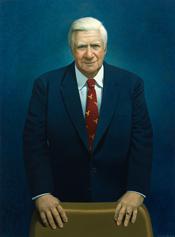
Historical · U.S. House · Massachusetts · District 8
Tip O’Neill Jr.
Former U.S. Representative · Massachusetts District 8 · 1953–1987 · Democratic
Tip O’Neill Jr. represented Massachusetts's District 8 in the United States House of Representatives (1953–1987) for the Democratic party. The page below collects sourced biographical facts, term history, committee roles, and provenance for Jr..
Bioguide ID: O000098
Key facts
- Full name
- Tip O’Neill Jr.
- State
- Massachusetts
- District
- District 8
- Party
- Democratic
- House service
- 1953–1987
- First House term
- 1953
- Status
- Left office
- Current term ends
- —
- Born
- 1912
- Bioguide ID
- O000098
- Committee assignments
- —
- Dataset version
- 1.20260605
Biographical narrative
942 words · sourced from the Wikipedia REST extract
Thomas P. O'Neill Jr. was a prominent American politician and member of the Democratic Party, who served as a U.S. Representative for Massachusetts's 8th congressional district from 1953 until 1987. O'Neill is best known for his long tenure as Speaker of the House from 1977 to 1987, making him the third-longest-serving Speaker in U.S. history. His political career was marked by significant legislative achievements and leadership roles, as well as a commitment to the principles of the New Deal, which shaped his approach to governance and public policy.
Early life and career
Born on December 9, 1912, in North Cambridge, Massachusetts, Thomas Phillip O'Neill Jr. was the youngest of three children in a working-class Irish family. His father, Thomas Phillip O'Neill Sr., was a bricklayer who later became a city council member and Superintendent of Sewers in Cambridge. O'Neill's mother died when he was just nine months old, and he was raised primarily by a French-Canadian housekeeper until his father remarried when he was eight years old. This upbringing in a modest environment influenced O'Neill's later political views and commitment to social justice.
O'Neill attended Roman Catholic schools, graduating from St. John High School in Cambridge in 1931, where he was active in sports, serving as captain of the basketball team. He continued his education at Boston College, earning a degree in 1936. His interest in politics began at a young age; he first became involved in political campaigns at the age of 15, volunteering for Al Smith's presidential campaign in 1928. He later supported Franklin D. Roosevelt's campaign during his senior year at Boston College, which solidified his commitment to the Democratic Party and its policies.
After graduating, O'Neill entered politics by winning a seat in the Massachusetts House of Representatives at the age of 24. His election came during a time of economic hardship, which made him a strong advocate for Roosevelt's New Deal policies. O'Neill's early political career was characterized by a commitment to addressing social issues through government intervention, a perspective shaped by his experiences growing up in a working-class environment. In 1949, he became the first Democratic Speaker of the Massachusetts House of Representatives, a position he held until 1952, when he successfully ran for the U.S. House of Representatives.
House tenure
O'Neill was elected to the U.S. House of Representatives in 1952, succeeding John F. Kennedy, who had been elected to the Senate. During his time in Congress, O'Neill was re-elected 16 times, serving a total of 17 terms without facing significant opposition. His congressional district, which initially was the 11th District, was re-designated as the 8th District in 1963, encompassing the northern half of Boston.
Throughout his tenure, O'Neill was known for his strong leadership and ability to navigate complex legislative issues. He served on the House Rules Committee, where he became a key ally of Democratic leadership, particularly his mentor, John William McCormack. O'Neill's legislative record includes support for significant civil rights legislation, as he voted in favor of the Civil Rights Acts of 1957, 1960, 1964, and 1968, as well as the Voting Rights Act of 1965 and the 24th Amendment to the U.S. Constitution. He also voted in favor of the Hawaii Admission Act while opposing the Alaska Statehood Act.
In the late 1960s, O'Neill's political stance evolved as he became increasingly critical of the Vietnam War. In 1967, he publicly broke with President Lyndon B. Johnson's administration over the war, expressing his belief that U.S. involvement was morally unjustifiable. This shift in position garnered him support from younger constituents, including students and faculty at local colleges, while alienating some older voters. His opposition to the war helped him connect with a new generation of political leaders in the House, contributing to his rise within the Democratic Party.
O'Neill's leadership trajectory continued to ascend in the 1970s. He was appointed House Majority Whip in 1971 and subsequently became House Majority Leader in 1973. His most significant achievement came in 1977 when he was elected Speaker of the House, a position he held until 1987. During his speakership, O'Neill played a crucial role in shaping legislative priorities and fostering party unity, particularly during a time of political division in the country.
Legislative focus and committees
As Speaker of the House, O'Neill's legislative focus included a range of domestic and foreign policy issues. He was a staunch advocate for social welfare programs and sought to expand access to healthcare and job opportunities. His tenure coincided with the presidency of Jimmy Carter, during which O'Neill aimed to implement a universal healthcare system and a guaranteed jobs program. However, the relationship between the Carter administration and Congress became strained, particularly as economic challenges mounted and political dynamics shifted.
O'Neill's opposition to President Ronald Reagan's conservative domestic policies defined much of his later career. He emerged as a leading critic of Reagan's agenda, particularly in areas such as social welfare and economic policy. Despite their ideological differences, O'Neill and Reagan found common ground in foreign policy, particularly regarding the Anglo-Irish Agreement and the Reagan Doctrine during the Cold War. O'Neill's ability to work across party lines on certain issues showcased his commitment to national interests, even amidst political disagreements.
After retiring from Congress in 1987, O'Neill remained active in public life, publishing a best-selling autobiography and making appearances in various media, including commercials. He passed away on January 5, 1994, leaving behind a legacy as a significant figure in American politics, particularly for his contributions to civil rights, social welfare, and legislative leadership. His career reflects the complexities of American political life during a transformative era, marked by both challenges and achievements in governance.
Notable legislation
Sponsored and co-sponsored legislation for Tip O’Neill Jr. is pending operator curation. The biographical narrative above carries the same provenance trail until per-bill rows are written.
Sources
- [1]https://en.wikipedia.org/wiki/Tip_O'NeillWikipedia · retrieved 2026-06-05
Notable quotes
Sourced quotes for Tip O’Neill Jr. are pending operator curation. Narrative-scope provenance remains attached below.
Sources
- [1]https://en.wikipedia.org/wiki/Tip_O'NeillWikipedia · retrieved 2026-06-05
Key positions
Curated policy positions for Tip O’Neill Jr. are pending operator review. The biographical narrative above carries the same provenance trail until per-topic positions are written.
Sources
- [1]https://en.wikipedia.org/wiki/Tip_O'NeillWikipedia · retrieved 2026-06-05
Terms served
- 1953–1955U.S. House · Term 1 · Democratic
- 1955–1957U.S. House · Term 2 · Democratic
- 1957–1959U.S. House · Term 3 · Democratic
- 1959–1961U.S. House · Term 4 · Democratic
- 1961–1963U.S. House · Term 5 · Democratic
- 1963–1965U.S. House · Term 6 · Democratic
- 1965–1967U.S. House · Term 7 · Democratic
- 1967–1969U.S. House · Term 8 · Democratic
- 1969–1971U.S. House · Term 9 · Democratic
- 1971–1973U.S. House · Term 10 · Democratic
- 1973–1975U.S. House · Term 11 · Democratic
- 1975–1977U.S. House · Term 12 · Democratic
- 1977–1979U.S. House · Term 13 · Democratic
- 1979–1981U.S. House · Term 14 · Democratic
- 1981–1983U.S. House · Term 15 · Democratic
- 1983–1985U.S. House · Term 16 · Democratic
- 1985–1987U.S. House · Term 17 · Democratic
Sources & provenance
Every attributable claim above carries a per-section [N] marker that resolves to the corresponding URL below. Each entry records the upstream provider, the canonical URL, and the timestamp at which the source was retrieved by the ingest pipeline.
Key facts
- https://bioguide.congress.gov/search/bio/O000098bioguide · retrieved 2026-06-05
- https://www.govtrack.us/congress/members/408307govtrack · retrieved 2026-06-05
Biographical narrative
- https://en.wikipedia.org/wiki/Tip_O'Neillwikipedia · retrieved 2026-06-05
Find your representative
Every U.S. state elects representatives by district. Browse Massachusetts’s delegation, the full former-representative roster, or explore the role and term length.
Related on The Candidate
- Preceded by Arthur HealeyEarlier holder of the Massachusetts District 8 House seat · Democratic.Open
- Succeeded by Joseph Kennedy IILater holder of the Massachusetts District 8 House seat · Democratic.Open
- Abbott LawrenceFormer U.S. Representative · Massachusetts District 1 · WhigOpen
- Allen TreadwayFormer U.S. Representative · Massachusetts District 1 · RepublicanOpen
- Artemas Ward Jr.Former U.S. Representative · Massachusetts District 1 · FederalistOpen
- Ashley WrightFormer U.S. Representative · Massachusetts District 1 · RepublicanOpen