
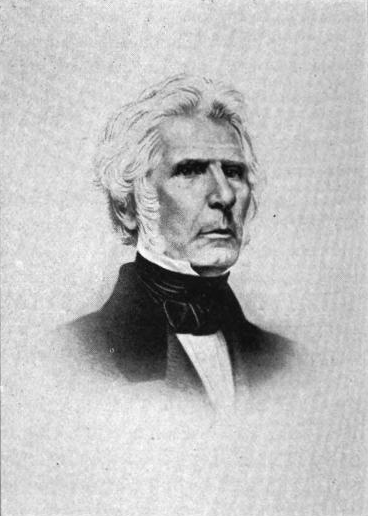
Historical · U.S. House · Massachusetts · District 8
William Calhoun
Former U.S. Representative · Massachusetts District 8 · 1835–1843 · Whig
William Calhoun represented Massachusetts's District 8 in the United States House of Representatives (1835–1843) for the Whig party. The page below collects sourced biographical facts, term history, committee roles, and provenance for Calhoun.
Bioguide ID: C000046
Key facts
- Full name
- William Calhoun
- State
- Massachusetts
- District
- District 8
- Party
- Whig
- House service
- 1835–1843
- First House term
- 1835
- Status
- Left office
- Current term ends
- —
- Born
- 1796
- Bioguide ID
- C000046
- Committee assignments
- —
- Dataset version
- 1.20260606
Biographical narrative
1,013 words · sourced from the Wikipedia REST extract
William Calhoun was a prominent American politician who served as a U.S. Representative for Massachusetts' 8th congressional district during the early to mid-19th century. A member of the Whig Party, Calhoun's political career spanned several key roles, including his time in the U.S. House of Representatives, where he was involved in various legislative activities and held significant positions of leadership. His contributions to state and national politics were marked by a commitment to public service that extended beyond his congressional tenure.
Early life and career
William Calhoun was born on December 29, 1796, in Boston, Massachusetts, into a family that would influence his future pursuits in both law and politics. He was the eldest child of Andrew Calhoun and Martha Chamberlain Calhoun. Growing up in Boston, Calhoun had access to educational opportunities that would shape his intellectual development. He graduated from Yale College in 1814, an achievement that positioned him well for a career in law and public service.
Following his graduation, Calhoun embarked on the study of law, initially in Concord, New Hampshire, before continuing his legal education in Springfield, Massachusetts. This transition to Springfield would later play a significant role in his political career, as he established himself within the community. After completing his legal studies, Calhoun was admitted to the bar and began practicing law in Springfield. His legal career provided him with a foundation in governance and public affairs, which would later inform his political decisions.
Calhoun's political career began in earnest when he was elected to the Massachusetts House of Representatives, where he served from 1825 to 1834. His leadership abilities were recognized early on, and he held the position of speaker of the House from 1828 to 1834. This role allowed him to influence legislative proceedings and gain valuable experience in the workings of state government. His tenure in the Massachusetts legislature was marked by a commitment to the issues facing his constituents and the state as a whole.
House tenure
William Calhoun's congressional career began when he was elected as an Anti-Jacksonian to the Twenty-fourth Congress, which convened on March 4, 1835. His election marked the start of a significant period in his political life, as he transitioned from state politics to the national stage. Calhoun was subsequently re-elected to three additional terms in the U.S. House of Representatives, serving until March 3, 1843. Throughout his time in Congress, he was affiliated with the Whig Party, which emerged in opposition to the policies of President Andrew Jackson and the Democratic Party.
During his congressional tenure, Calhoun was actively involved in various legislative matters, demonstrating his commitment to addressing the needs of his constituents. Notably, he served as the chairman of the Committee on Private Land Claims during the Twenty-sixth Congress. This committee was responsible for addressing issues related to land ownership and claims, which were particularly relevant in the context of westward expansion and the evolving legal landscape of land rights in the United States. His leadership in this committee underscored his ability to navigate complex legislative issues and advocate for policies that aligned with the interests of his constituents.
Calhoun's decision not to seek renomination in 1842 marked the end of his congressional career. This choice may have been influenced by various factors, including the shifting political landscape and his desire to pursue other opportunities in public service. His time in Congress, however, left a lasting impact on his political legacy and established him as a notable figure in Massachusetts politics.
Legislative focus and committees
Throughout his time in the U.S. House of Representatives, William Calhoun focused on a range of legislative issues that were pertinent to his constituents and the nation. His role as chairman of the Committee on Private Land Claims was particularly significant, as it involved addressing the complexities surrounding land ownership and claims, especially during a period marked by significant territorial expansion in the United States. The committee's work was crucial in resolving disputes and clarifying land rights, which were essential for the development of new territories and states.
Calhoun's legislative focus extended beyond land claims, as he was involved in broader discussions about governance and public policy during a transformative era in American history. The Whig Party, of which he was a member, advocated for a range of issues, including economic development, infrastructure improvements, and a more active role for the federal government in promoting social and economic progress. Calhoun's alignment with these principles likely influenced his legislative priorities and the initiatives he supported during his time in Congress.
After leaving Congress, Calhoun continued to engage in public service in various capacities. In 1844, he served as a Presidential Elector for Henry Clay, a prominent Whig candidate for the presidency. His involvement in the electoral process demonstrated his ongoing commitment to the political landscape of the nation. Additionally, Calhoun held several important positions in Massachusetts state government, including serving as a member of the Massachusetts Senate in 1846 and 1847, where he also held the role of president.
Calhoun's public service continued with his appointment as Secretary of the Commonwealth of Massachusetts from 1848 to 1851, a role that involved overseeing various administrative functions of the state government. He later served as the state bank commissioner from 1853 to 1855, where he was responsible for regulating banking activities in Massachusetts. His experience in these roles further solidified his reputation as a dedicated public servant.
In 1859, Calhoun was elected mayor of Springfield, Massachusetts, where he continued to influence local governance. His leadership at the municipal level allowed him to address community issues and contribute to the development of Springfield. He returned to the Massachusetts House of Representatives in 1861, further demonstrating his enduring commitment to public service and political engagement.
William Calhoun passed away on November 8, 1865, in Springfield, Massachusetts. His contributions to state and national politics were marked by a dedication to public service and a commitment to the issues facing his constituents. He was interred in Springfield Cemetery, leaving behind a legacy of political involvement that spanned several decades and various levels of government.
Notable legislation
Sponsored and co-sponsored legislation for William Calhoun is pending operator curation. The biographical narrative above carries the same provenance trail until per-bill rows are written.
Sources
- [1]https://en.wikipedia.org/wiki/William_B._CalhounWikipedia · retrieved 2026-06-06
Notable quotes
Sourced quotes for William Calhoun are pending operator curation. Narrative-scope provenance remains attached below.
Sources
- [1]https://en.wikipedia.org/wiki/William_B._CalhounWikipedia · retrieved 2026-06-06
Key positions
Curated policy positions for William Calhoun are pending operator review. The biographical narrative above carries the same provenance trail until per-topic positions are written.
Sources
- [1]https://en.wikipedia.org/wiki/William_B._CalhounWikipedia · retrieved 2026-06-06
Terms served
- 1835–1837U.S. House · Term 1 · Whig
- 1837–1839U.S. House · Term 2 · Whig
- 1839–1841U.S. House · Term 3 · Whig
- 1841–1843U.S. House · Term 4 · Whig
Sources & provenance
Every attributable claim above carries a per-section [N] marker that resolves to the corresponding URL below. Each entry records the upstream provider, the canonical URL, and the timestamp at which the source was retrieved by the ingest pipeline.
Key facts
- https://bioguide.congress.gov/search/bio/C000046bioguide · retrieved 2026-06-06
- https://www.govtrack.us/congress/members/402207govtrack · retrieved 2026-06-06
Biographical narrative
- https://en.wikipedia.org/wiki/William_B._Calhounwikipedia · retrieved 2026-06-06
Find your representative
Every U.S. state elects representatives by district. Browse Massachusetts’s delegation, the full former-representative roster, or explore the role and term length.
Related on The Candidate
- Preceded by Samuel LathropEarlier holder of the Massachusetts District 8 House seat · Adams.Open
- Succeeded by Horace MannLater holder of the Massachusetts District 8 House seat · Free Soil.Open
- Abbott LawrenceFormer U.S. Representative · Massachusetts District 1 · WhigOpen
- Allen TreadwayFormer U.S. Representative · Massachusetts District 1 · RepublicanOpen
- Artemas Ward Jr.Former U.S. Representative · Massachusetts District 1 · FederalistOpen
- Ashley WrightFormer U.S. Representative · Massachusetts District 1 · RepublicanOpen