
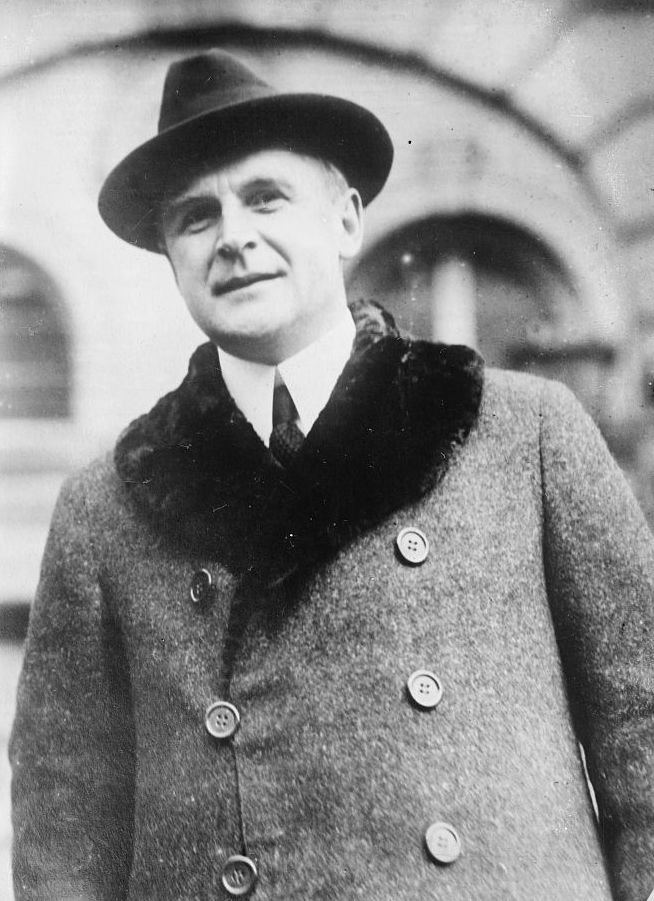
Historical · U.S. House · Massachusetts · District 9
Alvan Fuller
Former U.S. Representative · Massachusetts District 9 · 1917–1921 · Republican
Alvan Fuller represented Massachusetts's District 9 in the United States House of Representatives (1917–1921) for the Republican party. The page below collects sourced biographical facts, term history, committee roles, and provenance for Fuller.
Bioguide ID: F000405
Key facts
- Full name
- Alvan Fuller
- State
- Massachusetts
- District
- District 9
- Party
- Republican
- House service
- 1917–1921
- First House term
- 1917
- Status
- Left office
- Current term ends
- —
- Born
- 1878
- Bioguide ID
- F000405
- Committee assignments
- —
- Dataset version
- 1.20260606
Biographical narrative
969 words · sourced from the Wikipedia REST extract
Alvan Fuller was an American businessman and politician who served as a U.S. Representative for Massachusetts's 9th congressional district from 1917 to 1921. A member of the Republican Party, Fuller was known for his involvement in the automobile industry, where he achieved significant success as a car dealer, and for his subsequent political career that included serving as a delegate to the Republican National Convention and as the Governor of Massachusetts. His tenure in public office was marked by his advocacy for reform and transparency in government operations.
Early life and career
Alvan Tufts Fuller was born on February 27, 1878, in the Charlestown neighborhood of Boston, Massachusetts. He was the son of Alvan Bond Fuller and Flora Arabella Tufts Fuller, who came from working-class backgrounds. When Fuller was a child, his family relocated to Malden, Massachusetts. Early in his life, he began working in a rubber factory, where he also repaired bicycles as a side endeavor. His passion for cycling led him to participate in local races, where he garnered attention and success.
To promote his bicycle business, Fuller engaged in marketing strategies that included hosting open houses on Washington's Birthday, a tradition that he would later adapt in his automobile business. Fuller’s lineage can be traced back to English Puritan settler Captain Matthew Fuller, and he was distantly related to Benjamin Franklin, which added a historical dimension to his family background.
Fuller's interest in automobiles was sparked in the late 1890s. He sold his racing trophies to finance a trip to Europe in 1899, where he gained insights into the burgeoning automobile industry. Upon his return, he imported two French De Dion-Bouton voiturettes, marking the first instance of motor vehicles being brought into Boston through that port. In 1903, he secured the Boston franchise for Packard automobiles and later expanded his dealership to include Cadillac vehicles.
His first dealership was established on Commonwealth Avenue in Boston's Allston neighborhood, which was then an undeveloped area. Fuller's success in the automobile business was notable; he extended his sales operations as far west as Worcester and south to Providence, Rhode Island. By 1920, he was recognized as the world's most successful car dealer, a testament to his business acumen and the popularity of his dealerships. His flagship showroom, constructed in 1927 and designed by industrial architect Albert Kahn, became a landmark in the area and is now listed on the National Register of Historic Places.
House tenure
Fuller's political career began to take shape around 1912 when he supported Theodore Roosevelt's presidential campaign. Although he declined the Progressive Party's nomination for Governor of Massachusetts in 1912, he successfully won a seat in the Massachusetts House of Representatives in 1914 as a member of the Progressive Party. By 1916, Fuller had transitioned to the Republican Party and served as a delegate to its national convention that year.
In the same election cycle, Fuller ran for the U.S. House of Representatives as an independent candidate. He narrowly defeated the incumbent Republican, Ernest W. Roberts, by a margin of just 16 votes. Fuller served two terms in the U.S. House during the Sixty-fifth and Sixty-sixth Congresses, from March 4, 1917, to January 5, 1921. His second election was won with a more substantial margin after he officially aligned with the Republican Party.
During his time in Congress, Fuller was known for his advocacy of reform and transparency in government. He was critical of the inefficiencies in the legislative process, describing it as "the most expensive barnacle that ever attached itself to the ship of state." His calls for reform contributed to President Woodrow Wilson's introduction of a new centralized budgeting system in 1919. Fuller was committed to increasing transparency and reducing political influence in Congress, and he refrained from cashing his congressional paychecks or utilizing the franking privilege, which allowed members of Congress to send mail without postage.
After completing his two terms in the House, Fuller sought the office of Lieutenant Governor of Massachusetts in 1920. He won the election and served as the 48th lieutenant governor from 1921 to 1925, working alongside Governor Channing Cox. His primary competition in the Republican primaries came from Joseph E. Warner, the Speaker of the Massachusetts House of Representatives. The Democratic Party at the time was relatively disorganized, which allowed Fuller and the Republican Party to maintain a stronghold on state politics.
Legislative focus and committees
During his tenure in the U.S. House of Representatives, Fuller was particularly focused on reforming the legislative process. He believed that the existing methods of handling legislation were inefficient and costly, and he sought to implement changes that would enhance the effectiveness of Congress. His proposals aimed to increase transparency and accountability within the legislative framework, reflecting his commitment to improving the governance of the country.
Fuller’s legislative efforts were characterized by a progressive approach that sought to address the needs of his constituents while also advocating for broader reforms at the national level. His experience as a businessman informed his perspective on economic issues, and he often emphasized the importance of sound fiscal management in government.
After his time in Congress, Fuller continued his public service by taking on the role of Lieutenant Governor and later becoming the 50th Governor of Massachusetts from 1925 to 1929. His political career was marked by a commitment to the principles of fiscal conservatism and social moderation, which he maintained throughout his time in office.
In summary, Alvan Fuller’s career spanned significant developments in both the automotive industry and American politics. His contributions as a businessman and politician reflect a dedication to reform and public service that characterized his life and work. His legacy includes not only his achievements in the automobile sector but also his efforts to improve the legislative process and governance in Massachusetts and the nation.
Notable legislation
Sponsored and co-sponsored legislation for Alvan Fuller is pending operator curation. The biographical narrative above carries the same provenance trail until per-bill rows are written.
Sources
- [1]https://en.wikipedia.org/wiki/Alvan_T._FullerWikipedia · retrieved 2026-06-06
Notable quotes
Sourced quotes for Alvan Fuller are pending operator curation. Narrative-scope provenance remains attached below.
Sources
- [1]https://en.wikipedia.org/wiki/Alvan_T._FullerWikipedia · retrieved 2026-06-06
Key positions
Curated policy positions for Alvan Fuller are pending operator review. The biographical narrative above carries the same provenance trail until per-topic positions are written.
Sources
- [1]https://en.wikipedia.org/wiki/Alvan_T._FullerWikipedia · retrieved 2026-06-06
Terms served
- 1917–1919U.S. House · Term 1 · Ind. Republican
- 1919–1921U.S. House · Term 2 · Republican
Sources & provenance
Every attributable claim above carries a per-section [N] marker that resolves to the corresponding URL below. Each entry records the upstream provider, the canonical URL, and the timestamp at which the source was retrieved by the ingest pipeline.
Key facts
- https://bioguide.congress.gov/search/bio/F000405bioguide · retrieved 2026-06-06
- https://www.govtrack.us/congress/members/404346govtrack · retrieved 2026-06-06
Biographical narrative
- https://en.wikipedia.org/wiki/Alvan_T._Fullerwikipedia · retrieved 2026-06-06
Find your representative
Every U.S. state elects representatives by district. Browse Massachusetts’s delegation, the full former-representative roster, or explore the role and term length.
Related on The Candidate
- Preceded by Ernest RobertsEarlier holder of the Massachusetts District 9 House seat · Republican.Open
- Succeeded by Charles GiffordLater holder of the Massachusetts District 9 House seat · Republican.Open
- Abbott LawrenceFormer U.S. Representative · Massachusetts District 1 · WhigOpen
- Allen TreadwayFormer U.S. Representative · Massachusetts District 1 · RepublicanOpen
- Artemas Ward Jr.Former U.S. Representative · Massachusetts District 1 · FederalistOpen
- Ashley WrightFormer U.S. Representative · Massachusetts District 1 · RepublicanOpen