
Historical · U.S. House · Massachusetts · District 9
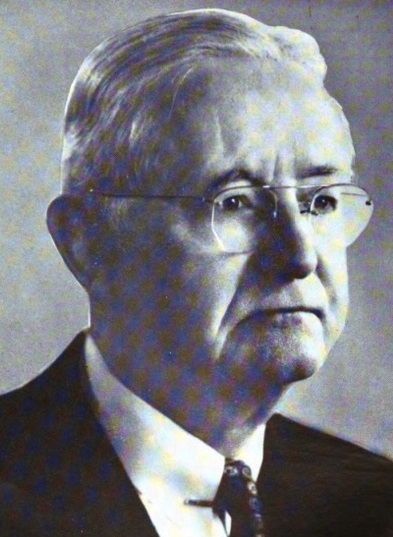
Charles Gifford
Former U.S. Representative · Massachusetts District 9 · 1921–1949 · Republican
Charles Gifford represented Massachusetts's District 9 in the United States House of Representatives (1921–1949) for the Republican party. The page below collects sourced biographical facts, term history, committee roles, and provenance for Gifford.
Bioguide ID: G000169
Key facts
- Full name
- Charles Gifford
- State
- Massachusetts
- District
- District 9
- Party
- Republican
- House service
- 1921–1949
- First House term
- 1921
- Status
- Left office
- Current term ends
- —
- Born
- 1871
- Bioguide ID
- G000169
- Committee assignments
- —
- Dataset version
- 1.20260605
Biographical narrative
909 words · sourced from the Wikipedia REST extract
Charles Gifford was a prominent Republican politician who served as a United States Representative for Massachusetts's 9th congressional district. His congressional career spanned nearly three decades, during which he was elected to 14 consecutive terms in the House of Representatives. Gifford's political journey was marked by his commitment to various issues, particularly during the tumultuous years leading up to and during World War II. He was known for his advocacy of support for Great Britain prior to the United States' entry into the war and for his opposition to antisemitism.
Early life and career
Charles Laceille Gifford was born on March 15, 1871, in Cotuit, Massachusetts. He hailed from a lineage that included notable early American figures, with ancestral ties to Robert Pike, George Phillips, Richard Saltonstall, and William Phelps through his father. His mother’s lineage traced back to John Humphrey, Thomas Hastings, and the Quaker Christopher Holder. Gifford's early education took place in the common schools of Massachusetts, where he laid the foundation for his future endeavors.
From 1890 to 1900, Gifford worked as a teacher in both Massachusetts and Connecticut, gaining valuable experience that would later inform his public service. Following his teaching career, he transitioned into the real estate sector, becoming the owner of several summer cottages on Cape Cod, which he rented to vacationers. He also operated the Cotuit Inn, further establishing his presence in the local economy. Gifford's interests extended beyond real estate; he became involved in the Cotuit Oyster Company, where he served as president and engaged in oyster farming. Additionally, he ventured into cranberry farming, diversifying his business interests and contributing to the agricultural landscape of the region.
Gifford's political career began in earnest when he was elected to the Massachusetts House of Representatives, where he served from 1912 to 1913. His legislative experience continued to grow as he was subsequently elected to the Massachusetts State Senate, serving from 1914 to 1919. These early political roles provided Gifford with insights into governance and public policy, setting the stage for his future endeavors at the national level.
House tenure
Gifford's tenure in the U.S. House of Representatives began when he was elected as a Republican to the Sixty-seventh Congress to fill a vacancy caused by the resignation of Joseph Walsh. He was elected to the Sixty-eighth Congress on the same day. Gifford's electoral success continued as he was reelected to the Sixty-ninth Congress and the eleven succeeding Congresses, serving from November 7, 1922, until the end of his last term on January 3, 1949. His long-standing presence in the House made him a significant figure in Massachusetts politics and a consistent voice for his constituents.
During his time in Congress, Gifford held several leadership positions. He served as the chairman of the Committee on Elections No. 3 during the Sixty-ninth and Seventieth Congresses, where he oversaw matters related to electoral processes and the integrity of elections. Additionally, he chaired the Committee on Election of President, Vice President, and Representatives during the Seventy-first Congress, further solidifying his role in shaping electoral policy.
Gifford's political career was characterized by his engagement with pressing national issues. He was an advocate for supporting Great Britain during World War II, a stance that became increasingly relevant as the conflict escalated. His position on this matter was particularly evident during the 1940 House election, where he faced an opponent who espoused isolationist views. Gifford's pro-British stance and vocal opposition to antisemitism distinguished him in the political landscape of the time.
Legislative focus and committees
Throughout his congressional career, Gifford's legislative focus reflected the priorities and concerns of his constituents as well as the broader national context. His support for international alliances and aid during World War II was a defining aspect of his tenure. He voted in favor of the Lend-Lease Act in 1941, which facilitated the provision of military aid to Allied nations, including Great Britain. This decision underscored his commitment to supporting allies in the face of global conflict and his belief in the importance of international cooperation.
In addition to his work on international issues, Gifford's committee assignments allowed him to influence a range of legislative matters. His leadership roles in the Committee on Elections and the Committee on Election of President, Vice President, and Representatives positioned him at the center of discussions about electoral integrity and the democratic process. These committees played a crucial role in shaping policies that governed how elections were conducted and how representatives were chosen, reflecting Gifford's dedication to upholding democratic principles.
Gifford's legislative contributions were also informed by his background in business and agriculture. His experiences in real estate, oyster farming, and cranberry cultivation provided him with insights into the economic challenges faced by his constituents. This understanding likely influenced his positions on various economic and agricultural policies, as he sought to advocate for the interests of those in his district.
Gifford's long service in the House of Representatives came to an end with the conclusion of his last term in January 1949. He passed away on August 23, 1947, in Cotuit, Massachusetts, where he was laid to rest in Mosswood Cemetery. His legacy as a dedicated public servant and a representative of Massachusetts's 9th congressional district remains a part of the state's political history. Gifford's commitment to his constituents and his involvement in significant national issues during a pivotal time in American history continue to be recognized as part of his contributions to the legislative process.
Notable legislation
Sponsored and co-sponsored legislation for Charles Gifford is pending operator curation. The biographical narrative above carries the same provenance trail until per-bill rows are written.
Sources
- [1]https://en.wikipedia.org/wiki/Charles_L._GiffordWikipedia · retrieved 2026-06-05
Notable quotes
Sourced quotes for Charles Gifford are pending operator curation. Narrative-scope provenance remains attached below.
Sources
- [1]https://en.wikipedia.org/wiki/Charles_L._GiffordWikipedia · retrieved 2026-06-05
Key positions
Curated policy positions for Charles Gifford are pending operator review. The biographical narrative above carries the same provenance trail until per-topic positions are written.
Sources
- [1]https://en.wikipedia.org/wiki/Charles_L._GiffordWikipedia · retrieved 2026-06-05
Terms served
- 1921–1923U.S. House · Term 1 · Republican
- 1923–1925U.S. House · Term 2 · Republican
- 1925–1927U.S. House · Term 3 · Republican
- 1927–1929U.S. House · Term 4 · Republican
- 1929–1931U.S. House · Term 5 · Republican
- 1931–1933U.S. House · Term 6 · Republican
- 1933–1935U.S. House · Term 7 · Republican
- 1935–1937U.S. House · Term 8 · Republican
- 1937–1939U.S. House · Term 9 · Republican
- 1939–1941U.S. House · Term 10 · Republican
- 1941–1943U.S. House · Term 11 · Republican
- 1943–1945U.S. House · Term 12 · Republican
- 1945–1947U.S. House · Term 13 · Republican
- 1947–1949U.S. House · Term 14 · Republican
Sources & provenance
Every attributable claim above carries a per-section [N] marker that resolves to the corresponding URL below. Each entry records the upstream provider, the canonical URL, and the timestamp at which the source was retrieved by the ingest pipeline.
Key facts
- https://bioguide.congress.gov/search/bio/G000169bioguide · retrieved 2026-06-05
- https://www.govtrack.us/congress/members/404536govtrack · retrieved 2026-06-05
Biographical narrative
- https://en.wikipedia.org/wiki/Charles_L._Giffordwikipedia · retrieved 2026-06-05
Find your representative
Every U.S. state elects representatives by district. Browse Massachusetts’s delegation, the full former-representative roster, or explore the role and term length.
Related on The Candidate
- Preceded by Alvan FullerEarlier holder of the Massachusetts District 9 House seat · Republican.Open
- Succeeded by Louise HicksLater holder of the Massachusetts District 9 House seat · Democratic.Open
- Abbott LawrenceFormer U.S. Representative · Massachusetts District 1 · WhigOpen
- Allen TreadwayFormer U.S. Representative · Massachusetts District 1 · RepublicanOpen
- Artemas Ward Jr.Former U.S. Representative · Massachusetts District 1 · FederalistOpen
- Ashley WrightFormer U.S. Representative · Massachusetts District 1 · RepublicanOpen