
Historical · U.S. House · Michigan · District 1
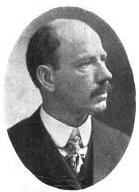
Frank Doremus
Former U.S. Representative · Michigan District 1 · 1911–1921 · Democratic
Frank Doremus represented Michigan's District 1 in the United States House of Representatives (1911–1921) for the Democratic party. The page below collects sourced biographical facts, term history, committee roles, and provenance for Doremus.
Bioguide ID: D000431
Key facts
- Full name
- Frank Doremus
- State
- Michigan
- District
- District 1
- Party
- Democratic
- House service
- 1911–1921
- First House term
- 1911
- Status
- Left office
- Current term ends
- —
- Born
- 1865
- Bioguide ID
- D000431
- Committee assignments
- —
- Dataset version
- 1.20260606
Biographical narrative
950 words · sourced from the Wikipedia REST extract
Frank Doremus was an American politician who served as a U.S. Representative for Michigan's 1st congressional district from 1911 to 1921. A member of the Democratic Party, he played a significant role in local and national politics during the early 20th century. In addition to his congressional service, Doremus held various positions in local government, including serving as the mayor of Detroit and as a member of the Michigan House of Representatives. His career spanned several decades, during which he was involved in both legal practice and public service.
Early life and career
Frank Ellsworth Doremus was born on August 31, 1865, in Venango County, Pennsylvania. He was the son of Sylvester and Sarah Peake Doremus. The Doremus family relocated to Ovid, Michigan, in 1866, and later moved to Portland, Michigan, in 1872. Doremus received his education in the public schools of Portland, where he developed a foundation that would support his future endeavors in law and politics. He furthered his education by graduating from the Detroit College of Law, which equipped him with the legal knowledge necessary for his subsequent career.
Doremus began his professional life in journalism in 1882 when he took a position at the Portland Observer. His early career in media continued as he moved on to manage the Pewamo Plain Dealer. In 1885, he founded the Portland Review, a publication that he edited until 1899. This experience in journalism likely contributed to his communication skills and understanding of public opinion, which would later serve him well in his political career.
In addition to his work in journalism, Doremus was active in local politics. He was appointed as the postmaster of Portland, serving from 1895 to 1899. His political career began to take shape when he was elected township clerk in 1888, a position he held until 1890, when he was elected to the Michigan House of Representatives from Ionia County's 1st District. His tenure in the state legislature lasted from 1890 to 1892, marking his first significant foray into elected office.
After his time in the Michigan House, Doremus pursued a legal career, gaining admission to the bar and starting his practice in Detroit in 1899. His legal expertise led him to serve as assistant corporation counsel for the city of Detroit from 1903 to 1907. Following this role, he was appointed city comptroller, a position he held from 1907 until 1910. These roles in local government provided him with valuable experience in public finance and administration, further preparing him for his future congressional duties.
In 1890, Doremus married Libby Hatley, and the couple had one child, Robert. This family life would have been an important aspect of his personal identity, grounding him in the community he served.
House tenure
Frank Doremus's congressional career began when he was elected to the U.S. House of Representatives in 1910. He successfully defeated the incumbent Republican representative, Edwin C. Denby, to represent Michigan's 1st congressional district. Doremus took office on March 4, 1911, and continued to serve through five consecutive terms, concluding his tenure on March 3, 1921. His election to the House marked a significant transition from local to national politics, allowing him to influence legislation on a larger scale.
During his time in Congress, Doremus was involved in various legislative initiatives and served on multiple committees. His election as chair of the Democratic Congressional Campaign Committee in 1913 underscored his leadership within the party and his commitment to advancing Democratic interests at the national level. Doremus was also a delegate to the Democratic National Convention in both 1916 and 1920, further solidifying his role as a prominent figure within the party during a transformative period in American politics.
Doremus's congressional service coincided with significant events in U.S. history, including World War I and the social changes that accompanied the early 20th century. His legislative actions and positions during this time reflected the evolving political landscape and the challenges faced by the nation.
Legislative focus and committees
Throughout his five terms in the U.S. House of Representatives, Frank Doremus focused on various issues that were pertinent to his constituents and the nation. While specific legislative achievements and votes are not detailed in the available records, it is known that he was actively engaged in the political discourse of his time. His role as chair of the Democratic Congressional Campaign Committee suggests that he was involved in strategizing and promoting Democratic candidates and policies, which would have included a focus on issues relevant to his district and the broader Democratic platform.
Doremus's participation in the Democratic National Conventions of 1916 and 1920 indicates his commitment to the party and its principles. These conventions were critical in shaping the party's direction and policies, particularly in the context of the challenges posed by World War I and the subsequent social changes in the United States. His involvement in these events likely provided him with insights into national issues and the opportunity to advocate for policies that aligned with his constituents' needs.
After completing his congressional service in 1921, Doremus returned to his legal practice in Fowlerville, Michigan. His departure from Congress marked the end of a significant chapter in his political career, but he remained engaged in the community through his legal work. Doremus's contributions to public service continued even after his time in elected office, reflecting a lifelong commitment to the welfare of his community and the principles of democracy.
Frank Doremus passed away on September 4, 1947, in Howell, Michigan. He was interred in Roseland Park in Berkley, Michigan. His legacy as a public servant, lawyer, and community leader remains a part of Michigan's political history, illustrating the impact of local leaders on national governance.
Notable legislation
Sponsored and co-sponsored legislation for Frank Doremus is pending operator curation. The biographical narrative above carries the same provenance trail until per-bill rows are written.
Sources
- [1]https://en.wikipedia.org/wiki/Frank_E._DoremusWikipedia · retrieved 2026-06-06
Notable quotes
Sourced quotes for Frank Doremus are pending operator curation. Narrative-scope provenance remains attached below.
Sources
- [1]https://en.wikipedia.org/wiki/Frank_E._DoremusWikipedia · retrieved 2026-06-06
Key positions
Curated policy positions for Frank Doremus are pending operator review. The biographical narrative above carries the same provenance trail until per-topic positions are written.
Sources
- [1]https://en.wikipedia.org/wiki/Frank_E._DoremusWikipedia · retrieved 2026-06-06
Terms served
- 1911–1913U.S. House · Term 1 · Democratic
- 1913–1915U.S. House · Term 2 · Democratic
- 1915–1917U.S. House · Term 3 · Democratic
- 1917–1919U.S. House · Term 4 · Democratic
- 1919–1921U.S. House · Term 5 · Democratic
Sources & provenance
Every attributable claim above carries a per-section [N] marker that resolves to the corresponding URL below. Each entry records the upstream provider, the canonical URL, and the timestamp at which the source was retrieved by the ingest pipeline.
Key facts
- https://bioguide.congress.gov/search/bio/D000431bioguide · retrieved 2026-06-06
- https://www.govtrack.us/congress/members/403542govtrack · retrieved 2026-06-06
Biographical narrative
- https://en.wikipedia.org/wiki/Frank_E._Doremuswikipedia · retrieved 2026-06-06
Find your representative
Every U.S. state elects representatives by district. Browse Michigan’s delegation, the full former-representative roster, or explore the role and term length.
Related on The Candidate
- Preceded by Edwin DenbyEarlier holder of the Michigan District 1 House seat · Republican.Open
- Succeeded by George CoddLater holder of the Michigan District 1 House seat · Republican.Open
- Alexander BuelFormer U.S. Representative · Michigan District 1 · DemocraticOpen
- Alfred LuckingFormer U.S. Representative · Michigan District 1 · DemocraticOpen
- Alpheus WilliamsFormer U.S. Representative · Michigan District 1 · DemocraticOpen
- Bart StupakFormer U.S. Representative · Michigan District 1 · DemocraticOpen