
Historical · U.S. House · Michigan · District 1
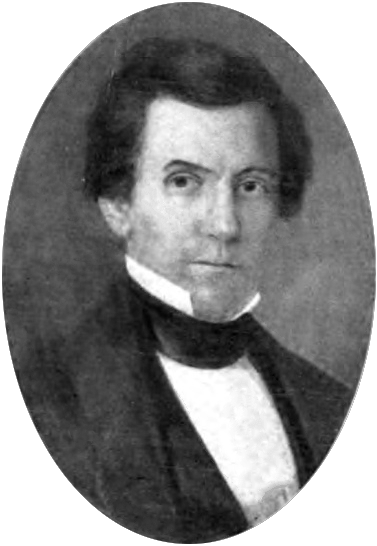
Isaac Crary
Former U.S. Representative · Michigan District 1 · 1835–1841 · Democratic
Isaac Crary represented Michigan's District 1 in the United States House of Representatives (1835–1841) for the Democratic party. The page below collects sourced biographical facts, term history, committee roles, and provenance for Crary.
Bioguide ID: C000882
Key facts
- Full name
- Isaac Crary
- State
- Michigan
- District
- District 1
- Party
- Democratic
- House service
- 1835–1841
- First House term
- 1835
- Status
- Left office
- Current term ends
- —
- Born
- 1804
- Bioguide ID
- C000882
- Committee assignments
- —
- Dataset version
- 1.20260606
Biographical narrative
1,002 words · sourced from the Wikipedia REST extract
Isaac Crary was an American lawyer and politician who served as the first elected U.S. Representative from the state of Michigan. A member of the Democratic Party, Crary played a significant role in the early political landscape of Michigan, contributing to both state and national governance during a formative period in American history. His tenure in the U.S. House of Representatives spanned from 1835 to 1841, during which he was involved in various legislative activities and debates. Crary's legacy extends beyond his congressional service, as he was also instrumental in shaping Michigan's educational system and served in various capacities within the state government.
Early life and career
Isaac Crary was born on October 2, 1804, in Preston, Connecticut. He received his early education in the public schools of his hometown before pursuing higher education at Trinity College in Hartford, Connecticut. Crary graduated from Trinity College in 1827, marking the completion of his studies in its inaugural class. Following his graduation, he studied law and was subsequently admitted to the bar, beginning his legal practice in Hartford. In addition to his legal work, Crary served as the assistant editor of the New England Weekly Review, which provided him with valuable experience in writing and public discourse.
In 1833, seeking new opportunities, Crary relocated to Marshall, Michigan. This move came at a time when Michigan was on the cusp of statehood, and Crary quickly became involved in the political landscape of his new home. His legal background and commitment to public service positioned him as a prominent figure in the community. In 1835, he was selected as a delegate to the state constitutional convention, where he played a role in shaping the foundational governance of Michigan.
Upon Michigan's admission to the Union, Crary was elected to the U.S. House of Representatives on October 5 and 6, 1835. His initial election was under the banner of the Jacksonian movement, which was a precursor to the modern Democratic Party. However, due to a territorial dispute known as the Toledo War between Michigan and Ohio, Congress initially refused to accept his credentials. As a result, Crary was seated as a delegate until Michigan was officially recognized as a state on January 26, 1837. This unique circumstance underscored the complexities of statehood and representation during this period in American history.
House tenure
Crary's congressional career spanned three terms in the U.S. House of Representatives, beginning with his first term in 1835 and concluding with his last term ending on March 3, 1841. After his initial term, he was re-elected to the Twenty-fifth and Twenty-sixth Congresses as a member of the Democratic Party. Throughout his time in Congress, Crary was involved in various legislative discussions and debates that reflected the political climate of the era.
One notable moment during his tenure occurred in 1840 when he participated in a debate regarding funding for the Cumberland Road, a significant infrastructure project. During this debate, Crary criticized the military record of William Henry Harrison, who was then a presidential candidate. His remarks were met with applause from his fellow Democrats, indicating his alignment with party sentiments. However, this moment also drew the attention of Ohio Representative Thomas Corwin, who humorously responded to Crary's comments in a speech that became widely discussed and reported in newspapers across the nation. Corwin's remarks, which included a satirical depiction of Crary's military exploits, contributed to a light-hearted atmosphere in the House but also marked a turning point in Crary's political fortunes, as he was not renominated for another term following this incident.
In addition to his congressional responsibilities, Crary was also active in state governance. He served as a regent of the University of Michigan from 1837 to 1844, contributing to the establishment and development of higher education in the state. His involvement in education extended beyond the university level; he was appointed to the State Board of Education, where he served from 1820 to 1852. In collaboration with John D. Pierce, Crary played a pivotal role in drafting the education article of Michigan's 1835 constitution. Together, they laid the groundwork for Michigan's public school system, advocating for a separate department of education that would be overseen by a superintendent. This initiative aimed to introduce uniform schooling across the state, reflecting Crary's commitment to improving educational opportunities for Michigan's residents.
Legislative focus and committees
Throughout his time in the U.S. House of Representatives, Crary's legislative focus encompassed a range of issues pertinent to both Michigan and the nation. His engagement in debates and discussions often reflected the interests and concerns of his constituents, particularly in relation to infrastructure, education, and state rights. As a member of the Democratic Party, he aligned with the party's platform, which emphasized agrarian interests and the rights of states in the face of federal authority.
Crary's contributions to education were particularly significant, as he was instrumental in shaping policies that would have a lasting impact on Michigan's educational landscape. His work on the State Board of Education and his role in establishing the public school system underscored his belief in the importance of accessible education for all citizens. This commitment to education was a defining aspect of his public service and contributed to his legacy in Michigan.
After concluding his congressional service in 1841, Crary continued to be active in public life. He served in the Michigan House of Representatives from 1842 to 1846, where he held the position of Speaker of the House in 1846. His ongoing involvement in state politics demonstrated his dedication to public service and governance.
Isaac Crary passed away on May 8, 1854, in Marshall, Michigan. He is interred at Oakridge Cemetery in Marshall. His contributions to Michigan's political and educational systems are remembered through institutions named in his honor, including Isaac E. Crary Elementary School in Detroit and Isaac E. Crary Middle School in Waterford. These institutions serve as a testament to his impact on the state and the legacy he left behind in the realms of education and public service.
Notable legislation
Sponsored and co-sponsored legislation for Isaac Crary is pending operator curation. The biographical narrative above carries the same provenance trail until per-bill rows are written.
Sources
- [1]https://en.wikipedia.org/wiki/Isaac_E._CraryWikipedia · retrieved 2026-06-06
Notable quotes
Sourced quotes for Isaac Crary are pending operator curation. Narrative-scope provenance remains attached below.
Sources
- [1]https://en.wikipedia.org/wiki/Isaac_E._CraryWikipedia · retrieved 2026-06-06
Key positions
Curated policy positions for Isaac Crary are pending operator review. The biographical narrative above carries the same provenance trail until per-topic positions are written.
Sources
- [1]https://en.wikipedia.org/wiki/Isaac_E._CraryWikipedia · retrieved 2026-06-06
Terms served
- 1835–1837U.S. House · Term 1 · Jackson
- 1837–1839U.S. House · Term 2 · Democratic
- 1839–1841U.S. House · Term 3 · Democratic
Sources & provenance
Every attributable claim above carries a per-section [N] marker that resolves to the corresponding URL below. Each entry records the upstream provider, the canonical URL, and the timestamp at which the source was retrieved by the ingest pipeline.
Key facts
- https://bioguide.congress.gov/search/bio/C000882bioguide · retrieved 2026-06-06
- https://www.govtrack.us/congress/members/402994govtrack · retrieved 2026-06-06
Biographical narrative
- https://en.wikipedia.org/wiki/Isaac_E._Crarywikipedia · retrieved 2026-06-06
Find your representative
Every U.S. state elects representatives by district. Browse Michigan’s delegation, the full former-representative roster, or explore the role and term length.
Related on The Candidate
- Succeeded by Robert McClellandLater holder of the Michigan District 1 House seat · Democratic.Open
- Alexander BuelFormer U.S. Representative · Michigan District 1 · DemocraticOpen
- Alfred LuckingFormer U.S. Representative · Michigan District 1 · DemocraticOpen
- Alpheus WilliamsFormer U.S. Representative · Michigan District 1 · DemocraticOpen
- Bart StupakFormer U.S. Representative · Michigan District 1 · DemocraticOpen
- Democratic PartyFederal candidates and office holders on the Democratic line.Open