
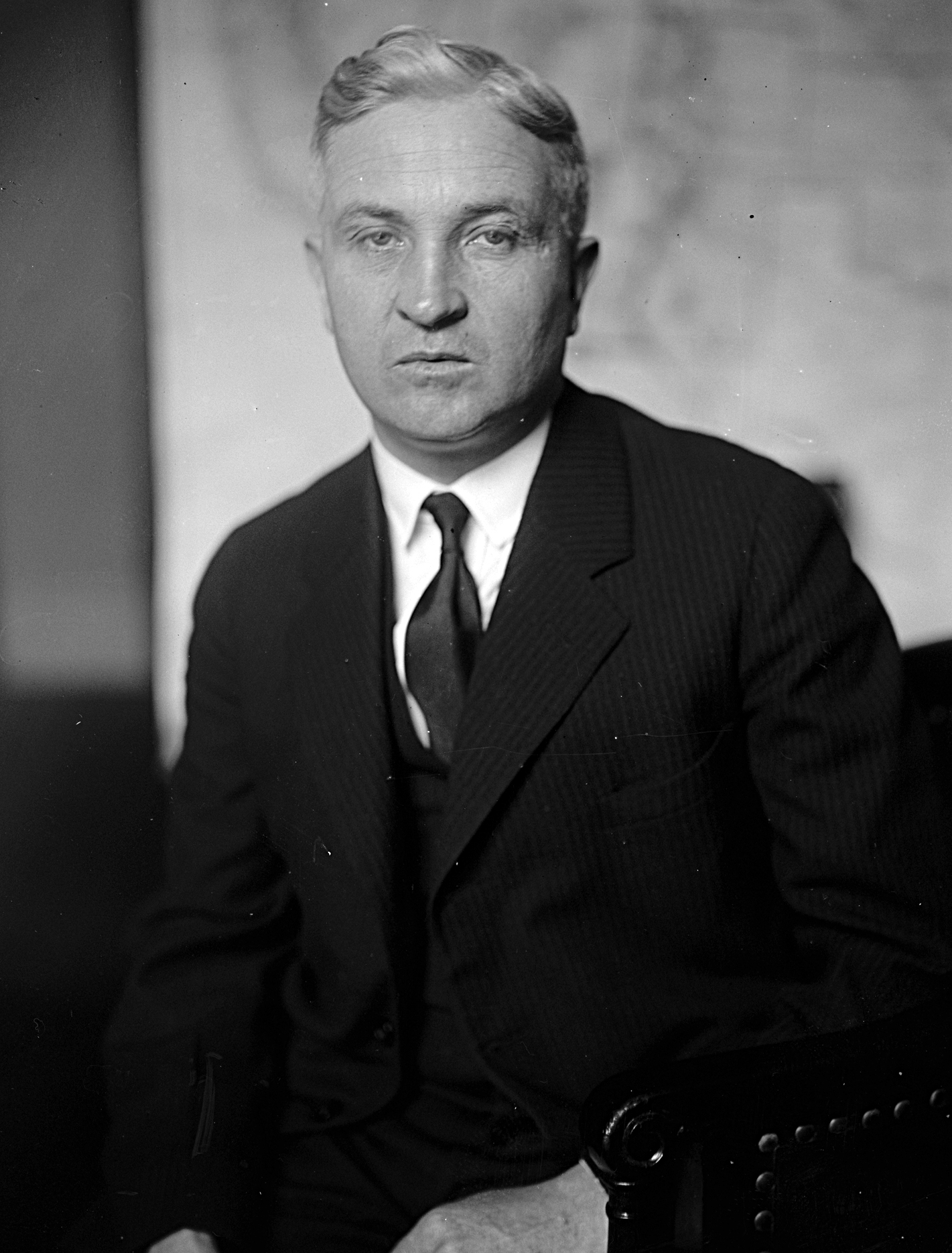
Historical · U.S. House · Michigan · District 1
Robert Clancy
Former U.S. Representative · Michigan District 1 · 1923–1933 · Republican
Robert Clancy represented Michigan's District 1 in the United States House of Representatives (1923–1933) for the Republican party. The page below collects sourced biographical facts, term history, committee roles, and provenance for Clancy.
Bioguide ID: C000412
Key facts
- Full name
- Robert Clancy
- State
- Michigan
- District
- District 1
- Party
- Republican
- House service
- 1923–1933
- First House term
- 1923
- Status
- Left office
- Current term ends
- —
- Born
- 1882
- Bioguide ID
- C000412
- Committee assignments
- —
- Dataset version
- 1.20260606
Biographical narrative
885 words · sourced from the Wikipedia REST extract
Robert Clancy was a notable American politician who served as a U.S. Representative for Michigan's 1st congressional district. A member of the Republican Party, Clancy's congressional career spanned four terms from 1923 to 1933. His early life and professional background laid the foundation for his political career, which included significant roles in both local and national government. After his time in Congress, Clancy continued to engage in various professional endeavors until his retirement.
Early life and career
Robert Henry Clancy was born on March 14, 1882, in Detroit, Michigan. He received his early education in the public school system of Detroit, which provided him with a foundational understanding of the community he would later serve. Clancy pursued higher education at the University of Michigan at Ann Arbor, where he graduated from the literary department in 1907. Following his graduation, he spent a year studying law at the same institution, although he did not complete a law degree.
Clancy's professional career began in journalism, where he worked as a reporter for several Detroit newspapers for four years. This experience in the media likely contributed to his understanding of public affairs and the political landscape. In 1911, he transitioned into politics by becoming the secretary to Congressman Frank E. Doremus, a position he held until 1913. This role provided him with valuable insights into the legislative process and the workings of Congress.
After his time with Doremus, Clancy served as secretary to Edwin F. Sweet, who was the Assistant United States Secretary of Commerce, from 1913 to 1917. His involvement in these roles positioned him well for a future in public service. During World War I, Clancy took on several significant responsibilities, including managing the War Trade Board in Detroit and serving as the chief inspector of purchases for the Medical Corps of the War Department in Michigan. Additionally, he worked as a recruiting officer for the aviation division in Detroit, contributing to the war effort in various capacities.
Following the war, Clancy was appointed as the United States customs appraiser for Michigan, a position he held from 1917 until 1922. His career during this period was marked by involvement in both governmental and military operations, which further solidified his reputation as a dedicated public servant. However, Clancy's career was not without controversy; during Prohibition, he was arrested alongside the mayor of Detroit and the Wayne County sheriff for consuming alcohol at the Deutsches Hall.
House tenure
Clancy's political career in the U.S. House of Representatives began when he was elected as a Democrat from Michigan's 1st congressional district to the 68th Congress. His term commenced on March 4, 1923, and concluded on March 3, 1925. However, his initial foray into Congress was cut short when he was defeated by Republican John B. Sosnowski in the 1924 election.
After his defeat, Clancy shifted his focus to the real estate business, where he remained until he decided to re-enter politics. In 1926, he switched his party affiliation to Republican and ran for Congress again. He successfully defeated the incumbent Sosnowski in the primary election and subsequently won the general election against Democratic candidate William M. Donnelly, securing his seat in the 70th Congress. Clancy continued to build on this success, winning re-election in both 1928 and 1930, which allowed him to serve in the 71st and 72nd Congresses. His tenure in the House lasted until March 3, 1933.
During his time in Congress, Clancy was involved in various legislative activities and contributed to discussions on a range of issues pertinent to his constituents and the nation. His experiences in journalism and previous governmental roles likely informed his approach to legislation and constituent services.
In 1932, following redistricting that occurred after the 1930 Census, Clancy sought election in Michigan's Fourteenth Congressional District. However, he was defeated by Democrat Carl M. Weideman. This loss marked the end of his congressional career, after which Clancy transitioned to a role in the private sector.
Legislative focus and committees
While specific details regarding Clancy's legislative focus and committee assignments during his time in Congress are not extensively documented, it can be inferred that his background in journalism and public service influenced his priorities. Clancy's early career in the media likely instilled in him an appreciation for communication and transparency in government, which may have shaped his approach to legislative matters.
As a member of the House, Clancy would have participated in discussions and decisions on various issues affecting Michigan and the nation. His experiences as a customs appraiser and in various roles during World War I may have provided him with unique insights into economic and defense-related matters. Additionally, his involvement in local politics and community affairs would have informed his understanding of the needs and concerns of his constituents.
After leaving Congress, Clancy engaged in executive roles within a manufacturing company until his retirement in 1948. His post-congressional career reflects a continued commitment to public service and community engagement, albeit in a different capacity. Clancy passed away on April 23, 1962, in Detroit, Michigan, where he is interred at Mount Olivet Cemetery.
Robert Clancy's life and career illustrate the journey of a public servant who navigated various roles in government and business, contributing to the political landscape of Michigan and the United States during a transformative period in history.
Notable legislation
Sponsored and co-sponsored legislation for Robert Clancy is pending operator curation. The biographical narrative above carries the same provenance trail until per-bill rows are written.
Sources
- [1]https://en.wikipedia.org/wiki/Robert_H._ClancyWikipedia · retrieved 2026-06-06
Notable quotes
Sourced quotes for Robert Clancy are pending operator curation. Narrative-scope provenance remains attached below.
Sources
- [1]https://en.wikipedia.org/wiki/Robert_H._ClancyWikipedia · retrieved 2026-06-06
Key positions
Curated policy positions for Robert Clancy are pending operator review. The biographical narrative above carries the same provenance trail until per-topic positions are written.
Sources
- [1]https://en.wikipedia.org/wiki/Robert_H._ClancyWikipedia · retrieved 2026-06-06
Terms served
- 1923–1925U.S. House · Term 1 · Democratic
- 1927–1929U.S. House · Term 2 · Republican
- 1929–1931U.S. House · Term 3 · Republican
- 1931–1933U.S. House · Term 4 · Republican
Sources & provenance
Every attributable claim above carries a per-section [N] marker that resolves to the corresponding URL below. Each entry records the upstream provider, the canonical URL, and the timestamp at which the source was retrieved by the ingest pipeline.
Key facts
- https://bioguide.congress.gov/search/bio/C000412bioguide · retrieved 2026-06-06
- https://www.govtrack.us/congress/members/402551govtrack · retrieved 2026-06-06
Biographical narrative
- https://en.wikipedia.org/wiki/Robert_H._Clancywikipedia · retrieved 2026-06-06
Find your representative
Every U.S. state elects representatives by district. Browse Michigan’s delegation, the full former-representative roster, or explore the role and term length.
Related on The Candidate
- Preceded by George CoddEarlier holder of the Michigan District 1 House seat · Republican.Open
- Succeeded by George SadowskiLater holder of the Michigan District 1 House seat · Democratic.Open
- Alexander BuelFormer U.S. Representative · Michigan District 1 · DemocraticOpen
- Alfred LuckingFormer U.S. Representative · Michigan District 1 · DemocraticOpen
- Alpheus WilliamsFormer U.S. Representative · Michigan District 1 · DemocraticOpen
- Bart StupakFormer U.S. Representative · Michigan District 1 · DemocraticOpen