
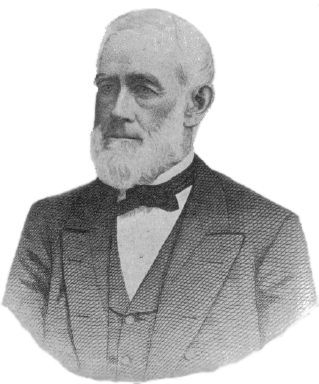
Historical · U.S. House · Michigan · District 1
William Howard
Former U.S. Representative · Michigan District 1 · 1855–1861 · Republican
William Howard represented Michigan's District 1 in the United States House of Representatives (1855–1861) for the Republican party. The page below collects sourced biographical facts, term history, committee roles, and provenance for Howard.
Bioguide ID: H000847
Key facts
- Full name
- William Howard
- State
- Michigan
- District
- District 1
- Party
- Republican
- House service
- 1855–1861
- First House term
- 1855
- Status
- Left office
- Current term ends
- —
- Born
- 1813
- Bioguide ID
- H000847
- Committee assignments
- —
- Dataset version
- 1.20260606
Biographical narrative
860 words · sourced from the Wikipedia REST extract
William Howard was a prominent American politician and lawyer who served as a U.S. Representative from Michigan's 1st congressional district during the mid-19th century. A member of the Republican Party, Howard's congressional career spanned three terms from 1855 to 1861. Following his time in Congress, he held various positions, including Governor of the Dakota Territory, where he served until his death in 1880.
Early life and career
William Howard was born on April 8, 1813, in Hinesburg, Vermont. He grew up in a time when educational opportunities were expanding in the United States, and he took advantage of these opportunities from a young age. At the age of fourteen, Howard began an apprenticeship as a cabinet maker in Albion, New York, which provided him with practical skills and a foundation for his future endeavors. He later pursued higher education, graduating from Middlebury College in Vermont in 1839.
After completing his education, Howard initially worked as a teacher, which was a common profession for educated young men of his time. However, seeking better health, he relocated to Michigan. In Michigan, he continued his educational pursuits by teaching mathematics at the University of Michigan for a year. This experience not only solidified his academic credentials but also helped him establish connections in the state.
In 1842, Howard shifted his focus to law, studying diligently to prepare for a legal career. He was admitted to the Michigan bar that same year and began practicing law in Detroit. His legal career included notable cases, such as serving as the lead defense attorney for individuals accused of conspiring to burn the Michigan Central Depot in Detroit in 1850. This case highlighted his legal acumen and commitment to defending his clients, further establishing his reputation in the legal community.
House tenure
William Howard's political career began in earnest when he was elected as a Republican to represent Michigan's 1st congressional district in the 34th Congress. His first term in the House of Representatives commenced on March 4, 1855. During this period, he was part of a growing Republican movement that sought to address the pressing issues of the time, including the expansion of slavery and the rights of states.
Howard was re-elected to a second term in the House, reflecting his constituents' support and confidence in his ability to represent their interests. His tenure in Congress was marked by the political turbulence of the 1850s, a decade characterized by intense debates over slavery and sectionalism. Howard's alignment with the Republican Party positioned him within a faction that opposed the extension of slavery into new territories and states.
In 1859, Howard successfully contested the election of George B. Cooper to the 36th Congress, allowing him to serve a third term from May 15, 1860, until March 3, 1861. However, he chose not to seek renomination for a fourth term in 1860, concluding his congressional career after three terms. His time in the House coincided with significant national events, including the lead-up to the Civil War, which would have influenced the legislative priorities and discussions during his service.
Legislative focus and committees
During his time in the House of Representatives, William Howard was involved in various legislative matters that reflected the interests and concerns of his constituents and the broader national context. While specific details about the bills he sponsored or the committees he served on are not extensively documented, it is known that his political career was shaped by the pressing issues of his time, particularly those related to the expansion of slavery and the rights of states.
After leaving Congress, Howard continued to play an active role in Michigan politics. He served as the Chairman of the Michigan Republican Party from 1862 to 1868, contributing to the party's organization and strategy during a critical period in American history. His leadership in the party helped to solidify the Republican presence in Michigan during the post-Civil War era.
In addition to his political activities, Howard held several significant positions in the railway industry. From 1869 to 1871, he served as the land commissioner for the Grand Rapids and Indiana Railway, and later, from 1872 to 1878, he took on the role of land commissioner for the North Pacific Railway. These roles allowed him to engage with the growing transportation infrastructure that was vital for economic development in the United States during the late 19th century.
In 1878, Howard was appointed as the Governor of the Dakota Territory by President Rutherford B. Hayes. His appointment marked a significant transition in his career, as he moved from a legislative role to an executive position in a developing territory. Howard's governorship lasted until his death on April 10, 1880, in Washington, D.C. During his time as governor, he resided in Yankton, Dakota Territory, where he oversaw the administration of the territory during a period of growth and change.
William Howard's life and career reflect the complexities of American politics in the mid-19th century, as well as the evolving role of governance in newly established territories. His contributions to both Michigan and the Dakota Territory demonstrate a commitment to public service and the development of the regions he represented.
Notable legislation
Sponsored and co-sponsored legislation for William Howard is pending operator curation. The biographical narrative above carries the same provenance trail until per-bill rows are written.
Sources
- [1]https://en.wikipedia.org/wiki/William_Alanson_HowardWikipedia · retrieved 2026-06-06
Notable quotes
Sourced quotes for William Howard are pending operator curation. Narrative-scope provenance remains attached below.
Sources
- [1]https://en.wikipedia.org/wiki/William_Alanson_HowardWikipedia · retrieved 2026-06-06
Key positions
Curated policy positions for William Howard are pending operator review. The biographical narrative above carries the same provenance trail until per-topic positions are written.
Sources
- [1]https://en.wikipedia.org/wiki/William_Alanson_HowardWikipedia · retrieved 2026-06-06
Terms served
- 1855–1857U.S. House · Term 1 · Ind. Republican-Democrat
- 1857–1859U.S. House · Term 2 · Republican
- 1859–1861U.S. House · Term 3 · Republican
Sources & provenance
Every attributable claim above carries a per-section [N] marker that resolves to the corresponding URL below. Each entry records the upstream provider, the canonical URL, and the timestamp at which the source was retrieved by the ingest pipeline.
Key facts
- https://bioguide.congress.gov/search/bio/H000847bioguide · retrieved 2026-06-06
- https://www.govtrack.us/congress/members/405694govtrack · retrieved 2026-06-06
Biographical narrative
- https://en.wikipedia.org/wiki/William_Alanson_Howardwikipedia · retrieved 2026-06-06
Find your representative
Every U.S. state elects representatives by district. Browse Michigan’s delegation, the full former-representative roster, or explore the role and term length.
Related on The Candidate
- Preceded by David StuartEarlier holder of the Michigan District 1 House seat · Democratic.Open
- Succeeded by Bradley GrangerLater holder of the Michigan District 1 House seat · Republican.Open
- Alexander BuelFormer U.S. Representative · Michigan District 1 · DemocraticOpen
- Alfred LuckingFormer U.S. Representative · Michigan District 1 · DemocraticOpen
- Alpheus WilliamsFormer U.S. Representative · Michigan District 1 · DemocraticOpen
- Bart StupakFormer U.S. Representative · Michigan District 1 · DemocraticOpen