
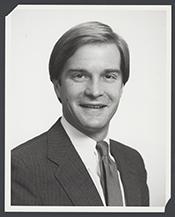
Historical · U.S. House · Michigan · District 10
Bill Schuette
Former U.S. Representative · Michigan District 10 · 1985–1991 · Republican
Bill Schuette represented Michigan's District 10 in the United States House of Representatives (1985–1991) for the Republican party. The page below collects sourced biographical facts, term history, committee roles, and provenance for Schuette.
Bioguide ID: S000143
Key facts
- Full name
- Bill Schuette
- State
- Michigan
- District
- District 10
- Party
- Republican
- House service
- 1985–1991
- First House term
- 1985
- Status
- Left office
- Current term ends
- —
- Born
- 1953
- Bioguide ID
- S000143
- Committee assignments
- —
- Dataset version
- 1.20260605
Biographical narrative
831 words · sourced from the Wikipedia REST extract
William Duncan Schuette is a former American politician and lawyer who served as a U.S. Representative for Michigan's 10th congressional district from 1985 to 1991. A member of the Republican Party, Schuette's political career includes various roles, including serving as Michigan's Attorney General from 2011 to 2019. He is recognized for his involvement in state and national politics, including unsuccessful campaigns for the U.S. Senate and the governorship of Michigan.
Early life and career
Bill Schuette was born on October 13, 1953, in Midland, Michigan. He is the son of Esther Cathrin Little and William H. Schuette, and he also has a notable connection through his stepfather, Carl Gerstacker, who was the former chairman of The Dow Chemical Company. Schuette completed his secondary education at Herbert Henry Dow High School, graduating in 1972. He pursued higher education at Georgetown University in Washington, D.C., where he earned a Bachelor of Science degree in Foreign Service, graduating cum laude in 1976. During his academic career, he also participated in an exchange program at the University of Aberdeen in Scotland from 1974 to 1975. Following his undergraduate studies, Schuette attended the University of San Francisco School of Law, where he received his Juris Doctor degree in 1979. He was admitted to the Michigan bar in 1981, marking the beginning of his legal career.
Schuette's political involvement began early, as he served as a delegate to Michigan Republican conventions in the early 1970s. His entry into elected office came in November 1984 when he won a narrow victory against incumbent Democrat Donald J. Albosta for a seat in the U.S. House of Representatives. This victory marked the start of Schuette's congressional career, which would last for three terms.
House tenure
Schuette's tenure in the U.S. House of Representatives began on January 3, 1985, and continued until January 3, 1991. During this period, he was re-elected to two additional terms, reflecting a degree of support from his constituents in Michigan's 10th congressional district. Throughout his time in Congress, Schuette was involved in various legislative activities and served on several committees, including the House Budget Committee, the House Agriculture Committee, and the House Select Committee on Aging. His participation in these committees allowed him to engage with a range of issues affecting both his district and the nation.
In 1990, Schuette sought to advance his political career by challenging Democratic Senator Carl Levin for re-election. However, this campaign was unsuccessful, and Schuette was unable to secure a Senate seat. Following his congressional career, he transitioned to a role in state government when he was appointed by Governor John Engler as the director of the Michigan Department of Agriculture in January 1991. In this capacity, he focused on agricultural issues and community initiatives, including the establishment of the Michigan Harvest Gathering, a program aimed at addressing hunger in the state.
Legislative focus and committees
During his time in the House of Representatives, Schuette's legislative focus encompassed a variety of issues pertinent to his constituents and the broader agricultural community. His service on the House Agriculture Committee was particularly significant, as it aligned with his background and expertise in agricultural law and policy. Schuette's involvement in this committee allowed him to advocate for agricultural interests and contribute to discussions on food production, rural development, and related matters.
In addition to his work on agricultural issues, Schuette's role on the House Budget Committee provided him with insights into federal spending and fiscal policy. This experience was crucial in shaping his understanding of budgetary constraints and the need for responsible financial management at the federal level. His participation in the House Select Committee on Aging further demonstrated his commitment to addressing the needs of older Americans, a demographic that has increasingly gained attention in legislative discussions.
After leaving Congress, Schuette continued to engage in public service and politics. His subsequent roles included serving in the Michigan Senate and as a judge on the Michigan Fourth District Court of Appeals. He was later elected as Michigan's Attorney General, a position he held from 2011 to 2019. In this role, he was involved in various legal and policy initiatives, including cases related to abortion and same-sex marriage, reflecting his active engagement in contemporary legal debates.
Schuette's political career has been marked by a series of significant campaigns and initiatives, including his unsuccessful bids for the U.S. Senate and the governorship of Michigan. His candidacy for governor in 2018 was notable for its support from prominent figures within the Republican Party, including President Donald Trump. Despite his efforts, Schuette lost the general election to Democrat Gretchen Whitmer.
In summary, Bill Schuette's career has spanned various roles in public service, law, and politics, characterized by his commitment to representing the interests of his constituents and engaging with critical issues facing Michigan and the nation. His legislative focus and committee work during his time in the U.S. House of Representatives laid the groundwork for his subsequent political endeavors and contributions to state governance.
Notable legislation
Sponsored and co-sponsored legislation for Bill Schuette is pending operator curation. The biographical narrative above carries the same provenance trail until per-bill rows are written.
Sources
- [1]https://en.wikipedia.org/wiki/Bill_SchuetteWikipedia · retrieved 2026-06-05
Notable quotes
Sourced quotes for Bill Schuette are pending operator curation. Narrative-scope provenance remains attached below.
Sources
- [1]https://en.wikipedia.org/wiki/Bill_SchuetteWikipedia · retrieved 2026-06-05
Key positions
Curated policy positions for Bill Schuette are pending operator review. The biographical narrative above carries the same provenance trail until per-topic positions are written.
Sources
- [1]https://en.wikipedia.org/wiki/Bill_SchuetteWikipedia · retrieved 2026-06-05
Terms served
- 1985–1987U.S. House · Term 1 · Republican
- 1987–1989U.S. House · Term 2 · Republican
- 1989–1991U.S. House · Term 3 · Republican
Sources & provenance
Every attributable claim above carries a per-section [N] marker that resolves to the corresponding URL below. Each entry records the upstream provider, the canonical URL, and the timestamp at which the source was retrieved by the ingest pipeline.
Key facts
- https://bioguide.congress.gov/search/bio/S000143bioguide · retrieved 2026-06-05
- https://www.govtrack.us/congress/members/409651govtrack · retrieved 2026-06-05
Biographical narrative
- https://en.wikipedia.org/wiki/Bill_Schuettewikipedia · retrieved 2026-06-05
Find your representative
Every U.S. state elects representatives by district. Browse Michigan’s delegation, the full former-representative roster, or explore the role and term length.
Related on The Candidate
- Preceded by Donald AlbostaEarlier holder of the Michigan District 10 House seat · Democratic.Open
- Succeeded by Candice MillerLater holder of the Michigan District 10 House seat · Republican.Open
- Alexander BuelFormer U.S. Representative · Michigan District 1 · DemocraticOpen
- Alfred LuckingFormer U.S. Representative · Michigan District 1 · DemocraticOpen
- Alpheus WilliamsFormer U.S. Representative · Michigan District 1 · DemocraticOpen
- Bart StupakFormer U.S. Representative · Michigan District 1 · DemocraticOpen