
Historical · U.S. House · Michigan · District 10
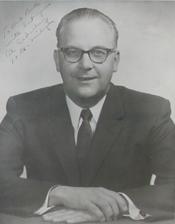
Elford Cederberg
Former U.S. Representative · Michigan District 10 · 1953–1979 · Republican
Elford Cederberg represented Michigan's District 10 in the United States House of Representatives (1953–1979) for the Republican party. The page below collects sourced biographical facts, term history, committee roles, and provenance for Cederberg.
Bioguide ID: C000263
Key facts
- Full name
- Elford Cederberg
- State
- Michigan
- District
- District 10
- Party
- Republican
- House service
- 1953–1979
- First House term
- 1953
- Status
- Left office
- Current term ends
- —
- Born
- 1918
- Bioguide ID
- C000263
- Committee assignments
- —
- Dataset version
- 1.20260605
Biographical narrative
905 words · sourced from the Wikipedia REST extract
Elford A. Cederberg was a prominent American politician who served as a U.S. Representative for Michigan's 10th congressional district. A member of the Republican Party, Cederberg's congressional career spanned 26 years, during which he was elected to 13 consecutive terms in the House of Representatives. His legislative tenure was marked by significant involvement in various civil rights initiatives and budgetary matters. Cederberg's career in public service began at the local level before he transitioned to national politics, where he played a role in shaping policies during a transformative period in American history.
Early life and career
Elford Albin Cederberg was born on March 6, 1918, in Bay City, Michigan, to Albin and Helen (Olson) Cederberg, who were dairy farmers. His family background included Swedish immigrants, which influenced his upbringing in a community that valued hard work and resilience. Cederberg attended public schools in Bay City and furthered his education at Bay City Junior College from 1935 to 1937.
In April 1941, Cederberg enlisted in the United States Army, where he began a distinguished military career. He was commissioned as a second lieutenant in July 1942 and quickly advanced to the rank of captain by 1943. Cederberg served with the 83rd Infantry Division during World War II, participating in significant military operations, including the Normandy invasion. His service in Europe included combat in France and Germany, where he earned five campaign battle stars and the Bronze Star for his bravery and leadership.
After the war, Cederberg returned to Bay City, where he took on the role of manager at the Nelson Manufacturing Company from 1946 until 1952. His involvement in local governance began during this time, as he was elected mayor of Bay City, serving from 1949 to 1953. This local leadership experience laid the groundwork for his future political aspirations at the federal level.
Cederberg first sought a seat in the U.S. House of Representatives in 1950 but was unsuccessful in the Republican primary against incumbent Roy O. Woodruff. However, when Woodruff chose not to seek re-election in 1952, Cederberg capitalized on the opportunity. He won the Republican primary and subsequently the general election, marking the beginning of his long congressional career.
House tenure
Cederberg officially took office in the U.S. House of Representatives on January 3, 1953. Over the course of his 13 terms, he became a well-known figure in Michigan politics and a respected member of the House. His tenure lasted until January 3, 1979, when he resigned from Congress. Throughout his time in office, Cederberg was re-elected multiple times, reflecting his strong support within his district.
During his congressional career, Cederberg was involved in various legislative initiatives and was known for his participation in key votes on significant civil rights legislation. He supported the Civil Rights Acts of 1957, 1960, 1964, and 1968, as well as the Voting Rights Act of 1965 and the 24th Amendment to the U.S. Constitution. His voting record indicated a commitment to advancing civil rights during a pivotal era in American history.
Cederberg's influence extended beyond civil rights issues; he also became the ranking minority member of the House Appropriations Committee. This role placed him at the center of budgetary discussions and decisions, allowing him to impact federal funding allocations across various sectors. His experience in both local and national governance equipped him with the knowledge and skills necessary to navigate complex legislative processes.
Despite his long-standing service and contributions, Cederberg faced challenges in his later political career. In 1978, he ran for re-election to the 96th Congress but was defeated by Democrat Donald J. Albosta. This loss marked the end of Cederberg's active political career, concluding a significant chapter in Michigan's congressional history.
Legislative focus and committees
Throughout his time in the House of Representatives, Cederberg's legislative focus encompassed a range of issues, with a notable emphasis on civil rights and budgetary matters. His support for civil rights legislation aligned with the broader national movement aimed at addressing racial inequalities and ensuring voting rights for all citizens. Cederberg's votes in favor of landmark civil rights laws demonstrated his engagement with the pressing social issues of his time.
As a member of the House Appropriations Committee, Cederberg played a crucial role in shaping federal spending priorities. This committee is responsible for determining how federal funds are allocated across various government departments and programs. His position allowed him to influence budgetary decisions that affected both his constituents in Michigan and the nation as a whole. Cederberg's experience in local governance and business management likely informed his approach to fiscal responsibility and resource allocation.
Cederberg's legislative contributions extended beyond specific bills; he was involved in broader discussions about the role of government in addressing social issues and economic challenges. His long tenure in Congress provided him with insights into the evolving political landscape and the complexities of governance during a time of significant change in American society.
After leaving Congress, Cederberg transitioned to a consulting role, working with various companies, including United Technologies, RCA, and Grumman Aircraft. He eventually moved to Florida in the late 1990s, where he continued to engage in civic activities until his passing on April 17, 2006, at the age of 88. Cederberg's legacy as a public servant is marked by his extensive congressional career and his contributions to civil rights and budgetary policy during a transformative period in American history. He is interred in Elm Lawn Cemetery in Bay City, Michigan.
Notable legislation
Sponsored and co-sponsored legislation for Elford Cederberg is pending operator curation. The biographical narrative above carries the same provenance trail until per-bill rows are written.
Sources
- [1]https://en.wikipedia.org/wiki/Al_CederbergWikipedia · retrieved 2026-06-05
Notable quotes
Sourced quotes for Elford Cederberg are pending operator curation. Narrative-scope provenance remains attached below.
Sources
- [1]https://en.wikipedia.org/wiki/Al_CederbergWikipedia · retrieved 2026-06-05
Key positions
Curated policy positions for Elford Cederberg are pending operator review. The biographical narrative above carries the same provenance trail until per-topic positions are written.
Sources
- [1]https://en.wikipedia.org/wiki/Al_CederbergWikipedia · retrieved 2026-06-05
Terms served
- 1953–1955U.S. House · Term 1 · Republican
- 1955–1957U.S. House · Term 2 · Republican
- 1957–1959U.S. House · Term 3 · Republican
- 1959–1961U.S. House · Term 4 · Republican
- 1961–1963U.S. House · Term 5 · Republican
- 1963–1965U.S. House · Term 6 · Republican
- 1965–1967U.S. House · Term 7 · Republican
- 1967–1969U.S. House · Term 8 · Republican
- 1969–1971U.S. House · Term 9 · Republican
- 1971–1973U.S. House · Term 10 · Republican
- 1973–1975U.S. House · Term 11 · Republican
- 1975–1977U.S. House · Term 12 · Republican
- 1977–1979U.S. House · Term 13 · Republican
Sources & provenance
Every attributable claim above carries a per-section [N] marker that resolves to the corresponding URL below. Each entry records the upstream provider, the canonical URL, and the timestamp at which the source was retrieved by the ingest pipeline.
Key facts
- https://bioguide.congress.gov/search/bio/C000263bioguide · retrieved 2026-06-05
- https://www.govtrack.us/congress/members/402407govtrack · retrieved 2026-06-05
Biographical narrative
- https://en.wikipedia.org/wiki/Al_Cederbergwikipedia · retrieved 2026-06-05
Find your representative
Every U.S. state elects representatives by district. Browse Michigan’s delegation, the full former-representative roster, or explore the role and term length.
Related on The Candidate
- Preceded by Roy WoodruffEarlier holder of the Michigan District 10 House seat · Republican.Open
- Succeeded by Donald AlbostaLater holder of the Michigan District 10 House seat · Democratic.Open
- Alexander BuelFormer U.S. Representative · Michigan District 1 · DemocraticOpen
- Alfred LuckingFormer U.S. Representative · Michigan District 1 · DemocraticOpen
- Alpheus WilliamsFormer U.S. Representative · Michigan District 1 · DemocraticOpen
- Bart StupakFormer U.S. Representative · Michigan District 1 · DemocraticOpen