
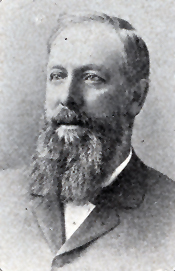
Historical · U.S. House · Michigan · District 10
Rousseau Crump
Former U.S. Representative · Michigan District 10 · 1895–1903 · Republican
Rousseau Crump represented Michigan's District 10 in the United States House of Representatives (1895–1903) for the Republican party. The page below collects sourced biographical facts, term history, committee roles, and provenance for Crump.
Bioguide ID: C000957
Key facts
- Full name
- Rousseau Crump
- State
- Michigan
- District
- District 10
- Party
- Republican
- House service
- 1895–1903
- First House term
- 1895
- Status
- Left office
- Current term ends
- —
- Born
- 1843
- Bioguide ID
- C000957
- Committee assignments
- —
- Dataset version
- 1.20260606
Biographical narrative
1,104 words · sourced from the Wikipedia REST extract
Rousseau Crump was a businessman and politician who served as a U.S. Representative for Michigan's 10th congressional district. A member of the Republican Party, Crump's congressional career spanned from 1895 until his death in 1901. He was known for his involvement in local politics and his contributions to the lumber industry, which played a significant role in Michigan's economy during his lifetime.
Early life and career
Rousseau Owen Crump was born on May 20, 1843, in Pittsford, New York. He was the eldest son of Samuel and Sarah (Cutting) Crump, who had emigrated from England shortly before his birth. His father, a builder by trade, continued his work in the United States after settling in Pittsford in April 1842. Crump received his education in the public schools of Pittsford and Rochester, New York, where he developed a foundation that would support his future endeavors.
Following his education, Crump initially worked alongside his father in the building trade. He later transitioned to wagon and carriage making, and subsequently to ship-carpentering. His skills in ship-carpentering were put to the test when he contributed to the construction of one of the largest sailing vessels on the Great Lakes. After completing this project in the fall of 1864, he embarked on a journey aboard the ship, visiting various ports along Lakes Erie, Huron, and Michigan, including cities such as Detroit, Port Huron, Mackinaw, Chicago, and Milwaukee.
In 1865, Crump joined Colonel Abel Streight, a former Union officer who had escaped from a Confederate prison during the Civil War. He worked as a salesman at Streight's lumberyards in Indianapolis for nearly a year. However, health issues prompted him to return to New York for recuperation. After resigning his position in 1868, Crump married Phebe A. Tucker from Craigsville, New York, and subsequently moved to Winona, Minnesota, where he worked with Laird, Norton & Co., a planing mill and lumberyard.
In 1869, Crump established a lumber business in Plainwell, Michigan, where he built his first home and found moderate success. Due to health concerns, he returned to Pittsford in December 1875. In 1876, he partnered with D. B. Eder to operate a planing mill and lumberyard until 1879. During this time, he was also involved in a venture to build and operate a powder mill near Syracuse, which unfortunately exploded in 1877, resulting in significant financial losses for Crump.
Crump then formed a partnership with his uncle, James Cutting, in Simcoe, Ontario, where they operated a general lumber, stave, sash, shingle, and door factory. In 1881, he and his wife toured the Great Lakes and negotiated a lease in West Bay City, Michigan, to establish a new lumber operation. They relocated their business there, and by September 1881, construction of a large mill began, which became operational in October of that year. Crump eventually incorporated his business as Crump's Manufacturing Company in February 1884, focusing on box and package manufacturing, which became one of the largest plants of its kind in the country at that time.
Crump and his wife raised a family that included one son and four daughters. Their children were born in various locations, reflecting the family's moves throughout Crump's career. In West Bay City, Crump became involved in local governance, serving on the board of aldermen from 1889 to 1892. He also ran unsuccessfully for the Michigan House of Representatives in the fall of 1890 before being elected mayor of West Bay City, a position he held from 1892 to 1895.
House tenure
Rousseau Crump's political career at the federal level began when he was elected as a Republican to represent Michigan's 10th congressional district in the 54th United States Congress. He took office on March 4, 1895, and was subsequently re-elected to three additional terms, serving until his death in 1901. His tenure in the House of Representatives was marked by his active participation in various legislative matters and his leadership roles within committees.
During his time in Congress, Crump was known for his focus on issues related to mining and natural resources, which were particularly relevant to Michigan's economy. In the 56th Congress, he served as the chairman of the Committee on Mines and Mining, where he was involved in discussions and decisions that impacted the mining industry and its regulations. His experience as a businessman likely informed his approach to legislative matters, particularly those affecting the economic landscape of his district and the state.
Crump's congressional career was characterized by his commitment to representing the interests of his constituents in Michigan. He navigated the complexities of federal legislation while advocating for policies that aligned with the needs of his district. His ability to serve multiple terms indicated a level of support from his constituents, reflecting his engagement with the community and responsiveness to their concerns.
Legislative focus and committees
Throughout his time in the House of Representatives, Rousseau Crump's legislative focus was primarily on issues related to mining and natural resources, reflecting the economic priorities of Michigan during the late 19th century. As chairman of the Committee on Mines and Mining in the 56th Congress, he played a crucial role in shaping policies that governed the mining industry, which was vital to the state's economy. His leadership in this committee allowed him to influence legislation that addressed the challenges and opportunities faced by the mining sector.
Crump's background in business, particularly in the lumber industry, likely provided him with insights into the economic implications of mining policies. He understood the importance of natural resources in driving economic growth and job creation, which informed his legislative priorities. His work in Congress was characterized by a commitment to fostering an environment conducive to industrial development, particularly in sectors that were significant to Michigan's economic landscape.
In addition to his focus on mining, Crump's broader legislative activities were aligned with the interests of his constituents. He worked to address various issues that affected the lives of the people in his district, demonstrating a dedication to public service. His ability to navigate the complexities of federal legislation and advocate for the needs of his community was a hallmark of his tenure in the House.
Rousseau Crump's life came to an end while he was still in office, as he passed away on May 1, 1901, in West Bay City, Michigan, just weeks before his fifty-eighth birthday. His contributions to both local and federal governance, as well as his impact on the lumber and mining industries, left a lasting legacy in Michigan. He was interred at Elm Lawn Cemetery in Bay City, Michigan, where he is remembered for his service and commitment to his community.
Notable legislation
Sponsored and co-sponsored legislation for Rousseau Crump is pending operator curation. The biographical narrative above carries the same provenance trail until per-bill rows are written.
Sources
- [1]https://en.wikipedia.org/wiki/Rousseau_O._CrumpWikipedia · retrieved 2026-06-06
Notable quotes
Sourced quotes for Rousseau Crump are pending operator curation. Narrative-scope provenance remains attached below.
Sources
- [1]https://en.wikipedia.org/wiki/Rousseau_O._CrumpWikipedia · retrieved 2026-06-06
Key positions
Curated policy positions for Rousseau Crump are pending operator review. The biographical narrative above carries the same provenance trail until per-topic positions are written.
Sources
- [1]https://en.wikipedia.org/wiki/Rousseau_O._CrumpWikipedia · retrieved 2026-06-06
Terms served
- 1895–1897U.S. House · Term 1 · Republican
- 1897–1899U.S. House · Term 2 · Republican
- 1899–1901U.S. House · Term 3 · Republican
- 1901–1903U.S. House · Term 4 · Republican
Sources & provenance
Every attributable claim above carries a per-section [N] marker that resolves to the corresponding URL below. Each entry records the upstream provider, the canonical URL, and the timestamp at which the source was retrieved by the ingest pipeline.
Key facts
- https://bioguide.congress.gov/search/bio/C000957bioguide · retrieved 2026-06-06
- https://www.govtrack.us/congress/members/403069govtrack · retrieved 2026-06-06
Biographical narrative
- https://en.wikipedia.org/wiki/Rousseau_O._Crumpwikipedia · retrieved 2026-06-06
Find your representative
Every U.S. state elects representatives by district. Browse Michigan’s delegation, the full former-representative roster, or explore the role and term length.
Related on The Candidate
- Preceded by Thomas WeadockEarlier holder of the Michigan District 10 House seat · Democratic.Open
- Succeeded by George LoudLater holder of the Michigan District 10 House seat · Republican.Open
- Alexander BuelFormer U.S. Representative · Michigan District 1 · DemocraticOpen
- Alfred LuckingFormer U.S. Representative · Michigan District 1 · DemocraticOpen
- Alpheus WilliamsFormer U.S. Representative · Michigan District 1 · DemocraticOpen
- Bart StupakFormer U.S. Representative · Michigan District 1 · DemocraticOpen