
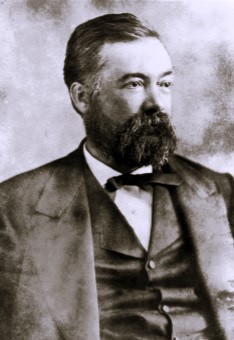
Historical · U.S. House · Michigan · District 11
Edward Breitung
Former U.S. Representative · Michigan District 11 · 1883–1885 · Republican
Edward Breitung represented Michigan's District 11 in the United States House of Representatives (1883–1885) for the Republican party. The page below collects sourced biographical facts, term history, committee roles, and provenance for Breitung.
Bioguide ID: B000795
Key facts
- Full name
- Edward Breitung
- State
- Michigan
- District
- District 11
- Party
- Republican
- House service
- 1883–1885
- First House term
- 1883
- Status
- Left office
- Current term ends
- —
- Born
- 1831
- Bioguide ID
- B000795
- Committee assignments
- —
- Dataset version
- 1.20260606
Biographical narrative
884 words · sourced from the Wikipedia REST extract
Edward Breitung was a politician from Michigan who served as a U.S. Representative for the state's 11th congressional district. A member of the Republican Party, he held office in the United States House of Representatives from 1883 to 1885. Breitung's career encompassed various roles in both business and politics, reflecting his deep engagement with the economic and social issues of his time.
Early life and career
Edward Breitung was born on November 10, 1831, in Schalkau, located in the Duchy of Saxe-Meiningen, Germany. He was the son of John M. Breitung, a Lutheran minister, which likely influenced his early values and education. Breitung pursued his studies at the College of Mining in Meiningen, an institution known for its rigorous scientific and classical curriculum. This educational background laid the groundwork for his later ventures in mining and business.
In 1849, following the upheaval of the German revolutions, Breitung immigrated to the United States, settling initially in Kalamazoo County, Michigan. His move marked the beginning of a significant transition as he sought new opportunities in a different land. By 1851, he relocated to Detroit, where he began working as a clerk in a mercantile house, gaining valuable experience in commerce.
Breitung's career in business took him to Marquette, Michigan, where he engaged in mercantile activities until 1859. He later moved to Negaunee, Michigan, where he continued his mercantile pursuits. However, a fire in 1860 destroyed his store, prompting a shift in his professional focus. He then partnered with Israel Case to operate the Pioneer Blast Furnace in Negaunee under a four-year contract. By 1864, Breitung transitioned to iron mining, exploring and locating several profitable iron deposits in Marquette and Menominee Counties. His entrepreneurial spirit also led him to explore mining opportunities beyond Michigan, including ventures in Minnesota and Colorado, where he sought both iron and precious metals.
On November 28, 1870, Breitung married Mary Paulin, who hailed from Belgium, Wisconsin. The couple had two children, Edward Jr. and William. Tragically, William passed away shortly after birth due to cholera, a loss that deeply affected Breitung and his family.
Breitung's political career began at the state level, where he served in the Michigan State House of Representatives from 1873 to 1874. He later became a member of the Michigan State Senate in 1877 and 1878. His local governance experience included serving as the mayor of Negaunee in 1879, 1880, and 1882, further establishing his reputation as a community leader.
House tenure
Edward Breitung was elected to the United States House of Representatives as a Republican, representing Michigan's 11th congressional district. His congressional term began on March 4, 1883, as part of the Forty-eighth Congress. During his time in office, Breitung focused on issues pertinent to his constituents and the broader economic landscape of the United States, particularly those related to mining and industrial development.
Breitung's tenure in Congress lasted until March 3, 1885, at which point he chose not to seek renomination for a second term in the 1884 elections. His decision to step away from national politics marked the end of his formal legislative career, although his influence in local and state matters continued through his business ventures and community involvement.
Legislative focus and committees
During his time in the House of Representatives, Edward Breitung's legislative focus was likely influenced by his background in business and mining. While specific details regarding the bills he sponsored or the committees he served on are not documented, it can be inferred that his experiences in the mining industry and local governance would have shaped his perspectives on economic development, labor issues, and infrastructure needs.
Breitung's commitment to his constituents and his understanding of the economic challenges facing Michigan's mining regions would have informed his approach to legislation. His background as a businessman and community leader likely provided him with insights into the needs of both workers and employers in the rapidly industrializing economy of the late 19th century.
After leaving Congress, Breitung returned to his business interests, particularly in mining, where he continued to have a significant impact on the industry. His contributions to the development of mining operations, especially in the Upper Peninsula of Michigan and beyond, were notable, and he remained an influential figure in the region's economic landscape.
Edward Breitung passed away on March 3, 1887, in Eastman, Georgia, shortly before he was to move into a winter residence he had constructed. His legacy includes the naming of Breitung Township in Minnesota, which recognizes his contributions to the Soudan Mine, as well as Breitung Township in Michigan, reflecting his lasting impact on the communities he served.
Breitung's family continued to play a role in the mining industry after his death. His son, Edward N. Breitung Jr., took over the family business and expanded its operations. The family maintained connections with notable figures in the region, including the Kaufman family, through marriages and business partnerships. Despite the challenges faced by the family during World War I, including controversies involving Edward Jr., the Breitung legacy in mining and community service persisted through subsequent generations.
Edward Breitung's life and career encapsulate the journey of a 19th-century immigrant who became a significant figure in both business and politics in Michigan, reflecting the broader themes of opportunity, industry, and community engagement during a transformative period in American history.
Notable legislation
Sponsored and co-sponsored legislation for Edward Breitung is pending operator curation. The biographical narrative above carries the same provenance trail until per-bill rows are written.
Sources
- [1]https://en.wikipedia.org/wiki/Edward_BreitungWikipedia · retrieved 2026-06-06
Notable quotes
Sourced quotes for Edward Breitung are pending operator curation. Narrative-scope provenance remains attached below.
Sources
- [1]https://en.wikipedia.org/wiki/Edward_BreitungWikipedia · retrieved 2026-06-06
Key positions
Curated policy positions for Edward Breitung are pending operator review. The biographical narrative above carries the same provenance trail until per-topic positions are written.
Sources
- [1]https://en.wikipedia.org/wiki/Edward_BreitungWikipedia · retrieved 2026-06-06
Terms served
- 1883–1885U.S. House · Term 1 · Republican
Sources & provenance
Every attributable claim above carries a per-section [N] marker that resolves to the corresponding URL below. Each entry records the upstream provider, the canonical URL, and the timestamp at which the source was retrieved by the ingest pipeline.
Key facts
- https://bioguide.congress.gov/search/bio/B000795bioguide · retrieved 2026-06-06
- https://www.govtrack.us/congress/members/401752govtrack · retrieved 2026-06-06
Biographical narrative
- https://en.wikipedia.org/wiki/Edward_Breitungwikipedia · retrieved 2026-06-06
Find your representative
Every U.S. state elects representatives by district. Browse Michigan’s delegation, the full former-representative roster, or explore the role and term length.
Related on The Candidate
- Succeeded by Seth MoffattLater holder of the Michigan District 11 House seat · Republican.Open
- Alexander BuelFormer U.S. Representative · Michigan District 1 · DemocraticOpen
- Alfred LuckingFormer U.S. Representative · Michigan District 1 · DemocraticOpen
- Alpheus WilliamsFormer U.S. Representative · Michigan District 1 · DemocraticOpen
- Bart StupakFormer U.S. Representative · Michigan District 1 · DemocraticOpen
- Republican PartyFederal candidates and office holders on the Republican line.Open