
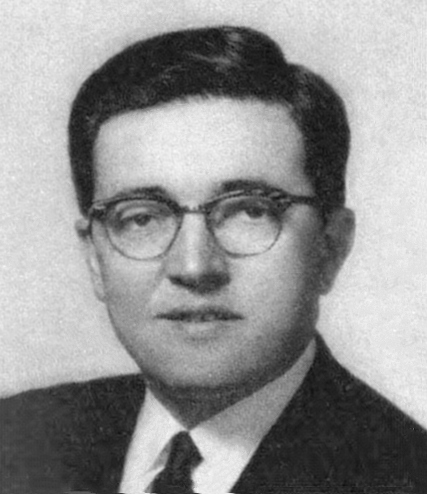
Historical · U.S. House · Michigan · District 11
Raymond Clevenger
Former U.S. Representative · Michigan District 11 · 1965–1967 · Democratic
Raymond Clevenger represented Michigan's District 11 in the United States House of Representatives (1965–1967) for the Democratic party. The page below collects sourced biographical facts, term history, committee roles, and provenance for Clevenger.
Bioguide ID: C000516
Key facts
- Full name
- Raymond Clevenger
- State
- Michigan
- District
- District 11
- Party
- Democratic
- House service
- 1965–1967
- First House term
- 1965
- Status
- Left office
- Current term ends
- —
- Born
- 1926
- Bioguide ID
- C000516
- Committee assignments
- —
- Dataset version
- 1.20260605
Biographical narrative
931 words · sourced from the Wikipedia REST extract
Raymond Clevenger was an American lawyer and politician who served as a U.S. Representative for Michigan's 11th congressional district from 1965 to 1967. A member of the Democratic Party, Clevenger's political career was marked by his election to Congress during a period of significant social and political change in the United States. His background in law and his involvement in local and state politics contributed to his candidacy and subsequent election to the House of Representatives. After his congressional term, he continued to engage in public service and law, demonstrating a commitment to his community and the legal profession.
Early life and career
Raymond Francis Clevenger was born on June 6, 1926, in Chicago, Illinois. He grew up in Oak Park, a suburb of Chicago, where he attended local schools and graduated from high school in 1944. Following his graduation, Clevenger served in the United States Army Medical Corps from July 1944 to July 1946, a period during which he gained valuable experience and discipline that would later inform his professional and political endeavors.
After completing his military service, Clevenger pursued higher education. He attended Roosevelt University in Chicago, where he became actively involved in student government. During his time at Roosevelt, he was elected student council president, working alongside future Chicago mayor Harold Washington, who served as vice president. This early involvement in leadership roles foreshadowed his later political career. Clevenger graduated from Roosevelt University in 1949 and subsequently enrolled at the University of Michigan Law School, where he earned his law degree in 1952.
Upon completing his legal education, Clevenger began practicing law in Sault Ste. Marie, Michigan, in 1953. His legal career was complemented by his active participation in the Democratic Party. He served as a delegate to various Democratic State Conventions from 1954 to 1964 and was a delegate to the 1956 Democratic National Convention. His involvement in the party at both the state and national levels helped him build a network of political connections that would be beneficial in his future political endeavors.
In addition to his legal practice, Clevenger held several notable positions in public service. He served as the Chippewa County Circuit Court Commissioner from 1958 to 1960, a role that provided him with insights into the judicial system and local governance. He was also a member of the Democratic State Central Committee during the same period. In 1961, he was appointed as Michigan's Corporation and Securities Commissioner, a position he held until 1963. These roles not only enhanced his understanding of legal and regulatory issues but also established his reputation as a dedicated public servant.
House tenure
Clevenger's political career took a significant turn in 1964 when he decided to run for a seat in the U.S. House of Representatives. He campaigned for Michigan's 11th congressional district, challenging the incumbent Republican representative, Victor A. Knox. Clevenger's campaign was successful, and he was elected to the Eighty-ninth Congress, taking office on January 3, 1965. His election was part of a broader trend during the 1960s when many Democrats gained seats in Congress amid shifting political dynamics in the United States.
During his time in Congress, Clevenger was part of a group known as the "Michigan Five Fluke Freshmen," a term that reflected the unexpected nature of their election victories. His tenure in the House lasted until January 3, 1967, when he completed his first term. Throughout his time in office, Clevenger focused on various issues pertinent to his constituents and the nation, although specific details regarding his legislative initiatives and voting record are not extensively documented.
Clevenger sought re-election in 1966 but was unsuccessful, losing to Republican candidate Philip Ruppe. He attempted to regain his seat in the 1968 election but faced defeat once again. These electoral challenges marked the end of his congressional career, but they did not diminish his commitment to public service.
Legislative focus and committees
While specific details about Clevenger's legislative focus during his time in Congress are limited, it is known that he was involved in various issues that were significant during the 1960s. This period was characterized by substantial social change, including civil rights advancements, discussions surrounding the Vietnam War, and significant domestic policy initiatives. As a member of the Democratic Party, Clevenger likely aligned with the party's broader goals of promoting social justice, economic opportunity, and civil rights, although the exact nature of his contributions in these areas is not detailed in available records.
Following his congressional tenure, Clevenger continued to serve in public roles. He was appointed by President Lyndon B. Johnson as the chairman of the Great Lakes Basin Commission, a position he held from 1967 to 1968. This role allowed him to engage with environmental and regional issues affecting the Great Lakes, an area of significant ecological and economic importance to the Midwest.
After his time with the commission, Clevenger returned to the practice of law, continuing his professional career while remaining active in local politics. In 1989, he ran for the position of Mayor of Ann Arbor, Michigan, but was defeated by the incumbent Republican mayor, Gerald D. Jernigan. This campaign reflected his ongoing interest in public service and community engagement.
Raymond Clevenger resided in Ann Arbor for much of his later life. He passed away on March 29, 2016, at the age of 89. His legacy includes his contributions to law, politics, and public service, as well as his involvement in the Democratic Party during a transformative era in American history. Clevenger's career exemplifies the path of a public servant dedicated to his community and the principles of democracy.
Notable legislation
Sponsored and co-sponsored legislation for Raymond Clevenger is pending operator curation. The biographical narrative above carries the same provenance trail until per-bill rows are written.
Sources
- [1]https://en.wikipedia.org/wiki/Raymond_F._ClevengerWikipedia · retrieved 2026-06-05
Notable quotes
Sourced quotes for Raymond Clevenger are pending operator curation. Narrative-scope provenance remains attached below.
Sources
- [1]https://en.wikipedia.org/wiki/Raymond_F._ClevengerWikipedia · retrieved 2026-06-05
Key positions
Curated policy positions for Raymond Clevenger are pending operator review. The biographical narrative above carries the same provenance trail until per-topic positions are written.
Sources
- [1]https://en.wikipedia.org/wiki/Raymond_F._ClevengerWikipedia · retrieved 2026-06-05
Terms served
- 1965–1967U.S. House · Term 1 · Democratic
Sources & provenance
Every attributable claim above carries a per-section [N] marker that resolves to the corresponding URL below. Each entry records the upstream provider, the canonical URL, and the timestamp at which the source was retrieved by the ingest pipeline.
Key facts
- https://bioguide.congress.gov/search/bio/C000516bioguide · retrieved 2026-06-05
- https://www.govtrack.us/congress/members/402651govtrack · retrieved 2026-06-05
Biographical narrative
- https://en.wikipedia.org/wiki/Raymond_F._Clevengerwikipedia · retrieved 2026-06-05
Find your representative
Every U.S. state elects representatives by district. Browse Michigan’s delegation, the full former-representative roster, or explore the role and term length.
Related on The Candidate
- Preceded by Victor KnoxEarlier holder of the Michigan District 11 House seat · Republican.Open
- Succeeded by Philip RuppeLater holder of the Michigan District 11 House seat · Republican.Open
- Alexander BuelFormer U.S. Representative · Michigan District 1 · DemocraticOpen
- Alfred LuckingFormer U.S. Representative · Michigan District 1 · DemocraticOpen
- Alpheus WilliamsFormer U.S. Representative · Michigan District 1 · DemocraticOpen
- Bart StupakFormer U.S. Representative · Michigan District 1 · DemocraticOpen