
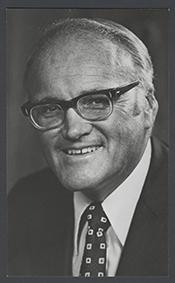
Historical · U.S. House · Michigan · District 12
James O’Hara
Former U.S. Representative · Michigan District 12 · 1959–1977 · Democratic
James O’Hara represented Michigan's District 12 in the United States House of Representatives (1959–1977) for the Democratic party. The page below collects sourced biographical facts, term history, committee roles, and provenance for O’Hara.
Bioguide ID: O000055
Key facts
- Full name
- James O’Hara
- State
- Michigan
- District
- District 12
- Party
- Democratic
- House service
- 1959–1977
- First House term
- 1959
- Status
- Left office
- Current term ends
- —
- Born
- 1925
- Bioguide ID
- O000055
- Committee assignments
- —
- Dataset version
- 1.20260605
Biographical narrative
905 words · sourced from the Wikipedia REST extract
James G. O'Hara was a prominent American politician and attorney who served as a U.S. Representative from Michigan for nearly two decades. A member of the Democratic Party, O'Hara's congressional career spanned from 1959 to 1977, during which he represented two different congressional districts in the Metro Detroit area. His legislative work and political engagements were shaped by his experiences as a soldier during World War II and his legal background, which informed his approach to governance and public service.
Early life and career
James Grant O'Hara was born on November 8, 1925, in Washington, D.C. His family relocated to Michigan in 1939, where he would spend much of his formative years. O'Hara completed his secondary education at the University of Detroit High School, graduating in 1943. Shortly thereafter, he enlisted in the United States Army, where he served with distinction during World War II. O'Hara was a member of Company B, 511th Parachute Infantry Regiment, part of the U.S. 11th Airborne Division. His military service included significant action in the Pacific Theater, where he gained valuable experiences that would later influence his perspectives on leadership and public service.
Following the conclusion of the war, O'Hara pursued higher education. He attended the University of Michigan, where he earned his undergraduate degree in 1954. He continued his studies at the same institution, graduating from its law school in 1955. After being admitted to the bar later that year, O'Hara began practicing law in the Detroit and Macomb County areas. His legal career provided him with a foundation in the complexities of law and governance, which would prove beneficial in his subsequent political endeavors. O'Hara also participated in the Democratic National Conventions in 1960 and 1968 as a delegate, further solidifying his involvement in the political landscape of the time.
House tenure
O'Hara's political career began in earnest when he ran for a seat in the U.S. House of Representatives in 1958. He successfully defeated the incumbent Republican, Robert J. McIntosh, to secure a position in the 86th United States Congress. O'Hara's first term began on January 3, 1959, and he would go on to be re-elected for eight consecutive terms, serving until January 3, 1977. His initial representation was of Michigan's 7th congressional district, which he held until 1965. Following redistricting that occurred after the 1960 census, O'Hara transitioned to represent Michigan's 12th congressional district, a region that included parts of the Metro Detroit area.
Throughout his tenure in Congress, O'Hara was involved in various legislative initiatives and discussions that reflected the interests and needs of his constituents. His long-standing service in the House allowed him to build a reputation as a dedicated public servant committed to addressing the challenges faced by the communities he represented. In 1976, O'Hara opted not to seek re-election to the House. Instead, he pursued a seat in the United States Senate, motivated by the decision of incumbent Senator Philip Hart not to run for re-election. O'Hara participated in the Democratic primary but was ultimately defeated by Donald W. Riegle Jr., a fellow Democratic candidate who had previously served as a U.S. Representative.
After leaving Congress, O'Hara returned to the practice of law in Washington, D.C. His legal expertise continued to play a significant role in his post-congressional career, allowing him to remain engaged in public affairs and legal matters. Additionally, he served as a member and later as chairman of the Federal Minimum Wage Study Commission from 1978 to 1981, where he contributed to discussions on wage policies and labor issues.
Legislative focus and committees
During his time in the House of Representatives, O'Hara's legislative focus encompassed a range of issues pertinent to his constituents and the broader national landscape. His background as a lawyer and his military service informed his approach to various legislative matters, particularly those related to labor, civil rights, and social welfare. O'Hara's commitment to public service was evident in his efforts to advocate for policies that aimed to improve the quality of life for the residents of Michigan and the nation as a whole.
O'Hara's involvement in congressional committees allowed him to play a significant role in shaping legislation. While specific committee assignments during his tenure are not detailed in the available information, it is common for members of Congress to serve on committees that align with their interests and expertise. These committees are crucial in reviewing proposed legislation, conducting hearings, and making recommendations to the full House. O'Hara's legal background would have been particularly advantageous in navigating the complexities of legislative processes and contributing to informed discussions on various bills.
In addition to his legislative work, O'Hara's participation in the Democratic National Conventions highlighted his active engagement in party politics and national issues. His role as a delegate allowed him to influence the direction of the Democratic Party during a transformative period in American politics, characterized by significant social and political changes.
O'Hara's legacy is marked by his long-standing commitment to public service and his contributions to the legislative process during a pivotal era in U.S. history. His experiences as a soldier, lawyer, and politician shaped his perspectives and actions, allowing him to serve effectively in the House of Representatives. After his congressional career, O'Hara continued to engage in legal practice and public service until his passing on March 13, 1989, at the age of 63. He is interred at Arlington National Cemetery, a testament to his service to the nation.
Notable legislation
Sponsored and co-sponsored legislation for James O’Hara is pending operator curation. The biographical narrative above carries the same provenance trail until per-bill rows are written.
Sources
- [1]https://en.wikipedia.org/wiki/James_G._O'HaraWikipedia · retrieved 2026-06-05
Notable quotes
Sourced quotes for James O’Hara are pending operator curation. Narrative-scope provenance remains attached below.
Sources
- [1]https://en.wikipedia.org/wiki/James_G._O'HaraWikipedia · retrieved 2026-06-05
Key positions
Curated policy positions for James O’Hara are pending operator review. The biographical narrative above carries the same provenance trail until per-topic positions are written.
Sources
- [1]https://en.wikipedia.org/wiki/James_G._O'HaraWikipedia · retrieved 2026-06-05
Terms served
- 1959–1961U.S. House · Term 1 · Democratic
- 1961–1963U.S. House · Term 2 · Democratic
- 1963–1965U.S. House · Term 3 · Democratic
- 1965–1967U.S. House · Term 4 · Democratic
- 1967–1969U.S. House · Term 5 · Democratic
- 1969–1971U.S. House · Term 6 · Democratic
- 1971–1973U.S. House · Term 7 · Democratic
- 1973–1975U.S. House · Term 8 · Democratic
- 1975–1977U.S. House · Term 9 · Democratic
Sources & provenance
Every attributable claim above carries a per-section [N] marker that resolves to the corresponding URL below. Each entry records the upstream provider, the canonical URL, and the timestamp at which the source was retrieved by the ingest pipeline.
Key facts
- https://bioguide.congress.gov/search/bio/O000055bioguide · retrieved 2026-06-05
- https://www.govtrack.us/congress/members/408290govtrack · retrieved 2026-06-05
Biographical narrative
- https://en.wikipedia.org/wiki/James_G._O'Harawikipedia · retrieved 2026-06-05
Find your representative
Every U.S. state elects representatives by district. Browse Michigan’s delegation, the full former-representative roster, or explore the role and term length.
Related on The Candidate
- Preceded by Frank HookEarlier holder of the Michigan District 12 House seat · Democratic.Open
- Alexander BuelFormer U.S. Representative · Michigan District 1 · DemocraticOpen
- Alfred LuckingFormer U.S. Representative · Michigan District 1 · DemocraticOpen
- Alpheus WilliamsFormer U.S. Representative · Michigan District 1 · DemocraticOpen
- Bart StupakFormer U.S. Representative · Michigan District 1 · DemocraticOpen
- Democratic PartyFederal candidates and office holders on the Democratic line.Open