
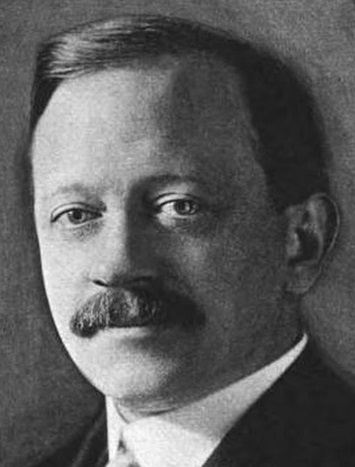
Historical · U.S. House · Michigan · District 13
Charles Nichols
Former U.S. Representative · Michigan District 13 · 1915–1921 · Republican
Charles Nichols represented Michigan's District 13 in the United States House of Representatives (1915–1921) for the Republican party. The page below collects sourced biographical facts, term history, committee roles, and provenance for Nichols.
Bioguide ID: N000090
Key facts
- Full name
- Charles Nichols
- State
- Michigan
- District
- District 13
- Party
- Republican
- House service
- 1915–1921
- First House term
- 1915
- Status
- Left office
- Current term ends
- —
- Born
- 1876
- Bioguide ID
- N000090
- Committee assignments
- —
- Dataset version
- 1.20260606
Biographical narrative
870 words · sourced from the Wikipedia REST extract
Charles Archibald Nichols was an American journalist and politician who served as a U.S. Representative for Michigan's 13th congressional district from 1915 until his death in 1920. A member of the Republican Party, Nichols was known for his involvement in local government prior to his congressional career, where he focused on various legislative issues and held a leadership position on a key committee.
Early life and career
Charles Nichols was born on August 25, 1876, in Boyne City, Michigan, to Thomas Whitney Nichols and his wife. He received his education in the public schools of Michigan, which laid the foundation for his future endeavors in journalism and politics. Nichols began his professional career in the field of journalism, working as a reporter and criminal investigator for prominent newspapers in Detroit, including the Detroit Journal and the Detroit News. His tenure in journalism lasted from 1898 to 1905, during which he gained valuable experience in reporting and investigative work.
Following his time in journalism, Nichols transitioned into public service. He served as the secretary of the police department in Detroit from 1905 to 1908, a role that likely provided him with insights into law enforcement and municipal governance. His career in local government continued as he was elected city clerk of Detroit, a position he held from 1908 until 1912. These roles not only enhanced his understanding of civic administration but also established his reputation as a dedicated public servant in the community.
Nichols's early political career was marked by his commitment to public service and his growing involvement in the Republican Party. His experiences in journalism and local government equipped him with the skills and knowledge necessary for a successful career in the U.S. Congress.
House tenure
In 1914, Charles Nichols was elected to represent Michigan's newly established 13th congressional district in the 64th United States Congress. His election marked the beginning of a significant chapter in his political career, as he took office on March 4, 1915. Nichols was re-elected twice, serving a total of three terms in the House of Representatives until his death in 1920.
During his time in Congress, Nichols was involved in various legislative activities and contributed to discussions on a range of issues pertinent to his constituents and the nation. His role as a congressman allowed him to advocate for the interests of Michigan residents and participate in the broader legislative process at the federal level.
Nichols's leadership capabilities were recognized when he was appointed chairman of the Committee on the Census during the 66th Congress. This position placed him at the forefront of discussions regarding the national census, an important undertaking that has significant implications for representation and resource allocation across the country. His chairmanship reflected his influence within the House and underscored his commitment to ensuring accurate representation for his constituents.
Nichols's congressional career was characterized by his dedication to public service and his active engagement in legislative matters. He served during a period of significant national change, including the lead-up to the United States' involvement in World War I, which likely influenced the legislative priorities of the time.
Legislative focus and committees
Throughout his tenure in the U.S. House of Representatives, Charles Nichols focused on a variety of legislative issues that were relevant to his constituents and the nation as a whole. While specific details of his legislative initiatives are not extensively documented, his role as chairman of the Committee on the Census highlights his involvement in significant national matters. The census is a critical process that impacts congressional representation, federal funding, and various demographic analyses, making it an essential area of focus for any legislator.
Nichols's work on the Committee on the Census would have involved overseeing the planning and execution of the census, ensuring that it was conducted fairly and accurately. This responsibility was particularly important given the changing demographics of the United States during the early 20th century. His leadership in this area would have allowed him to advocate for the needs of his district and ensure that Michigan's population was accurately represented in Congress.
In addition to his committee work, Nichols's background in journalism likely informed his approach to legislation and public policy. His experience as a reporter may have contributed to his understanding of the importance of transparency and accountability in government. This perspective could have influenced his legislative priorities and interactions with constituents, as he sought to address their concerns and represent their interests effectively.
Nichols's legislative focus and committee assignments reflect a commitment to public service and an understanding of the complexities of governance. His work in Congress occurred during a time of significant national challenges, including social and economic changes brought about by the war and the evolving role of the federal government.
Charles Archibald Nichols passed away while still in office on April 25, 1920, in Washington, D.C. His death marked the end of a notable political career, and he was interred in Grand Lawn Cemetery in Detroit, Michigan. Following his passing, Clarence McLeod was elected to fill the vacant seat, continuing the representation of Michigan's 13th congressional district. Nichols's legacy as a public servant and his contributions to the legislative process remain a part of Michigan's political history.
Notable legislation
Sponsored and co-sponsored legislation for Charles Nichols is pending operator curation. The biographical narrative above carries the same provenance trail until per-bill rows are written.
Sources
- [1]https://en.wikipedia.org/wiki/Charles_Archibald_NicholsWikipedia · retrieved 2026-06-06
Notable quotes
Sourced quotes for Charles Nichols are pending operator curation. Narrative-scope provenance remains attached below.
Sources
- [1]https://en.wikipedia.org/wiki/Charles_Archibald_NicholsWikipedia · retrieved 2026-06-06
Key positions
Curated policy positions for Charles Nichols are pending operator review. The biographical narrative above carries the same provenance trail until per-topic positions are written.
Sources
- [1]https://en.wikipedia.org/wiki/Charles_Archibald_NicholsWikipedia · retrieved 2026-06-06
Terms served
- 1915–1917U.S. House · Term 1 · Republican
- 1917–1919U.S. House · Term 2 · Republican
- 1919–1921U.S. House · Term 3 · Republican
Sources & provenance
Every attributable claim above carries a per-section [N] marker that resolves to the corresponding URL below. Each entry records the upstream provider, the canonical URL, and the timestamp at which the source was retrieved by the ingest pipeline.
Key facts
- https://bioguide.congress.gov/search/bio/N000090bioguide · retrieved 2026-06-06
- https://www.govtrack.us/congress/members/408175govtrack · retrieved 2026-06-06
Biographical narrative
- https://en.wikipedia.org/wiki/Charles_Archibald_Nicholswikipedia · retrieved 2026-06-06
Find your representative
Every U.S. state elects representatives by district. Browse Michigan’s delegation, the full former-representative roster, or explore the role and term length.
Related on The Candidate
- Succeeded by Vincent BrennanLater holder of the Michigan District 13 House seat · Republican.Open
- Alexander BuelFormer U.S. Representative · Michigan District 1 · DemocraticOpen
- Alfred LuckingFormer U.S. Representative · Michigan District 1 · DemocraticOpen
- Alpheus WilliamsFormer U.S. Representative · Michigan District 1 · DemocraticOpen
- Bart StupakFormer U.S. Representative · Michigan District 1 · DemocraticOpen
- Republican PartyFederal candidates and office holders on the Republican line.Open