
Historical · U.S. House · Michigan · District 13
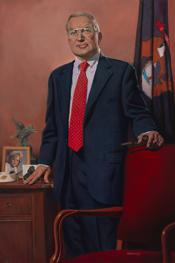
William Ford
Former U.S. Representative · Michigan District 13 · 1965–1995 · Democratic
William Ford represented Michigan's District 13 in the United States House of Representatives (1965–1995) for the Democratic party. The page below collects sourced biographical facts, term history, committee roles, and provenance for Ford.
Bioguide ID: F000270
Key facts
- Full name
- William Ford
- State
- Michigan
- District
- District 13
- Party
- Democratic
- House service
- 1965–1995
- First House term
- 1965
- Status
- Left office
- Current term ends
- —
- Born
- 1927
- Bioguide ID
- F000270
- Committee assignments
- —
- Dataset version
- 1.20260605
Biographical narrative
1,038 words · sourced from the Wikipedia REST extract
William D. Ford was a prominent U.S. Representative from Michigan, serving the 13th congressional district as a member of the Democratic Party from 1965 until 1995. His legislative career spanned three decades, during which he became known for his advocacy of workers' rights and educational opportunities. Ford's contributions to American legislation include significant acts such as the Workers Adjustment and Retraining Notification Act and the Middle Income Student Assistance Act. He was also instrumental in the passage of the Family and Medical Leave Act in 1993. In recognition of his efforts in education, the Federal Direct Student Loan Program was named in his honor in 1994.
Early life and career
William David Ford was born on August 6, 1927, in Detroit, Michigan. He grew up in a working-class family; his father, a Scottish immigrant, worked as an autoworker and was tragically killed on the job. This incident had a profound impact on Ford's political views and shaped his commitment to labor rights and worker protections. Ford's educational journey began at the Henry Ford Trade School and continued at Melvindale High School. He furthered his studies at Nebraska State Teachers College and Wayne State University.
His academic pursuits were interrupted when he enlisted in the United States Navy during World War II, serving from 1944 to 1946. Following his military service, Ford returned to his education, earning a Bachelor of Arts degree from the University of Denver in 1949. He continued his studies at the same institution, obtaining a Juris Doctor degree from the University of Denver College of Law in 1951. After being admitted to the bar that same year, he began practicing law in Taylor, Michigan.
Ford's early career included various roles in local government. He served as justice of the peace for Taylor Township from 1955 to 1957 and as city attorney for Melvindale from 1957 to 1959. He also held the position of attorney for Taylor Township from 1957 to 1964. His political involvement deepened when he became a delegate to the Michigan constitutional convention from 1961 to 1962, contributing to the drafting of the state constitution adopted in 1963. Ford's political career continued to flourish as he was elected to the Michigan State Senate, where he served from 1962 to 1964. Additionally, he was actively involved in the Michigan Democratic Party, serving as a member and officer of the Sixteenth District Democratic Organization from 1952 to 1964 and participating as a delegate in Michigan Democratic conventions from 1952 to 1970, including the Democratic National Convention in 1968.
House tenure
William D. Ford was elected to the United States House of Representatives in 1964, beginning his first term on January 3, 1965. He was re-elected for a total of 15 consecutive terms, demonstrating a strong electoral base in his district. Throughout his tenure, Ford served on various committees, gaining significant influence in legislative matters. He held the position of chairman of the U.S. House Committee on Post Office and Civil Service during the 97th through 101st Congresses, where he oversaw issues related to postal services and civil service employment. His leadership extended to the Committee on Education and Labor during the 102nd and 103rd Congresses, where he focused on policies affecting education and labor rights.
Ford's legislative work was characterized by a commitment to improving the lives of working Americans and expanding educational opportunities. He was particularly noted for his efforts to support workers facing job displacement, which culminated in the introduction of the Workers Adjustment and Retraining Notification Act, also known as the WARN Act. This legislation aimed to provide workers with advance notice of significant layoffs or plant closures, thereby allowing them time to prepare for the transition.
In addition to his work on labor issues, Ford played a crucial role in the passage of the Middle Income Student Assistance Act, which aimed to enhance financial aid for students pursuing higher education. His dedication to education was further recognized when the Federal Direct Student Loan Program was named in his honor in 1994, reflecting his long-standing commitment to making education accessible to all.
Ford chose not to seek re-election in the 1994 election, concluding his lengthy and impactful career in the House of Representatives on January 3, 1995. His departure marked the end of a significant era in Michigan's political landscape, as he had been a consistent advocate for the interests of his constituents and a key player in national legislative matters.
Legislative focus and committees
During his time in Congress, William D. Ford was known for his focus on issues related to labor, education, and civil service. His legislative priorities reflected a deep commitment to enhancing the welfare of American workers and ensuring that educational opportunities were available to all citizens, regardless of their economic background. Ford's work on the WARN Act exemplified his dedication to protecting workers from sudden job losses and providing them with necessary resources to transition to new employment opportunities.
In addition to labor protections, Ford's involvement with the Committee on Education and Labor allowed him to influence policies that shaped the educational landscape in the United States. He was a strong advocate for middle-income families seeking financial assistance for higher education, which was particularly important during a time when college affordability was becoming an increasingly pressing issue.
Ford's leadership roles in various congressional committees positioned him to effect meaningful change in the areas he championed. His tenure as chairman of the Committee on Post Office and Civil Service allowed him to address important issues related to federal employment and postal services, while his chairmanship of the Committee on Education and Labor enabled him to focus on critical educational reforms.
Throughout his congressional career, Ford's legislative achievements were recognized for their impact on American society, particularly in the realms of labor rights and education. His legacy is marked by a commitment to public service and a dedication to improving the lives of his constituents and the broader American public. Ford passed away on August 14, 2004, in Ypsilanti Township, Michigan, leaving behind a legacy of advocacy for workers and students that continues to resonate in contemporary discussions about labor and education policy. He was interred at Arlington National Cemetery, honoring his service to the country.
Notable legislation
Sponsored and co-sponsored legislation for William Ford is pending operator curation. The biographical narrative above carries the same provenance trail until per-bill rows are written.
Sources
- [1]https://en.wikipedia.org/wiki/William_D._FordWikipedia · retrieved 2026-06-05
Notable quotes
Sourced quotes for William Ford are pending operator curation. Narrative-scope provenance remains attached below.
Sources
- [1]https://en.wikipedia.org/wiki/William_D._FordWikipedia · retrieved 2026-06-05
Key positions
Curated policy positions for William Ford are pending operator review. The biographical narrative above carries the same provenance trail until per-topic positions are written.
Sources
- [1]https://en.wikipedia.org/wiki/William_D._FordWikipedia · retrieved 2026-06-05
Terms served
- 1965–1967U.S. House · Term 1 · Democratic
- 1967–1969U.S. House · Term 2 · Democratic
- 1969–1971U.S. House · Term 3 · Democratic
- 1971–1973U.S. House · Term 4 · Democratic
- 1973–1975U.S. House · Term 5 · Democratic
- 1975–1977U.S. House · Term 6 · Democratic
- 1977–1979U.S. House · Term 7 · Democratic
- 1979–1981U.S. House · Term 8 · Democratic
- 1981–1983U.S. House · Term 9 · Democratic
- 1983–1985U.S. House · Term 10 · Democratic
- 1985–1987U.S. House · Term 11 · Democratic
- 1987–1989U.S. House · Term 12 · Democratic
- 1989–1991U.S. House · Term 13 · Democratic
- 1991–1993U.S. House · Term 14 · Democratic
- 1993–1995U.S. House · Term 15 · Democratic
Sources & provenance
Every attributable claim above carries a per-section [N] marker that resolves to the corresponding URL below. Each entry records the upstream provider, the canonical URL, and the timestamp at which the source was retrieved by the ingest pipeline.
Key facts
- https://bioguide.congress.gov/search/bio/F000270bioguide · retrieved 2026-06-05
- https://www.govtrack.us/congress/members/404220govtrack · retrieved 2026-06-05
Biographical narrative
- https://en.wikipedia.org/wiki/William_D._Fordwikipedia · retrieved 2026-06-05
Find your representative
Every U.S. state elects representatives by district. Browse Michigan’s delegation, the full former-representative roster, or explore the role and term length.
Related on The Candidate
- Preceded by George O’BrienEarlier holder of the Michigan District 13 House seat · Democratic.Open
- Succeeded by Lynn RiversLater holder of the Michigan District 13 House seat · Democratic.Open
- Alexander BuelFormer U.S. Representative · Michigan District 1 · DemocraticOpen
- Alfred LuckingFormer U.S. Representative · Michigan District 1 · DemocraticOpen
- Alpheus WilliamsFormer U.S. Representative · Michigan District 1 · DemocraticOpen
- Bart StupakFormer U.S. Representative · Michigan District 1 · DemocraticOpen