
Historical · U.S. House · Michigan · District 15
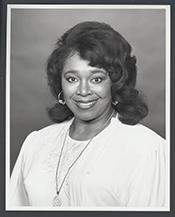
Barbara-Rose Collins
Former U.S. Representative · Michigan District 15 · 1991–1997 · Democratic
Barbara-Rose Collins represented Michigan's District 15 in the United States House of Representatives (1991–1997) for the Democratic party. The page below collects sourced biographical facts, term history, committee roles, and provenance for Collins.
Bioguide ID: C000633
Key facts
- Full name
- Barbara-Rose Collins
- State
- Michigan
- District
- District 15
- Party
- Democratic
- House service
- 1991–1997
- First House term
- 1991
- Status
- Left office
- Current term ends
- —
- Born
- 1939
- Bioguide ID
- C000633
- Committee assignments
- —
- Dataset version
- 1.20260605
Biographical narrative
863 words · sourced from the Wikipedia REST extract
Barbara-Rose Collins was an American politician who served as a U.S. Representative for Michigan's 15th congressional district from 1991 until 1997. A member of the Democratic Party, Collins was notable for being the first Black woman from Michigan elected to Congress. Her career spanned several decades, during which she held various positions in local and state government before making her mark on the national stage. Collins was recognized for her advocacy on issues affecting women and families, as well as her efforts to address social justice and educational reforms.
Early life and career
Barbara-Rose Collins was born on April 13, 1939, in Detroit, Michigan, to Lou Versa Jones and Lamar Nathaniel Richardson. Growing up in a city that would later become a focal point for civil rights activism, Collins attended Cass Technical High School, graduating in 1957. She furthered her education at Wayne State University, where she earned a Bachelor of Arts degree in Political Science and Anthropology.
In the early 1960s, Collins faced personal challenges when she became a single mother following her divorce in 1960. During this time, she worked multiple jobs and relied on public assistance to support her family. Eventually, she secured a position as a Business Manager at Wayne State University, where she worked for nine years in the Physics department.
Collins' political aspirations were ignited in the late 1960s after attending a speech by civil rights activist Stokely Carmichael at the Shrine of the Black Madonna Church in Detroit. Inspired by his call for community upliftment, she began her journey into activism. With the support of the church's pastor, she pursued a career in public service, leading her to run for a seat in the Michigan state legislature in 1974. During her early campaign efforts, she hyphenated her first and middle names to distinguish herself from other candidates, adopting the name Barbara-Rose.
Her political career began with her election to the Detroit Public School Board, where she served from 1971 to 1973. Following this, she was elected to the Michigan House of Representatives, representing the 21st district from 1975 to 1981. Collins later served on the Detroit City Council from 1982 until her election to Congress in 1991. Throughout her tenure on the Detroit Public School Board, she gained recognition for her commitment to school safety and academic achievement.
House tenure
Collins' congressional career began when she won the Democratic primary for Michigan's 13th congressional district in 1988, although she lost that election. However, when the incumbent, George W. Crockett Jr., retired, Collins successfully secured the Democratic nomination for the newly numbered 15th district in 1990. She won the general election with a significant majority, reflecting the district's heavily Democratic and Black-majority demographic. Collins was re-elected three additional times, consistently receiving over 80 percent of the vote in each election.
During her time in the House, Collins was involved in various legislative initiatives and was known for her advocacy on issues that impacted women and families. She sponsored several bills that became law, including the Food Dating Bill, the Sex Education Bill, and the Pregnancy Insurance Bill. Additionally, she introduced the Unrenumerated Work Act in multiple sessions, which aimed to recognize and assign value to unpaid labor, such as caregiving and household work, in the national economic statistics. This initiative garnered support from the Congressional Caucus for Women's Issues and attracted a substantial number of co-sponsors, although it ultimately did not pass.
Collins' tenure was not without controversy. In 1995, she became the subject of an inquiry by the United States House Committee on Ethics, which investigated allegations of misuse of funds. The inquiry was dropped in 1996 after she lost the Democratic primary for re-election to Carolyn Cheeks Kilpatrick. Following her departure from Congress, Collins returned to the Detroit City Council in 2001, where she was re-elected in 2005 and served until her retirement in 2009.
Legislative focus and committees
Throughout her congressional career, Barbara-Rose Collins focused on a range of issues, particularly those affecting women, children, and marginalized communities. Her legislative efforts included advocating for educational reforms, health care access, and social justice initiatives. One of her notable achievements was her introduction of legislation in 1996 to establish Juneteenth as a federal holiday, making her the first congressperson to propose such a measure. Although Juneteenth was not recognized as a federal holiday until 2021, her efforts highlighted the importance of acknowledging African American history and the legacy of slavery in the United States.
Collins served on various committees during her time in the House, where she contributed to discussions and decisions on policies relevant to her constituents and the broader American public. Her work on these committees allowed her to address critical issues, including education, health care, and civil rights, further solidifying her role as an advocate for social change.
After leaving Congress, Collins continued to engage in public service and community activism. Her legacy is marked by her commitment to uplifting communities and advocating for those often overlooked in the political process. Collins passed away on November 4, 2021, from complications related to COVID-19, leaving behind a legacy of public service and advocacy that continues to resonate in Michigan and beyond.
Notable legislation
Sponsored and co-sponsored legislation for Barbara-Rose Collins is pending operator curation. The biographical narrative above carries the same provenance trail until per-bill rows are written.
Sources
- [1]https://en.wikipedia.org/wiki/Barbara-Rose_CollinsWikipedia · retrieved 2026-06-05
Notable quotes
Sourced quotes for Barbara-Rose Collins are pending operator curation. Narrative-scope provenance remains attached below.
Sources
- [1]https://en.wikipedia.org/wiki/Barbara-Rose_CollinsWikipedia · retrieved 2026-06-05
Key positions
Curated policy positions for Barbara-Rose Collins are pending operator review. The biographical narrative above carries the same provenance trail until per-topic positions are written.
Sources
- [1]https://en.wikipedia.org/wiki/Barbara-Rose_CollinsWikipedia · retrieved 2026-06-05
Terms served
- 1991–1993U.S. House · Term 1 · Democratic
- 1993–1995U.S. House · Term 2 · Democratic
- 1995–1997U.S. House · Term 3 · Democratic
Sources & provenance
Every attributable claim above carries a per-section [N] marker that resolves to the corresponding URL below. Each entry records the upstream provider, the canonical URL, and the timestamp at which the source was retrieved by the ingest pipeline.
Key facts
- https://bioguide.congress.gov/search/bio/C000633bioguide · retrieved 2026-06-05
- https://www.govtrack.us/congress/members/402762govtrack · retrieved 2026-06-05
Biographical narrative
- https://en.wikipedia.org/wiki/Barbara-Rose_Collinswikipedia · retrieved 2026-06-05
Find your representative
Every U.S. state elects representatives by district. Browse Michigan’s delegation, the full former-representative roster, or explore the role and term length.
Related on The Candidate
- Preceded by John DingellEarlier holder of the Michigan District 15 House seat · Democratic.Open
- Alexander BuelFormer U.S. Representative · Michigan District 1 · DemocraticOpen
- Alfred LuckingFormer U.S. Representative · Michigan District 1 · DemocraticOpen
- Alpheus WilliamsFormer U.S. Representative · Michigan District 1 · DemocraticOpen
- Bart StupakFormer U.S. Representative · Michigan District 1 · DemocraticOpen
- Democratic PartyFederal candidates and office holders on the Democratic line.Open