
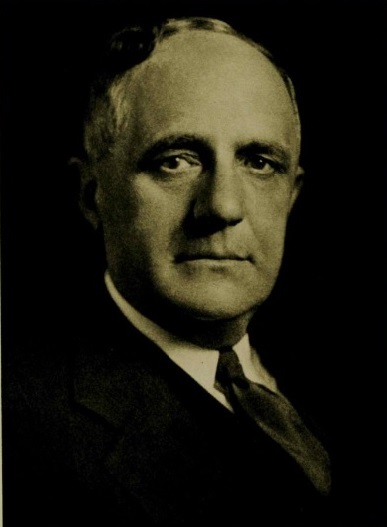
Historical · U.S. House · Michigan · District 3
Henry Kimball
Former U.S. Representative · Michigan District 3 · 1935–1937 · Republican
Henry Kimball represented Michigan's District 3 in the United States House of Representatives (1935–1937) for the Republican party. The page below collects sourced biographical facts, term history, committee roles, and provenance for Kimball.
Bioguide ID: K000183
Key facts
- Full name
- Henry Kimball
- State
- Michigan
- District
- District 3
- Party
- Republican
- House service
- 1935–1937
- First House term
- 1935
- Status
- Left office
- Current term ends
- —
- Born
- 1878
- Bioguide ID
- K000183
- Committee assignments
- —
- Dataset version
- 1.20260605
Biographical narrative
947 words · sourced from the Wikipedia REST extract
Henry Kimball was an American politician who served as a U.S. Representative from Michigan's 3rd congressional district. A member of the Republican Party, he held office during the 74th Congress from 1935 until his death in 1935. Born in Indiana, Kimball had a diverse career that included roles in education and law before entering politics. His tenure in Congress was marked by the challenges of the Great Depression, a period that significantly influenced legislative priorities and the political landscape of the time.
Early life and career
Henry Mahlon Kimball was born on August 27, 1878, in Orland, Indiana. He received his early education in the local common and high schools of Orland, where he laid the foundation for his future academic and professional pursuits. Following his secondary education, Kimball attended Hillsdale College in Michigan, an institution known for its liberal arts curriculum and commitment to the principles of individual liberty and limited government. His time at Hillsdale College helped shape his political and philosophical outlook.
After completing his studies at Hillsdale, Kimball transitioned into the field of education, serving as the principal of Orland High School. This role not only showcased his leadership abilities but also provided him with valuable experience in public service and community engagement. His commitment to education was evident in his subsequent decision to further his academic qualifications by attending the University of Michigan at Ann Arbor. There, he enrolled in both the literary and law departments, ultimately graduating from the law school in 1904.
Following his graduation, Kimball began his legal career in Orland, Indiana, where he practiced law for several years. In 1907, he relocated to Rosebud in Pershing County, Nevada, continuing his legal practice. His career took another turn in 1908 when he took on the role of a traveling auditor for a firm based in San Francisco, California. This position allowed him to gain experience in financial oversight and business operations, further broadening his professional expertise. In 1909, he moved to Portland, Oregon, where he continued to practice law before eventually settling in Kalamazoo, Michigan, in 1917. In Kalamazoo, he resumed his legal career, establishing himself as a prominent attorney in the community.
House tenure
Henry Kimball's political career began to take shape when he was elected as a Republican to represent Michigan's 3rd congressional district in the U.S. House of Representatives. His election to the 74th Congress marked the culmination of his professional journey, as he transitioned from a legal and educational background into the realm of national politics. Kimball officially took office on January 3, 1935, during a time when the United States was grappling with the profound economic challenges of the Great Depression.
During his brief tenure in Congress, Kimball was involved in the legislative discussions and decisions that characterized this tumultuous period. The Great Depression had a significant impact on the political landscape, leading to increased government intervention in the economy and a reevaluation of social welfare policies. As a member of the Republican Party, Kimball's legislative actions and positions would have been influenced by the party's platform, which traditionally emphasized limited government and fiscal conservatism. However, the realities of the economic crisis necessitated a more nuanced approach to governance, as constituents sought relief and support from their elected representatives.
Kimball's time in Congress was cut short by his untimely death on October 19, 1935, in Kalamazoo, Michigan. His passing occurred just months after he took office, highlighting the brevity of his legislative career. Following his death, Kimball's remains were cremated, and his ashes were interred in Green Lawn Cemetery in Orland, Indiana, the town of his birth. His sudden departure left a gap in representation for Michigan's 3rd congressional district, necessitating a special election to fill the vacancy he left behind.
Legislative focus and committees
While specific details regarding Kimball's legislative focus and committee assignments during his time in Congress are not extensively documented, it is important to contextualize his role within the broader framework of the 74th Congress. This period was marked by significant legislative activity aimed at addressing the economic hardships faced by the American populace. The Great Depression prompted a range of policy initiatives designed to provide relief, recovery, and reform.
As a member of the Republican Party, Kimball would likely have engaged with issues pertinent to his constituents in Michigan, including economic recovery efforts, labor relations, and social welfare programs. The political climate of the time necessitated a balance between traditional Republican values and the pressing needs of a nation in crisis. Kimball's legal background may have informed his understanding of the complexities surrounding legislation, particularly in areas related to economic policy and regulatory frameworks.
The 74th Congress was characterized by the implementation of various New Deal programs initiated by President Franklin D. Roosevelt. These programs sought to provide immediate relief to those affected by the economic downturn and to stimulate long-term recovery. Although Kimball's specific contributions to these initiatives are not detailed, the context of his tenure suggests that he would have been involved in discussions surrounding these critical issues.
In summary, Henry Kimball's life and career reflect a trajectory that transitioned from education and law to national politics during a pivotal moment in American history. His service as a U.S. Representative for Michigan's 3rd congressional district was marked by the challenges of the Great Depression, a period that shaped the legislative priorities of the time. Despite his brief tenure, Kimball's background in law and education provided him with a unique perspective on the complexities of governance and public service. His legacy is remembered in the context of the broader political landscape of the 1930s, a time of significant change and reform in the United States.
Notable legislation
Sponsored and co-sponsored legislation for Henry Kimball is pending operator curation. The biographical narrative above carries the same provenance trail until per-bill rows are written.
Sources
- [1]https://en.wikipedia.org/wiki/Henry_M._KimballWikipedia · retrieved 2026-06-05
Notable quotes
Sourced quotes for Henry Kimball are pending operator curation. Narrative-scope provenance remains attached below.
Sources
- [1]https://en.wikipedia.org/wiki/Henry_M._KimballWikipedia · retrieved 2026-06-05
Key positions
Curated policy positions for Henry Kimball are pending operator review. The biographical narrative above carries the same provenance trail until per-topic positions are written.
Sources
- [1]https://en.wikipedia.org/wiki/Henry_M._KimballWikipedia · retrieved 2026-06-05
Terms served
- 1935–1937U.S. House · Term 1 · Republican
Sources & provenance
Every attributable claim above carries a per-section [N] marker that resolves to the corresponding URL below. Each entry records the upstream provider, the canonical URL, and the timestamp at which the source was retrieved by the ingest pipeline.
Key facts
- https://bioguide.congress.gov/search/bio/K000183bioguide · retrieved 2026-06-05
- https://www.govtrack.us/congress/members/406345govtrack · retrieved 2026-06-05
Biographical narrative
- https://en.wikipedia.org/wiki/Henry_M._Kimballwikipedia · retrieved 2026-06-05
Find your representative
Every U.S. state elects representatives by district. Browse Michigan’s delegation, the full former-representative roster, or explore the role and term length.
Related on The Candidate
- Preceded by Joseph HooperEarlier holder of the Michigan District 3 House seat · Republican.Open
- Succeeded by Paul ShaferLater holder of the Michigan District 3 House seat · Republican.Open
- Alexander BuelFormer U.S. Representative · Michigan District 1 · DemocraticOpen
- Alfred LuckingFormer U.S. Representative · Michigan District 1 · DemocraticOpen
- Alpheus WilliamsFormer U.S. Representative · Michigan District 1 · DemocraticOpen
- Bart StupakFormer U.S. Representative · Michigan District 1 · DemocraticOpen