
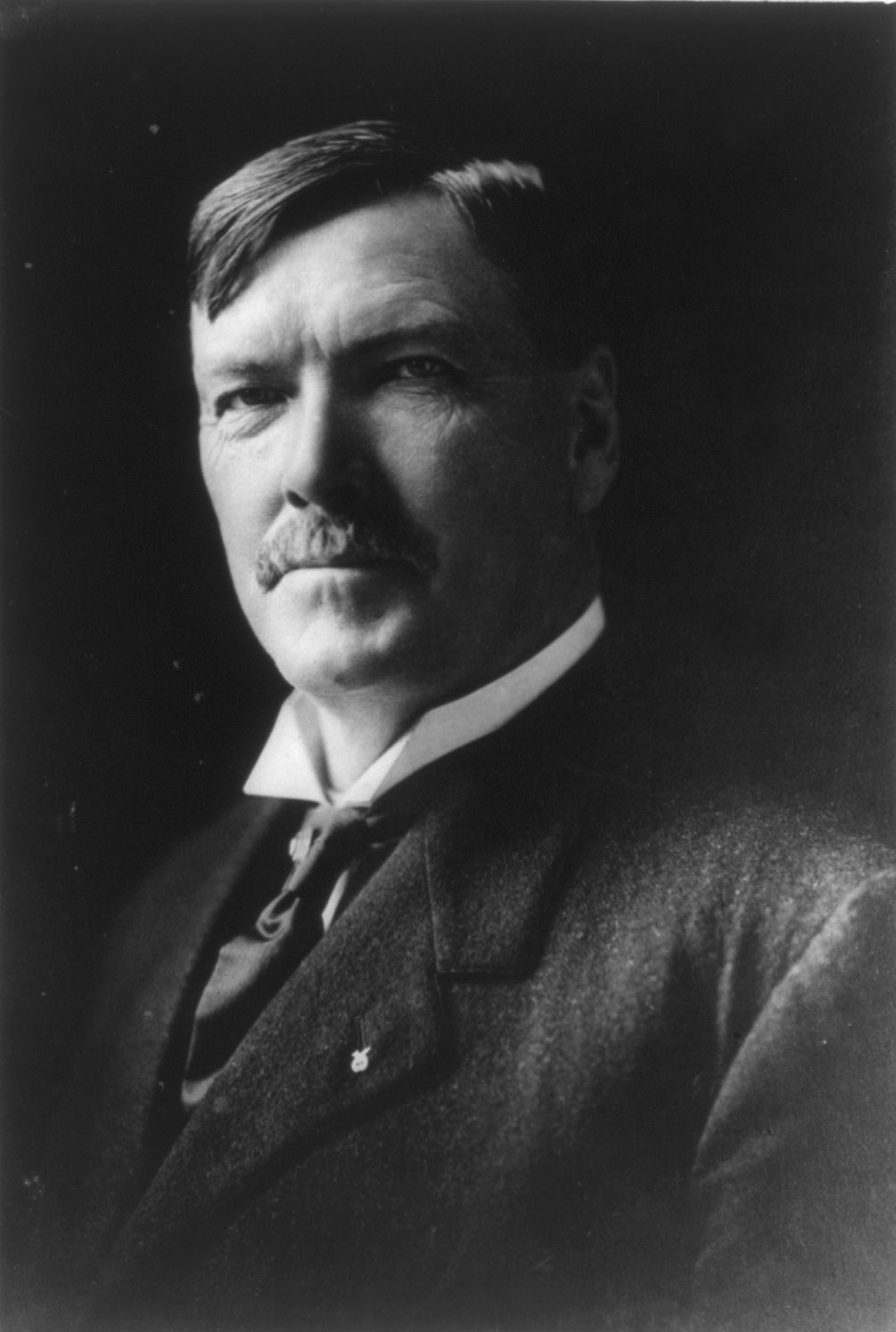
Historical · U.S. House · Michigan · District 3
John Smith
Former U.S. Representative · Michigan District 3 · 1911–1925 · Republican
John Smith represented Michigan's District 3 in the United States House of Representatives (1911–1925) for the Republican party. The page below collects sourced biographical facts, term history, committee roles, and provenance for Smith.
Bioguide ID: S000573
Key facts
- Full name
- John Smith
- State
- Michigan
- District
- District 3
- Party
- Republican
- House service
- 1911–1925
- First House term
- 1911
- Status
- Left office
- Current term ends
- —
- Born
- 1853
- Bioguide ID
- S000573
- Committee assignments
- —
- Dataset version
- 1.20260606
Biographical narrative
861 words · sourced from the Wikipedia REST extract
John Smith was a prominent American politician who served as a U.S. Representative for Michigan's 3rd congressional district. A member of the Republican Party, he had a lengthy career in the House of Representatives, spanning over a decade and encompassing seven terms. His legislative work and local engagements reflected his commitment to public service and the interests of his constituents in Michigan.
Early life and career
John Smith was born on February 6, 1853, in Belfast, which was then part of the United Kingdom. In 1855, when he was just two years old, his family immigrated to the United States, settling near Plymouth, Ohio. Smith's early education took place in public schools, which laid the foundation for his later academic pursuits. In 1867, he moved to Charlotte, Michigan, where he engaged in agricultural work and also took up masonry, reflecting a diverse skill set that would serve him well in his later professional endeavors.
Smith's academic journey continued at the University of Michigan in Ann Arbor, where he graduated from the academic department in 1879 and subsequently from the law department in 1880. After being admitted to the bar in 1882, he began practicing law in Detroit, establishing a legal career that would complement his political aspirations. His personal life included a marriage to Lena Parkhurst on October 23, 1887, the daughter of Major John D. Parkhurst of Charlotte. Together, they had two children, Lucile and William P. Smith.
In addition to his legal practice, Smith was actively involved in local governance and community affairs. He served as the prosecuting attorney for Eaton County from 1885 to 1888, a role that provided him with valuable experience in the legal and political arenas. His leadership abilities were further recognized when he became president of the First National Bank of Charlotte in 1898. Smith's engagement in various sectors, including manufacturing and agriculture, showcased his multifaceted contributions to the local economy and community.
Smith's political career began to take shape as he became a member of the board of aldermen in 1903. His involvement in state politics was marked by his participation in the State Constitutional Convention in 1908, where he contributed to discussions on governance and legal frameworks in Michigan. These experiences laid the groundwork for his future role in the U.S. Congress.
House tenure
John Smith's congressional career commenced when he was elected as a Republican to the Sixty-second Congress, beginning his first term on March 4, 1911. He was re-elected to four consecutive terms, serving until March 3, 1921. During this period, he was actively involved in legislative matters and held significant positions, including serving as the chairman of the United States House Committee on Labor during the Sixty-sixth Congress. This role allowed him to influence labor-related legislation and advocate for workers' rights and interests.
After a brief hiatus from Congress, Smith returned to the House as a result of a special election to fill the vacancy left by the death of fellow Representative William H. Frankhauser, who passed away while in office on May 9, 1921. Smith was elected to the Sixty-seventh Congress and subsequently re-elected to the Sixty-eighth Congress, where he continued to serve until his death. His tenure in Congress was marked by a commitment to his constituents and a focus on issues relevant to the working class and labor community.
Throughout his time in the House, Smith was known for his dedication to public service and his ability to navigate the complexities of legislative processes. His experience as a lawyer and local government official informed his approach to policymaking, allowing him to address the needs and concerns of his district effectively.
Legislative focus and committees
During his time in Congress, John Smith's legislative focus primarily revolved around labor issues, reflecting his role as chairman of the House Committee on Labor. This position enabled him to engage with various aspects of labor legislation, including workers' rights, labor relations, and economic policies that affected the workforce. His involvement in these matters was indicative of the broader social and economic changes occurring in the early 20th century, as the United States was experiencing significant industrial growth and labor movements.
Smith's legislative contributions were also shaped by his understanding of the local economy in Michigan, which was heavily influenced by manufacturing and agriculture. His background in these sectors likely informed his advocacy for policies that supported both workers and businesses, aiming to create a balanced approach to economic development.
In addition to his work on labor issues, Smith's participation in various congressional committees allowed him to engage with a wide range of topics relevant to his constituents. His ability to collaborate with colleagues and navigate the legislative landscape was crucial in advancing the interests of Michigan's 3rd congressional district.
Smith's congressional career came to an end with his death on March 30, 1923, in Charlotte, Michigan. He was interred in Maple Hill Cemetery in Charlotte, leaving behind a legacy of public service and commitment to the people he represented. His contributions to the U.S. House of Representatives and his involvement in local governance reflect a dedicated career in politics, marked by a focus on labor and community issues.
Notable legislation
Sponsored and co-sponsored legislation for John Smith is pending operator curation. The biographical narrative above carries the same provenance trail until per-bill rows are written.
Sources
- [1]https://en.wikipedia.org/wiki/John_M._C._SmithWikipedia · retrieved 2026-06-06
Notable quotes
Sourced quotes for John Smith are pending operator curation. Narrative-scope provenance remains attached below.
Sources
- [1]https://en.wikipedia.org/wiki/John_M._C._SmithWikipedia · retrieved 2026-06-06
Key positions
Curated policy positions for John Smith are pending operator review. The biographical narrative above carries the same provenance trail until per-topic positions are written.
Sources
- [1]https://en.wikipedia.org/wiki/John_M._C._SmithWikipedia · retrieved 2026-06-06
Terms served
- 1911–1913U.S. House · Term 1 · Republican
- 1913–1915U.S. House · Term 2 · Republican
- 1915–1917U.S. House · Term 3 · Republican
- 1917–1919U.S. House · Term 4 · Republican
- 1919–1921U.S. House · Term 5 · Republican
- 1921–1923U.S. House · Term 6 · Republican
- 1923–1925U.S. House · Term 7 · Republican
Sources & provenance
Every attributable claim above carries a per-section [N] marker that resolves to the corresponding URL below. Each entry records the upstream provider, the canonical URL, and the timestamp at which the source was retrieved by the ingest pipeline.
Key facts
- https://bioguide.congress.gov/search/bio/S000573bioguide · retrieved 2026-06-06
- https://www.govtrack.us/congress/members/410055govtrack · retrieved 2026-06-06
Biographical narrative
- https://en.wikipedia.org/wiki/John_M._C._Smithwikipedia · retrieved 2026-06-06
Find your representative
Every U.S. state elects representatives by district. Browse Michigan’s delegation, the full former-representative roster, or explore the role and term length.
Related on The Candidate
- Preceded by Washington GardnerEarlier holder of the Michigan District 3 House seat · Republican.Open
- Succeeded by Joseph HooperLater holder of the Michigan District 3 House seat · Republican.Open
- Alexander BuelFormer U.S. Representative · Michigan District 1 · DemocraticOpen
- Alfred LuckingFormer U.S. Representative · Michigan District 1 · DemocraticOpen
- Alpheus WilliamsFormer U.S. Representative · Michigan District 1 · DemocraticOpen
- Bart StupakFormer U.S. Representative · Michigan District 1 · DemocraticOpen