
Historical · U.S. House · Michigan · District 3
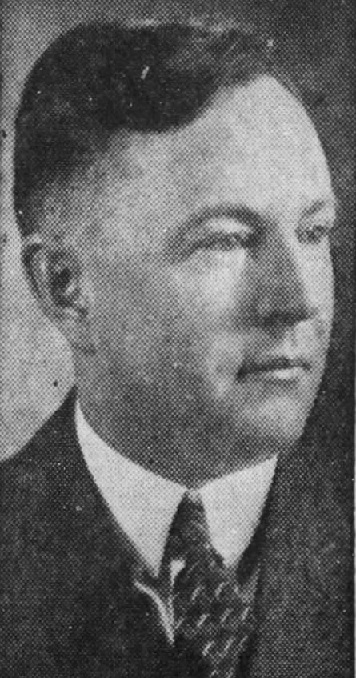
Verner Main
Former U.S. Representative · Michigan District 3 · 1935–1937 · Republican
Verner Main represented Michigan's District 3 in the United States House of Representatives (1935–1937) for the Republican party. The page below collects sourced biographical facts, term history, committee roles, and provenance for Main.
Bioguide ID: M000071
Key facts
- Full name
- Verner Main
- State
- Michigan
- District
- District 3
- Party
- Republican
- House service
- 1935–1937
- First House term
- 1935
- Status
- Left office
- Current term ends
- —
- Born
- 1885
- Bioguide ID
- M000071
- Committee assignments
- —
- Dataset version
- 1.20260605
Biographical narrative
943 words · sourced from the Wikipedia REST extract
Verner Main was a U.S. Representative from Michigan, serving in the 74th Congress as a member of the Republican Party. His political career was marked by a brief tenure in the House of Representatives, where he represented Michigan's 3rd congressional district. Born in 1885, Main's life encompassed various roles, including educator, lawyer, and military service member, before he entered the political arena. His time in Congress was characterized by a focus on local issues pertinent to his constituents, although his congressional career was relatively short-lived.
Early life and career
Verner Main was born on December 16, 1885, in Ashley, Ohio. He received his early education in the public school system, which laid the foundation for his future academic pursuits. After completing his studies at the local schools, he graduated from Marion High School in Marion, Ohio. Main's educational journey continued at Hillsdale College in Michigan, where he obtained his degree in 1907. This institution is known for its emphasis on classical education and liberal arts, which likely influenced Main's later pursuits in law and politics.
Following his undergraduate education, Main attended the University of Michigan at Ann Arbor, where he enrolled in the law department. He graduated in 1914, marking the beginning of his professional career in law. Shortly after being admitted to the bar, he began practicing law in Battle Creek, Michigan. His legal career was complemented by his earlier experiences in education; he served as the principal of high schools in Hudson, Michigan, from 1908 to 1909, and in Niles, Michigan, from 1909 to 1912. These roles not only provided him with leadership experience but also deepened his understanding of the educational needs of his community.
In addition to his educational and legal pursuits, Main demonstrated a commitment to public service during World War I. He volunteered for military service and was assigned to the Field Artillery. His training took place at an officers' training camp in Louisville, Kentucky. However, the armistice was signed before he could see combat, and he returned to civilian life. After the war, he continued to engage in public service, taking on the role of assistant prosecuting attorney for Calhoun County, Michigan, in 1926. This position further solidified his legal expertise and provided him with insights into the workings of the judicial system.
Main's political career began to take shape when he was elected to the Michigan State House of Representatives, serving from 1927 to 1929. His time in the state legislature allowed him to gain valuable experience in governance and policy-making, which would later serve him well in his congressional career. Additionally, he was involved in local governance as a member of the Battle Creek School Board from 1929 to 1932, further demonstrating his commitment to education and community development.
House tenure
Verner Main's congressional career began when he was elected as a Republican to represent Michigan's 3rd congressional district in the 74th Congress. He filled the vacancy left by the death of Henry M. Kimball, taking office on December 17, 1935. His election came during a challenging period in American history, as the nation was still grappling with the effects of the Great Depression. Main's role as a representative involved addressing the pressing needs of his constituents, many of whom were affected by economic hardships.
During his time in the House of Representatives, Main participated in the legislative process, contributing to discussions and decisions that impacted his district and the nation. Although specific details about the bills he sponsored or supported are not available, it is common for representatives to focus on issues relevant to their constituents, such as economic recovery, infrastructure, and social services during this era. His tenure in Congress lasted until January 3, 1937, when he completed his term.
Despite his efforts to serve his constituents, Main faced challenges in securing a longer congressional career. In 1936, he sought re-nomination but was unsuccessful in the Republican primary election, losing to Paul W. Shafer. This defeat marked the end of his time in federal office, after which he returned to his legal practice in Battle Creek. His experience in Congress, while brief, provided him with insights into national governance and the legislative process.
Legislative focus and committees
While specific details regarding Verner Main's legislative focus and committee assignments during his time in Congress are not documented, it is important to understand the context of the 74th Congress and the issues facing the nation at that time. The Great Depression had a profound impact on American society, and legislators were tasked with addressing the economic challenges that affected their constituents. Representatives often focused on initiatives aimed at economic recovery, job creation, and social welfare programs.
Main's background in law and education likely influenced his perspective on various legislative matters. As a former educator and practicing attorney, he may have been particularly attuned to issues related to education policy, legal reform, and community development. His experience in local governance and the state legislature would have provided him with a unique understanding of the needs and concerns of his district, which he could have advocated for during his time in Congress.
After leaving office, Main continued to practice law in Battle Creek, where he remained engaged in his community until his passing on July 6, 1965. He is interred in Oak Hill Cemetery in Battle Creek, Michigan. Main's life and career reflect a commitment to public service, education, and the legal profession, marking him as a notable figure in Michigan's political history during the early 20th century. His contributions, although brief in the national spotlight, were rooted in a deep understanding of the local issues that shaped the lives of his constituents.
Notable legislation
Sponsored and co-sponsored legislation for Verner Main is pending operator curation. The biographical narrative above carries the same provenance trail until per-bill rows are written.
Sources
- [1]https://en.wikipedia.org/wiki/Verner_MainWikipedia · retrieved 2026-06-05
Notable quotes
Sourced quotes for Verner Main are pending operator curation. Narrative-scope provenance remains attached below.
Sources
- [1]https://en.wikipedia.org/wiki/Verner_MainWikipedia · retrieved 2026-06-05
Key positions
Curated policy positions for Verner Main are pending operator review. The biographical narrative above carries the same provenance trail until per-topic positions are written.
Sources
- [1]https://en.wikipedia.org/wiki/Verner_MainWikipedia · retrieved 2026-06-05
Terms served
- 1935–1937U.S. House · Term 1 · Republican
Sources & provenance
Every attributable claim above carries a per-section [N] marker that resolves to the corresponding URL below. Each entry records the upstream provider, the canonical URL, and the timestamp at which the source was retrieved by the ingest pipeline.
Key facts
- https://bioguide.congress.gov/search/bio/M000071bioguide · retrieved 2026-06-05
- https://www.govtrack.us/congress/members/407099govtrack · retrieved 2026-06-05
Biographical narrative
- https://en.wikipedia.org/wiki/Verner_Mainwikipedia · retrieved 2026-06-05
Find your representative
Every U.S. state elects representatives by district. Browse Michigan’s delegation, the full former-representative roster, or explore the role and term length.
Related on The Candidate
- Preceded by Joseph HooperEarlier holder of the Michigan District 3 House seat · Republican.Open
- Succeeded by Paul ShaferLater holder of the Michigan District 3 House seat · Republican.Open
- Alexander BuelFormer U.S. Representative · Michigan District 1 · DemocraticOpen
- Alfred LuckingFormer U.S. Representative · Michigan District 1 · DemocraticOpen
- Alpheus WilliamsFormer U.S. Representative · Michigan District 1 · DemocraticOpen
- Bart StupakFormer U.S. Representative · Michigan District 1 · DemocraticOpen