
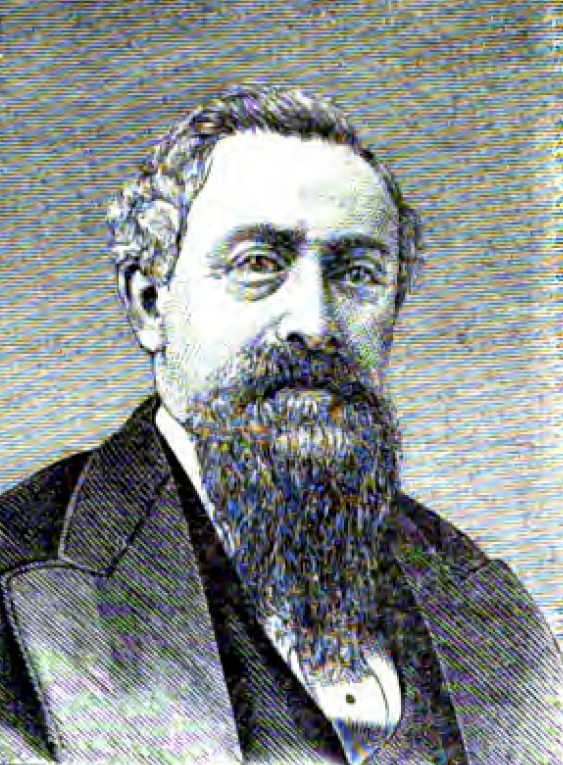
Historical · U.S. House · Michigan · District 5
Julius Houseman
Former U.S. Representative · Michigan District 5 · 1883–1885 · Democratic
Julius Houseman represented Michigan's District 5 in the United States House of Representatives (1883–1885) for the Democratic party. The page below collects sourced biographical facts, term history, committee roles, and provenance for Houseman.
Bioguide ID: H000820
Key facts
- Full name
- Julius Houseman
- State
- Michigan
- District
- District 5
- Party
- Democratic
- House service
- 1883–1885
- First House term
- 1883
- Status
- Left office
- Current term ends
- —
- Born
- 1832
- Bioguide ID
- H000820
- Committee assignments
- —
- Dataset version
- 1.20260606
Biographical narrative
914 words · sourced from the Wikipedia REST extract
Julius Houseman was a prominent American businessman and politician who served as a U.S. Representative for Michigan's 5th congressional district from 1883 to 1885. A member of the Democratic Party, Houseman was notable for being the first Jewish representative from Michigan. His career spanned various sectors, including business, banking, and local government, and he played a significant role in the development of Grand Rapids, Michigan, where he was also a key figure in the Jewish community.
Early life and career
Julius Houseman was born on December 8, 1832, in Zeckendorf, a locality near Bamberg in the Kingdom of Bavaria, which was part of the German Confederation at the time. He was the son of Solomon Houseman, a merchant and manufacturer of silk and cotton goods. Houseman received his education in the national schools of Zeckendorf and Bamberg, ultimately completing a two-year course at a commercial school in Munich. Following his education, he worked as a dry goods clerk in Bavaria for three years before deciding to immigrate to the United States.
In 1851, at the age of nineteen, Houseman arrived in the United States, initially settling in Cincinnati, Ohio. There, he worked briefly as a clerk in a clothing store before moving to New Vienna, Ohio, where he continued his work in a general store until March 1852. Subsequently, he relocated to Battle Creek, Michigan, where he entered the merchant tailoring and clothing business in partnership with I. Amberg, operating under the name Amberg & Houseman. In August 1852, Houseman moved to Grand Rapids, Michigan, where he established a branch of the Battle Creek firm, becoming recognized as the first permanent Jewish settler in Grand Rapids.
Houseman's business endeavors flourished, and by 1854, he became the sole proprietor of his enterprise, which he managed for nine years. In 1864, he formed a new partnership, Houseman, Alsberg & Co., which expanded to include branch houses in New York, Baltimore, and Savannah. This partnership lasted until 1870, after which Houseman retained control of the Grand Rapids location. By 1876, he sold his business to his cousin Joseph Houseman and Moses May, who continued the operation under the name Houseman & May.
In addition to his clothing business, Houseman diversified his interests into timber lands and the manufacture of pine lumber in Michigan. He became one of the largest real estate holders in the Grand Rapids area, with significant holdings in the Upper Peninsula of Michigan and other states. His business acumen extended to banking; he became a stockholder in the City National Bank in 1870 and was later elected as vice president of the bank in 1882. Houseman was also involved in various other business ventures, including serving as a director and vice president of the Grand Rapids Chair Company and holding leadership positions in the Grand Rapids Brush Company and the Grand Rapids Fire Insurance Company.
House tenure
Julius Houseman's political career began with his involvement in local governance. He served on the board of aldermen in Grand Rapids for eight years, from 1863 to 1870. He represented the first district of Kent County in the Michigan House of Representatives from 1871 to 1872. His political influence grew as he served two non-consecutive terms as mayor of Grand Rapids, first from 1872 to 1873 and again from 1874 to 1875. In 1876, he ran unsuccessfully for the position of lieutenant governor.
Houseman's congressional career began when he was elected as a Fusion candidate to the U.S. House of Representatives, representing Michigan's 5th congressional district. He served in the House from 1883 until his term ended in 1885. During his time in Congress, he was recognized as the first Jewish representative from Michigan. After completing his term, Houseman chose not to seek re-election in 1884 and returned to his business pursuits.
Legislative focus and committees
While specific details regarding Houseman's legislative focus and committee assignments during his time in Congress are not extensively documented, his background in business and local governance likely influenced his perspectives on economic and community issues. His experience as a businessman and mayor would have provided him with insights into the needs and concerns of his constituents in Michigan's 5th congressional district.
Houseman's political affiliations and activities reflect a commitment to public service and community development. His involvement in local organizations and initiatives, particularly those that supported the Jewish community in Grand Rapids, underscores his dedication to civic engagement. He was a member of the Freemasons and the Odd Fellows and played a significant role in establishing the Temple Emanuel in 1857, which is recognized as the fifth oldest reform congregation in the United States. Additionally, he was instrumental in founding the Jewish Benevolent and Burial Society, the first Jewish organization in Grand Rapids.
After leaving Congress, Houseman continued to be active in various business ventures and community organizations until his death on February 8, 1891, in Grand Rapids. He was interred in Oak Hill Cemetery in the same city. Houseman left behind a substantial estate, estimated to be worth approximately one million dollars. His legacy continued through his daughter, Hattie Houseman Amberg, who contributed to the community by donating land for an athletic field in memory of her father.
Julius Houseman's life and career reflect the experiences of many immigrants who sought opportunities in the United States during the 19th century. His contributions to business, local governance, and the Jewish community in Grand Rapids mark him as a significant figure in the history of Michigan and American politics.
Notable legislation
Sponsored and co-sponsored legislation for Julius Houseman is pending operator curation. The biographical narrative above carries the same provenance trail until per-bill rows are written.
Sources
- [1]https://en.wikipedia.org/wiki/Julius_HousemanWikipedia · retrieved 2026-06-06
Notable quotes
Sourced quotes for Julius Houseman are pending operator curation. Narrative-scope provenance remains attached below.
Sources
- [1]https://en.wikipedia.org/wiki/Julius_HousemanWikipedia · retrieved 2026-06-06
Key positions
Curated policy positions for Julius Houseman are pending operator review. The biographical narrative above carries the same provenance trail until per-topic positions are written.
Sources
- [1]https://en.wikipedia.org/wiki/Julius_HousemanWikipedia · retrieved 2026-06-06
Terms served
- 1883–1885U.S. House · Term 1 · Democratic
Sources & provenance
Every attributable claim above carries a per-section [N] marker that resolves to the corresponding URL below. Each entry records the upstream provider, the canonical URL, and the timestamp at which the source was retrieved by the ingest pipeline.
Key facts
- https://bioguide.congress.gov/search/bio/H000820bioguide · retrieved 2026-06-06
- https://www.govtrack.us/congress/members/405667govtrack · retrieved 2026-06-06
Biographical narrative
- https://en.wikipedia.org/wiki/Julius_Housemanwikipedia · retrieved 2026-06-06
Find your representative
Every U.S. state elects representatives by district. Browse Michigan’s delegation, the full former-representative roster, or explore the role and term length.
Related on The Candidate
- Preceded by George WebberEarlier holder of the Michigan District 5 House seat · Republican.Open
- Succeeded by Charles ComstockLater holder of the Michigan District 5 House seat · Democratic.Open
- Alexander BuelFormer U.S. Representative · Michigan District 1 · DemocraticOpen
- Alfred LuckingFormer U.S. Representative · Michigan District 1 · DemocraticOpen
- Alpheus WilliamsFormer U.S. Representative · Michigan District 1 · DemocraticOpen
- Bart StupakFormer U.S. Representative · Michigan District 1 · DemocraticOpen