
Historical · U.S. House · Michigan · District 5
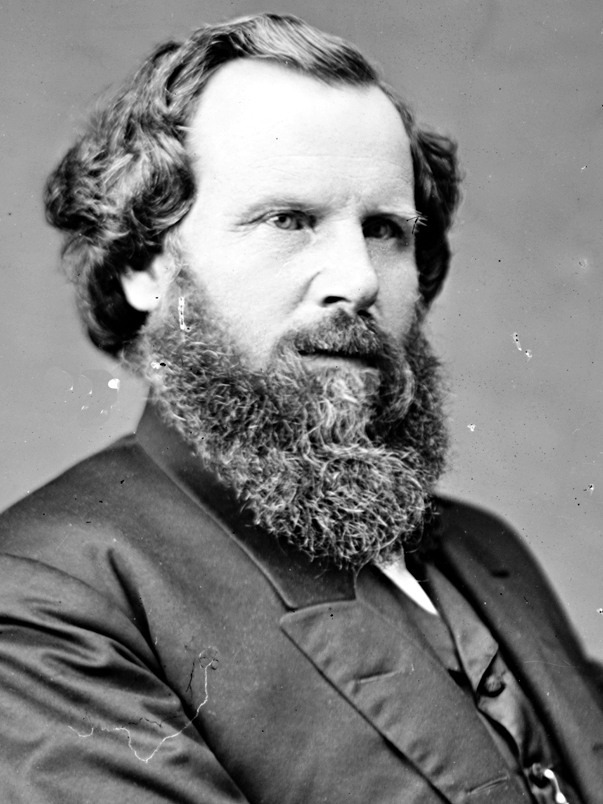
Rowland Trowbridge
Former U.S. Representative · Michigan District 5 · 1861–1869 · Republican
Rowland Trowbridge represented Michigan's District 5 in the United States House of Representatives (1861–1869) for the Republican party. The page below collects sourced biographical facts, term history, committee roles, and provenance for Trowbridge.
Bioguide ID: T000385
Key facts
- Full name
- Rowland Trowbridge
- State
- Michigan
- District
- District 5
- Party
- Republican
- House service
- 1861–1869
- First House term
- 1861
- Status
- Left office
- Current term ends
- —
- Born
- 1821
- Bioguide ID
- T000385
- Committee assignments
- —
- Dataset version
- 1.20260606
Biographical narrative
864 words · sourced from the Wikipedia REST extract
Rowland Trowbridge was an American politician who served as a U.S. Representative from Michigan's 5th congressional district during the mid-19th century. A member of the Republican Party, Trowbridge's congressional career spanned three terms, beginning in 1861 and concluding in 1869. He was actively involved in agricultural policy and held the position of chairman of the Committee on Agriculture during his final term in office. Following his time in Congress, Trowbridge briefly returned to federal service as the commissioner of Indian Affairs under President Rutherford B. Hayes.
Early life and career
Rowland Trowbridge was born on June 18, 1821, in Horseheads, New York, to Stephen Van Rensselaer Trowbridge and Elizabeth Conkling. His family relocated to Oakland County, Michigan, in the same year, where they established a farm in what is now Troy. Trowbridge was one of twelve children, including notable siblings such as William Petit Trowbridge and Luther Stephen Trowbridge, both of whom achieved the rank of general in the military.
Trowbridge's educational journey took him to Kenyon College in Gambier, Ohio, where he graduated in 1841. During his time at Kenyon, he formed friendships with several individuals who would later become prominent figures in American politics, including Rutherford B. Hayes, who would eventually become President, and Stanley Matthews, who would serve as an Associate Justice of the Supreme Court. Despite his academic achievements, Trowbridge faced challenges due to vision problems, which ultimately led him to abandon his aspirations for a legal career.
After completing his education, Trowbridge returned to Michigan and resumed farming. In 1848, he settled in Thorndale, Michigan, where he began to engage in local politics. His political career commenced as he took on the role of town supervisor. By 1851, he had moved back to his parents' county and became a member of the Michigan Senate, representing Bloomfield from 1856 to 1860. During this period, he married Mary Ann Satterlee in 1851, and together they had four children: Susan Elisabeth, Stephen Van Rensselaer, Tillman Conklin, and Samuel Satterlee. In 1860, the family relocated to Birmingham, Michigan, trading their farm in Bloomfield for a mill.
House tenure
Trowbridge's congressional career began when he was elected as a Republican to represent Michigan's 4th congressional district in the 37th United States Congress. His term lasted from March 4, 1861, to March 3, 1863. This period was marked by significant national turmoil, including the onset of the Civil War, which would have profound implications for the country and its governance.
Following the redistricting that occurred after the 1860 census, Trowbridge sought election in the newly established 5th congressional district in 1862. However, he was defeated by Democrat Augustus C. Baldwin. Undeterred, Trowbridge returned to the political arena and successfully won a seat in the 39th Congress in 1864, defeating Baldwin in the process. He was subsequently re-elected to the 40th Congress in 1866, serving from March 4, 1865, to March 3, 1869.
During his time in the 40th Congress, Trowbridge played a significant role as chairman of the Committee on Agriculture. This position allowed him to influence agricultural legislation and policies, which were particularly important during a time when agriculture was a cornerstone of the American economy. His work on the committee reflected his background and interests, as he had spent much of his life as a farmer.
Despite his contributions, Trowbridge was not re-nominated for a subsequent term in Congress, leading him to return to his agricultural pursuits. In 1873, he purchased a farm in Lansing, Michigan, where he continued to engage in farming and local affairs.
Legislative focus and committees
Throughout his congressional tenure, Trowbridge's legislative focus was primarily centered on agricultural issues. As chairman of the Committee on Agriculture during the 40th Congress, he was positioned to address the needs and concerns of farmers, which were critical to the economic landscape of the United States at the time. The agricultural sector faced numerous challenges, including the impacts of the Civil War, changes in land use, and the need for improved agricultural practices and policies.
Trowbridge's background as a farmer provided him with firsthand knowledge of the issues affecting his constituents and the broader agricultural community. His work on the committee likely involved advocating for policies that would support farmers, improve agricultural productivity, and address the economic challenges faced by rural communities. Although specific legislative achievements during his tenure are not detailed, his role as chairman indicates a commitment to advancing agricultural interests.
After leaving Congress, Trowbridge's political career saw a brief revival when his former college friend, Rutherford B. Hayes, was elected President of the United States. In 1880, Trowbridge was appointed as the commissioner of Indian Affairs, a position he held until 1881. This role involved overseeing federal policies related to Native American tribes and their affairs, a complex and often contentious aspect of U.S. governance during that era.
Rowland Trowbridge passed away on April 20, 1881, in Birmingham, Michigan. His contributions to both state and federal politics, particularly in the realm of agriculture, reflect a life dedicated to public service and the welfare of his community. He is interred in Greenwood Cemetery in Birmingham, leaving behind a legacy intertwined with the agricultural and political history of Michigan.
Notable legislation
Sponsored and co-sponsored legislation for Rowland Trowbridge is pending operator curation. The biographical narrative above carries the same provenance trail until per-bill rows are written.
Sources
- [1]https://en.wikipedia.org/wiki/Rowland_E._TrowbridgeWikipedia · retrieved 2026-06-06
Notable quotes
Sourced quotes for Rowland Trowbridge are pending operator curation. Narrative-scope provenance remains attached below.
Sources
- [1]https://en.wikipedia.org/wiki/Rowland_E._TrowbridgeWikipedia · retrieved 2026-06-06
Key positions
Curated policy positions for Rowland Trowbridge are pending operator review. The biographical narrative above carries the same provenance trail until per-topic positions are written.
Sources
- [1]https://en.wikipedia.org/wiki/Rowland_E._TrowbridgeWikipedia · retrieved 2026-06-06
Terms served
- 1861–1863U.S. House · Term 1 · Republican
- 1865–1867U.S. House · Term 2 · Republican
- 1867–1869U.S. House · Term 3 · Republican
Sources & provenance
Every attributable claim above carries a per-section [N] marker that resolves to the corresponding URL below. Each entry records the upstream provider, the canonical URL, and the timestamp at which the source was retrieved by the ingest pipeline.
Key facts
- https://bioguide.congress.gov/search/bio/T000385bioguide · retrieved 2026-06-06
- https://www.govtrack.us/congress/members/410954govtrack · retrieved 2026-06-06
Biographical narrative
- https://en.wikipedia.org/wiki/Rowland_E._Trowbridgewikipedia · retrieved 2026-06-06
Find your representative
Every U.S. state elects representatives by district. Browse Michigan’s delegation, the full former-representative roster, or explore the role and term length.
Related on The Candidate
- Succeeded by Wilder FosterLater holder of the Michigan District 5 House seat · Republican.Open
- Alexander BuelFormer U.S. Representative · Michigan District 1 · DemocraticOpen
- Alfred LuckingFormer U.S. Representative · Michigan District 1 · DemocraticOpen
- Alpheus WilliamsFormer U.S. Representative · Michigan District 1 · DemocraticOpen
- Bart StupakFormer U.S. Representative · Michigan District 1 · DemocraticOpen
- Republican PartyFederal candidates and office holders on the Republican line.Open